Data Protection boss calls for connected regulators to tackle big tech power
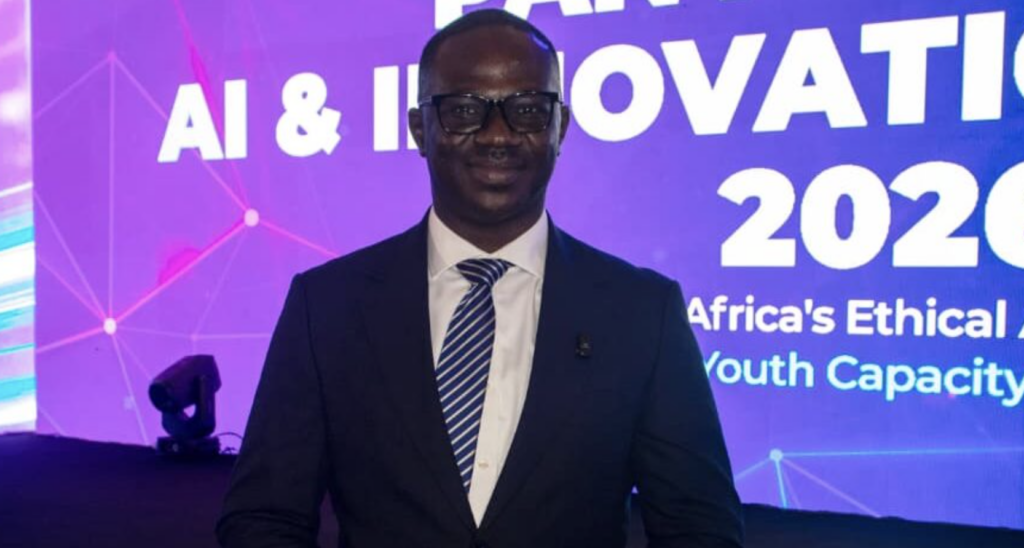
Arnold Kavaarpuo, Executive Director of the Data Protection Commission (DPC), has called for stronger collaboration among African regulators to address the growing concentration of data, technology and artificial intelligence (AI) power in the hands of large global technology platforms.
He said no single regulator or African country could effectively govern the increasingly interconnected power of global technology companies, whose influence could span communications, cloud infrastructure, digital identity, payments, AI models and access to markets.
Dr Kavaarpuo made the call when he spoke on the state of data governance in Africa at the second Pan-African AI and Innovation Summit 2026, in Accra on Tuesday.
The summit was organised in partnership with the Ministry of Communication, Digital Technology and Innovation, the University of Ghana Digital Youth Village, Brandeis University School for Global Development and Sustainability, the Ministry of Youth Development and Empowerment, and the Estonian Business Angel Network.
It was on the theme: “Scaling Africa’s Ethical AI & Innovation Ecosystem: Building Youth Capacity, Policy, Partnerships and Skills.”
Dr Kavaarpuo said African regulators needed to move beyond protecting personal data to addressing the broader question of who controlled data, processed it and captured the economic value generated from it.
“A privacy regulator asks if data was lawfully collected. A competition authority asks if control creates unfair advantage. The regulators must become connected too,” he said.
Dr Kavaarpuo noted that Africa had made significant progress in establishing data-protection regimes, with 44 of the 55 African Union (AU) member states having enacted data-protection laws.
Of those, 38 had both legislation and operational regulators, while six had laws but regulators that were not yet operational, leaving 11 countries without data-protection legislation.
He said the continent’s regulatory architecture was also developing at regional and continental levels, citing the ECOWAS framework, the SADC Data Protection Model Law and the AU Malabo Convention on personal data protection, cybersecurity and electronic transactions.
He said the AU Data Policy Framework, adopted in 2022, and the AfCFTA Protocol on Digital Trade, adopted in 2024, marked a further shift towards treating data as a strategic resource and supporting trusted cross-border data flows.
“The objective cannot be the unrestricted movement of data – nor the indiscriminate localisation of every dataset,” he said.
The DPC Executive Director also highlighted recent regulatory actions in Africa involving major technology companies as evidence that African institutions could enforce data and competition rules.
He cited Nigeria’s action against Meta and Kenya’s regulatory proceedings involving Worldcoin as examples of regulators addressing data protection, competition and accountability.
Dr Kavaarpuo also presented the Network of African Data Protection Authorities (NADPA) draft Model Policy on Cross-Border Data Transfers, describing it as a framework through which African countries could adopt compatible national approaches while retaining sovereignty over data within their jurisdictions.
The proposed policy uses a risk-based classification of data and provides six pathways for lawful cross-border transfers, including adequacy decisions, standard contractual clauses, binding corporate rules, certification, specific authorisation and limited derogations.
Dr Kavaarpuo said the framework sought to ensure that “protection follows the data” and that accountability did not end when information crossed national borders.
Mr Samuel Nartey George, Minister of Communication, Digital Technology and Innovation, said the Government would regulate AI-related risks without stifling innovation as Ghana implemented its 10-year National Artificial Intelligence Strategy.
“We will regulate risks and harms, not curiosity,” he said, explaining that regulation would distinguish between low-risk experimentation and high-risk AI systems used in areas such as lending and other critical decisions.
Speaking virtually at the summit, Mr George said implementation of the strategy had begun, including the training of 247 public-sector personnel in AI and the introduction of performance indicators to track adoption across Ministries, Departments and Agencies.
He said Cabinet had also approved a US$250 million investment in national computing infrastructure and AI applications to support researchers, universities and start-ups.
Madam Thelma Quaye, Chief Digital Infrastructure, Skills and Empowerment Officer at Smart Africa, also called for a shared continental ambition on AI, supported by stronger coordination and interoperability among African countries.
She said fragmentation across digital identity, payments, data and regulatory systems could constrain the ability of African innovators to scale, while countries could maintain policy sovereignty and still make their systems interoperable.
“We need coordination, not uniformity,” Madam Thelma said.
She urged countries to prioritise interoperable digital foundations, coordinated AI governance and investment in computing capacity, research, talent, datasets and start-ups.
Mr Chris Halliday, Deputy British High Commissioner to Ghana, urged African countries to help shape AI systems, regulations and markets around their own languages, needs and priorities, rather than becoming passive consumers of technologies developed elsewhere.
“The future of AI in Africa should not be written elsewhere and imported. It should be built here, shaped here, and owned here,” he said.
DISCLAIMER: The Views, Comments, Opinions, Contributions and Statements made by Readers and Contributors on this platform do not necessarily represent the views or policy of Multimedia Group Limited.
Tags:
DISCLAIMER: The Views, Comments, Opinions, Contributions and Statements made by Readers and Contributors on this platform do not necessarily represent the views or policy of Multimedia Group Limited.
KioskNews shows a cleaned-up reading view extracted from the publisher’s page — the original always lives on their site, not ours.