The 10 Best Novellas of All Time, Ranked

Jeremy has more than 2800 published articles on Collider to his name, and has been writing for the site since February 2022. He's an omnivore when it comes to his movie-watching diet, so will gladly watch and write about almost anything, from old Godzilla films to gangster flicks to samurai movies to classic musicals to the French New Wave to the MCU... well, maybe not the Disney+ shows.
His favorite directors include Martin Scorsese, Sergio Leone, Akira Kurosawa, Quentin Tarantino, Werner Herzog, John Woo, Bob Fosse, Fritz Lang, Guillermo del Toro, and Yoji Yamada. He's also very proud of the fact that he's seen every single Nicolas Cage movie released before 2022, even though doing so often felt like a tremendous waste of time. He's plagued by the question of whether or not The Room is genuinely terrible or some kind of accidental masterpiece, and has been for more than 12 years (and a similar number of viewings).
When he's not writing lists - and the occasional feature article - for Collider, he also likes to upload film reviews to his Letterboxd profile (username: Jeremy Urquhart) and Instagram account.
He has achieved his 2025 goal of reading all 13,467 novels written by Stephen King, and plans to spend the next year or two getting through the author's 82,756 short stories and 105,433 novellas.
Sign in to your Collider account
If you’ve ever tried (or succeeded in) reading The Lord of the Rings, Infinite Jest, or War and Peace, you'll be well aware of how long some novels can be. Getting through something that’s 1000 pages or more can be comparable to trying to get through a TV show that’s multiple seasons long, if you're talking the time one needs to dedicate to finishing things.
A novella, on the other hand, is likely to be more comparable to a movie, in terms of time needed to read. So, some of the best novellas of all time can be a good deal more digestible, and maybe easier to recommend to people who might not ordinarily love reading, but are trying to get into it a little more. As for the definition of a novella, it’s definitely something longer than a short story, but shorter than a novel, but as for words typically found in a novella, the range is actually fairly wide (usually between 15,000 and 40,000 words).
10 'Of Mice and Men' (1937)

Not that it’s simply just a tearjerker or anything, but Of Mice and Men does earn the right to be counted among the saddest books ever written. It takes place during the Great Depression, with John Steinbeck also writing it during the end of the very same period, and it’s about two men who venture around California, hoping (but failing) to find work of some kind, so they can stay alive.
It’s comparable to Steinbeck’s later novel, The Grapes of Wrath, with its setting, narrative, and what it goes for thematically, albeit Of Mice and Men is simpler, so it’s wise to read it before The Grapes of Wrath, which was published two years later. Thanks to both these works, it feels hard to deny John Steinbeck’s importance as perhaps the quintessential author who captured and depicted the Great Depression, even if it’s also unfair to say the Great Depression was all Steinbeck skillfully wrote about (see the more epic in scale East of Eden, obviously).
9 'The Body' (1982)

This is one of four novellas collected in Different Seasons, and since this is some of Stephen King’s absolute best work, not just in terms of his short fiction, but overall, The Body isn't even going to be the only Different Seasons selection here. It probably won’t be surprising which one’s even better than this, but yes, for now, it’s The Body, which is one of King’s most popular novellas, in part thanks to 1986’s Stand by Me.
That’s an admittedly great adaptation, but the source material should still be read, even if you're very familiar with the coming-of-age story told in the film. The Body is a little darker while also featuring quite a bit narratively that was cut out of the movie (even if it’s not a long read, those cuts were necessary to keep Stand by Me to a brisk sub-90-minute-long runtime).
8 'Heart of Darkness' (1899)

There are things about this very old novella that don’t hold up, perhaps inevitably, but at least Heart of Darkness didn’t have as poorly-aged a title as the novella Joseph Conrad had published two years earlier. Heart of Darkness is understandably his most famous, and the one that comes the closest to enduring, so long as you accept it, to some extent, as a product of its time.
This novella continues to be studied and discussed, with its influence on a fair few films, video games, and other pieces of media being both interesting and undeniable.
What Heart of Darkness has to say about some aspects of human nature, and how it works as an intense psychological drama? That’s the stuff that still works, and ensures this novella continues to be studied and discussed, with its influence on a fair few films, video games, and other pieces of media being both interesting and undeniable (for some, an argument could be mounted that those subsequent stories and reinterpretations improve upon the source material).
7 'Strange Case of Dr Jekyll and Mr Hyde' (1886)

On the topic of novellas published well over a century ago that are still influential, here’s Strange Case of Dr Jekyll and Mr Hyde, which is really called that, even if that title sometimes has a “The” added to the front of it. Either way, what you’ve got here is one of the most significant horror books (be they novella or novel-length) of all time, with it being about some murders that seem to involve two different people. Or do they?
Well, you probably know. If you can enter into Strange Case of Dr Jekyll and Mr Hyde without knowing certain things that are intended to be surprising, it’s about as impressive as watching Psycho (1960) nowadays and not knowing about that one particularly famous scene that happens a bit before the halfway mark. Still, knowing the “secrets” here doesn’t hurt the experience of reading this novella all that much, because plenty of great horror/mystery stories (of which this is definitely one) continue working regardless.
6 'Animal Farm' (1945)

Animal Farm has a surprising number of characters – and a whole lot of conflict – for something so short, with editions of this one typically being under 100 pages, putting it closer to short story-length than most of the other stories being mentioned here. It’s technically about farm animals staging a revolution and taking over the farm from the humans, with complications ensuing, not dissimilar to how conflict can emerge in real life after some kind of major societal/cultural shift.
What it’s about beyond that, and what Animal Farm is concerned with allegorically… you can go wild with analyzing and speculating, really. It’s that kind of story, all to the extent that pointing it out on those terms feels a bit silly. If it ever stops being one of the essential works of literature studied in high school, then that’s probably a sign of some kind of greater upheaval having taken place within the educational system than any revolutionary act found – or alluded to – in Animal Farm itself.
5 'Breakfast at Tiffany's' (1958)

If not for In Cold Blood, Breakfast at Tiffany’s would be the easy pick for the title of “best Truman Capote book,” but what should be stressed (especially if you don’t want to pick a side) is how these works demonstrate his range, as a writer. In Cold Blood is definitive as a work of true crime, while Breakfast at Tiffany’s is fictional and… okay, admittedly not as romance or comedy-heavy as the film adaptation, but it’s still a far cry from a crime book.
Much of what Breakfast at Tiffany’s, like Capote’s other major literary work, was groundbreaking and bold for its time, with some of those creative decisions being a little harder to appreciate today, after other books might've had the luxury of running after Breakfast at Tiffany’s had already walked. Nevertheless, this one does a lot for something that’s ultimately a pretty quick read, and its reputation for being a classic novella is well-deserved.
4 'The Crying of Lot 49' (1966)

Thomas Pynchon is one of those authors whose books have a stereotypical sort of reader: male, probably not too old, maybe paranoid… oops. Yet The Crying of Lot 49, his shortest book and one that sometimes gets called a novella and sometimes a novel, has a female protagonist, and she gets thrown into a dizzying series of events while trying to unpack a conspiracy, or a possible one, and everything that gets “discovered” makes the whole ordeal more confusing.
Getting a quicker burst of Pynchon is a good way to try and get a handle on his style, making The Crying of Lot 49 probably worth tackling before you try your hand at something like Gravity’s Rainbow, V, or (definitely) Mason & Dixon. This novella does mostly just hit the one note throughout, but it’s an interesting (and well-played) note, so that’s okay. Its length means it can get away with technically being simpler and not as deep as Pynchon’s later epics.

You can potentially compare The Metamorphosis to Animal Farm in the sense that it’s pretty engaging to read at a very simple level, because it’s about a man who turns into a large insect. He doesn’t know why. His family doesn’t know why. Nobody knows anything. He and his family just have to deal with it, and how that random occurrence upends everything, and maybe that sounds a bit funny, but it’s more horrifying.
There’s absurdism here without it necessarily being an absurdist comedy, and the same can be said about The Trial, which was published after Franz Kafka died, and was all about a man being arrested for reasons that were never really adequately explained to him (or the reader). Also like Animal Farm, and a fair few other novellas here, there are lots of things you can take from and read in The Metamorphosis, if you want to dig deeper and all.
2 'The Stranger' (1942)

The Stranger has an opening line that can go head-to-head with the best and most iconic first lines from any novel, since you're hit with “Mother died today. Or, maybe, yesterday; I can’t be sure” straight away. Of course you're going to get something head-scratching, philosophical, and psychologically troubling after that, and The Stranger is indeed all those things.
It’s about that death of the protagonist’s mother preceding another death caused by the protagonist himself, which happens relatively suddenly and at a time of great stress, with the fallout of that being explored in the book’s second half. The Stranger is decently compelling when taken at face value, though clearly benefits from being dived into deeper, which isn't hard to do when so much of it lingers in the mind and proves hard to forget.
1 'Rita Hayworth and Shawshank Redemption' (1982)

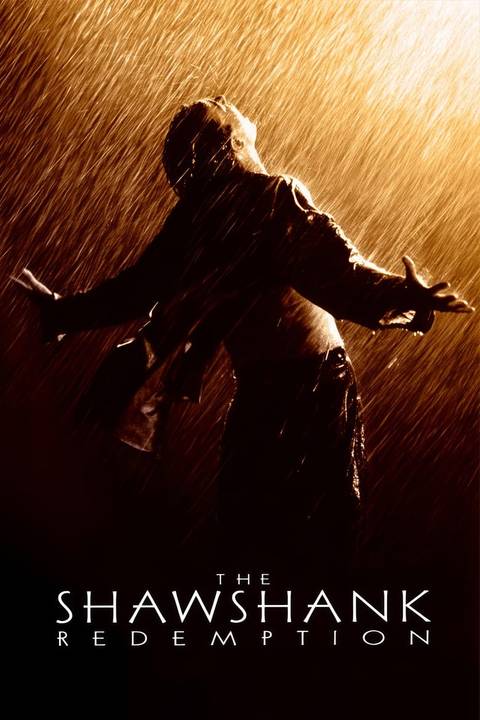
A different novella from Different Seasons than The Body, Rita Hayworth and Shawshank Redemption is another one that’s somewhat difficult to distance from the movie adaptation, and it is, once more, one with an altered title: The Shawshank Redemption. That is easily one of the best movies of all time, because of course it is, so the following claim can’t be made lightly, but Rita Hayworth and Shawshank Redemption is just as good a novella as The Shawshank Redemption is a movie.
It is very close to being better, and with a movie that’s perfect… actually, does that work? Better than perfect? Somehow, yes. This is about two men surviving inside a brutal prison, and then a lot of other things thematically speaking, with it being a broad sort of drama that feels hard to resist emotionally. The idea of someone reading this and not being (at the very least) a little moved feels basically impossible to fathom.
The Shawshank Redemption
- Release Date
- September 23, 1994
- Runtime
- 142 minutes
- Director
- Frank Darabont
- Writers
- Frank Darabont
KioskNews shows a cleaned-up reading view extracted from the publisher’s page — the original always lives on their site, not ours.