64 Years Later, John Wayne’s Classic War Movie Still Has the Greatest Quote

Molly DeCastro is a New York-based emerging film and entertainment journalist with a personal passion for poetic prose and impactful storytelling. She graduated from Pace University with a degree in English and a concentration in creative writing. While film analysis is at the heart of her work, she is especially interested in exploring cinema through an anthropological lens and in examining how creative themes reflect cultural identity. She aims to forge a deep connection between audiences and film through thoughtful and evocative writing.
She also enjoys keeping up with all things film! That means specializing in industry news, emerging directors, and stand-out projects.
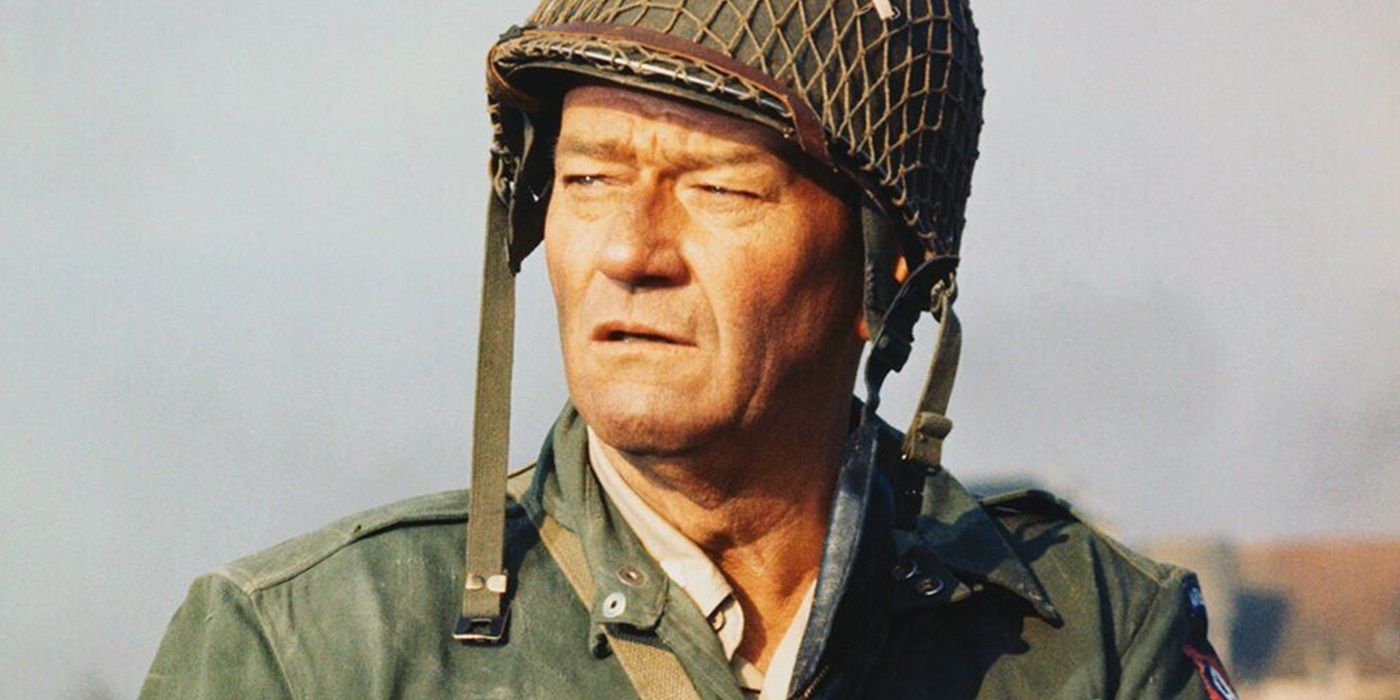
There are hundreds, if not thousands, of films depicting the gut-wrenching peril and horror of war. But there’s only one that can claim its rightful throne as the film that saved 20th Century Fox from complete financial ruin. The 1962 epic starring John Wayne, The Longest Day, captures the cinema icon as Lieutenant Colonel Benjamin Vandervoort, a real-life paratrooper in the 82nd Airborne Division during the D-Day invasion. Despite the heavy criticism from audiences regarding the historical accuracy of the film, half a century and some change later, one quote still rings particularly loud in the ears of fans and critics alike.
Interestingly, the film did not have one sole director. In fact, it had three: Ken Annakin, Andrew Marton, and Bernhard Wicki. Additionally, two more uncredited directors jumped on the project for extended scenes: Daryl F. Zanuck and Gerd Oswald. In many cases, this would result in a "too many cooks in the kitchen", chopped-up, amalgamation of ideas thrown on a silver screen. But against all odds, the group created one of the more influential movies of the time, including a specific moment in particular.
The Context and The Unforgettable Moment in 'The Longest Day'

Firstly, the immense thought and care put into the premise of this film is certainly worth noting. This story is the result of Cornelius Ryan's nonfiction recounting of the D-Day invasion of Normandy, France. Through conducting extensive interviews with more than three hundred soldiers and officers who were present on that fateful day, as well as closely studied reports, personal diaries, and public records, Ryan built this story brick by brick. Interestingly, the film captures the perspectives of both the British and French forces, expressing emotional and physical commonalities that cross enemy lines. This choice highlights the inhumane absurdity of war,
So where does the quote come in? A flight officer, David Campbell, played by Richard Burton, says the infamous line in the brutal aftermath of D-Day. He was shot down, nearly fatally injured. His leg was held together with safety pins, an inarguable death sentence on the battlefield. He stands over the body of a German soldier, one he killed. At this moment, two innocent men forced into the horrific brutal nonsense of war both fall victim to the consequences in different ways. One dead, the other a killer, each irrevocably changed.
Later, Dutch Schultz, played by Richard Beymer, an American paratrooper left to his own devices, wandering far off from his unit, arrives on the scene. He hasn't fired a single weapon, a feat almost nobody else can say they achieved. They talk, Schultz noting that night is falling, and he keeps hearing gunfire, yet he always somehow shows up after the fighting is over. Thus leading Campbell, overcome with the sudden awareness of the tragic horror of war, to say the iconic line: “He’s dead. I’m crippled. You’re lost. Do you suppose it’s always like that? I mean war.” This quote highlights the humbling reality that, in war, there are truly no winners. Nobody leaves unscathed, and more often than not, no battle is worth forcing innocent men to murder each other. There are plenty of war movies out there, but hardly any that tackle the reality of war in such a poignant and accurate way.

- Release Date
- October 4, 1962
- Runtime
- 178 minutes
- Director
- Andrew Marton, Bernhard Wicki, Ken Annakin
- Writers
- Cornelius Ryan, David Pursall, Jack Seddon, James Jones, Romain Gary
- Producers
- Darryl F. Zanuck
-

Henry Fonda
Brig. Gen. Theodore Roosevelt Jr.
-

Lt. Col. Benjamin Vandervoort
KioskNews shows a cleaned-up reading view extracted from the publisher’s page — the original always lives on their site, not ours.