Walking with Lucy, the fossil, into the future
A long-cherished desire to visit Ethiopia — the land of origins — finally came true. My curiosity about the country had been brewing for years, fuelled by two of Ethiopia’s most celebrated contributions to humanity: Lucy, the 3.2-million-year-old hominin fossil that helped rewrite the story of human evolution, and coffee, the magical energy bean that, according to legend, was discovered by a goat herder named Kaldi after he noticed his goats behaving as if they had consumed several espressos too many.
In fact, there was a third attraction as well: injera, Ethiopia’s beloved spongy flatbread. I was struck by its uncanny resemblance to dosa. The promise of tracing humanity’s origins, understanding the birthplace of coffee, and comparing injera with dosa added both flavour and energy to my curiosity long before I boarded the flight to Addis Ababa.
I arrived in Ethiopia carrying three stereotypes and an empty stomach. The stereotypes were Lucy, coffee, and injera. The empty stomach was quickly taken care of with enough of coffee to keep a small nation awake and had a taste of injera spongy and sour enough to make me forget dosa. But Lucy remained elusive.
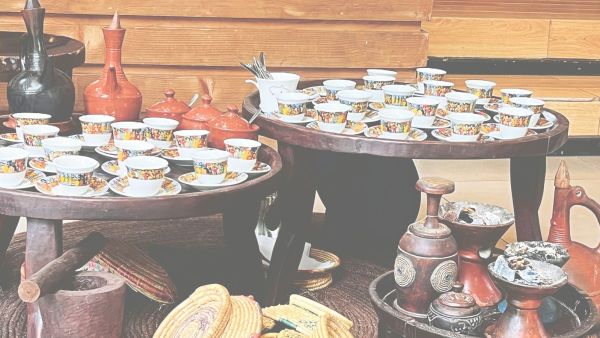 Ethiopia’s coffee culture (Image Source: Kishore Singh)
Long before Ethiopia, I knew Lucy as a fossil in a textbook — the 1974 skeleton that rewrote human evolution. She proved our ancestors walked upright millions of years before they were smart enough to invent traffic jams, luxury apartments or PowerPoint presentations on urban transformation.
Her discovery placed Ethiopia at the centre of the search for human origins. Scholars stopped looking at the country and started looking to it — a cradle of humanity, its Rift Valley sediments holding proof that every human story, whatever the race, nationality, or religion, traces back to this same dry earth.
If Lucy helped explain where humanity came from, coffee helped humanity stay awake long enough to think about it.
Few countries have given the world a gift as transformative as coffee. Originating in the highlands of Ethiopia, coffee has travelled farther than any Ethiopian ambassador could have imagined. From the cafés of Paris to the boardrooms of New York, from university libraries to roadside tea stalls that now serve coffee as well, billions of cups are consumed every day. It fuels conversations, commerce, creativity, and occasionally the illusion that deadlines are manageable.
Yet for Ethiopia, coffee is much more than a beverage. The rituals surrounding buna (coffee) in traditional Ethiopian homes makes it more than a beverage. The slow roasting of green beans, the wafting aroma, the careful brewing, and the unhurried conversations that accompany each cup transform coffee into a social institution. In Ethiopia, coffee is identity, culture, hospitality, and economy rolled into a single bean. It connects farmers to global markets, neighbours to one another, and the present generation to centuries of tradition. But the irony is that while the world runs on Ethiopian coffee, many coffee-growing communities continue to struggle with poverty, volatile global prices, and limited economic opportunities. The bean that energises the world does not always generate equivalent prosperity for those who grow it.
But beneath this glittering narrative lies another story.
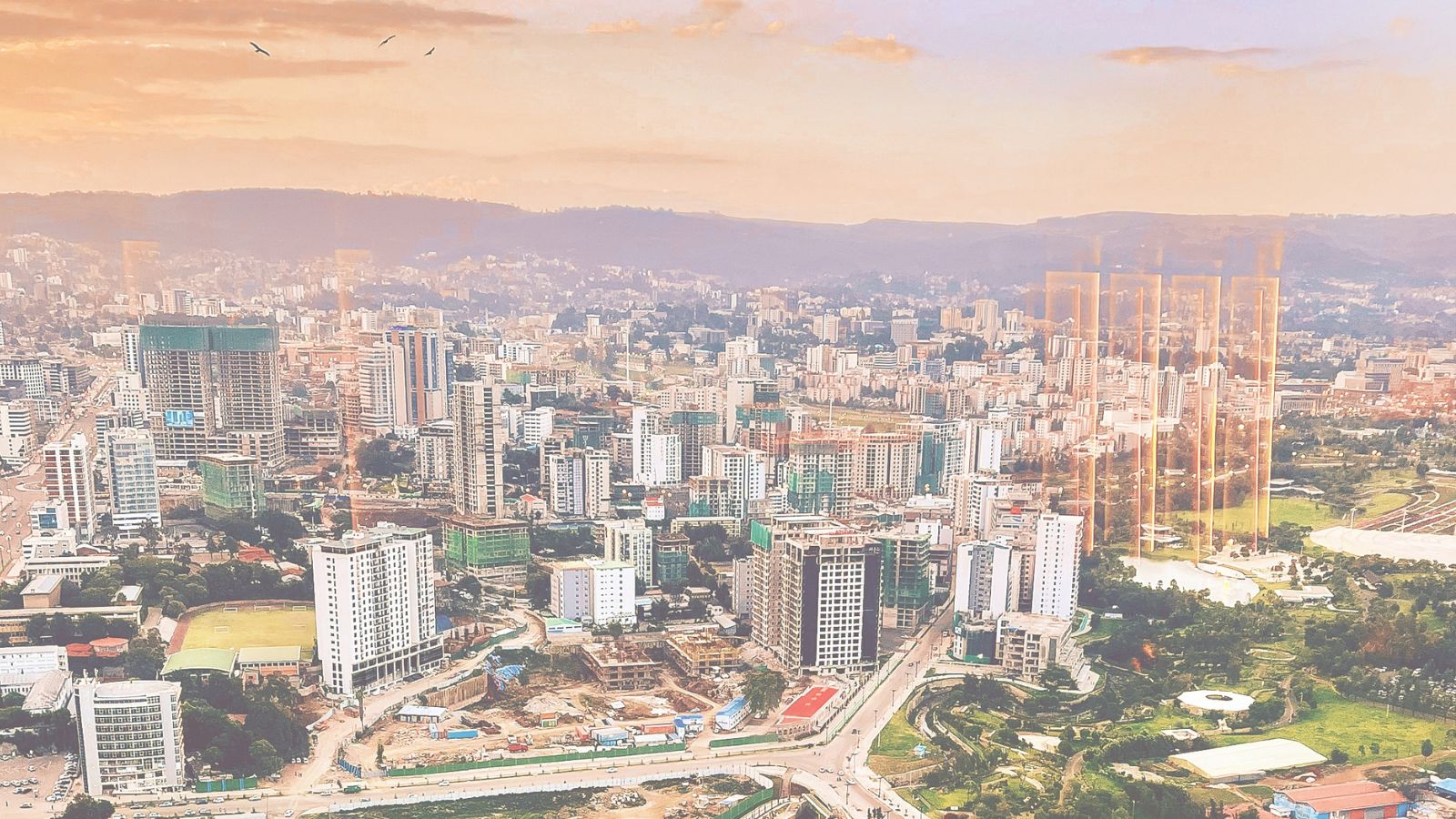
No visitor to Ethiopia today can miss the Corridor Development Project. Roads widen, flyovers soar, glass towers pierce the skyline, and construction cranes appear so often they might as well be the national bird. There is dust, cement, drilling, demolishing, widening, beautifying, modernising, and, above all, inaugurating. The city carries itself with the confidence of a place that knows it’s being watched: skylines rising almost overnight, development is celebrated through concrete, steel, and spectacle. New skylines are emerging almost overnight.
Walking through Ethiopia today, one encounters a striking paradox. One wonders what Lucy would make of the place today. She would probably be impressed by the roads. After all, walking was her thing.
At first, like many visitors, I was impressed. But as I spent more time observing the city and taking to people, another reality began to emerge. I could not ignore the quieter stories unfolding behind freshly laid boulevards and landscaped public spaces. Taxi drivers pointed to neighbourhoods that had disappeared. Urban workers spoke of long commutes from the city’s edge. Small businesses that once animated familiar streets had vanished.
The corridor project captures the central dilemma of contemporary Ethiopia. It asks a question that many rapidly developing societies confront: Who is the city being built for? The answer is not simple. The new infrastructure is real. The benefits are real. But so too are the anxieties of those who feel that, in the rush toward the future, their place within it has become uncertain.
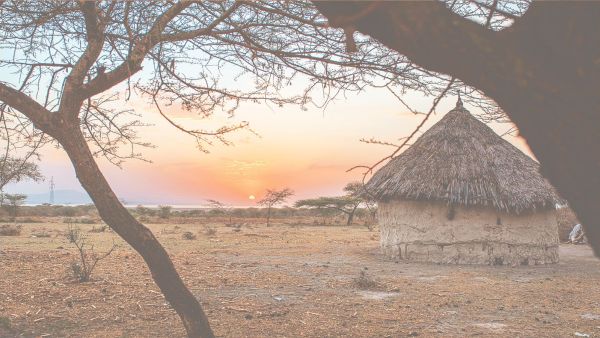 A traditional conical structure (Image Source: Getty Images)
The people who physically build the city — carrying stones, mixing cement, erecting towers — often find themselves excluded from the spaces they create. As land values rise, traditional neighbourhoods disappear and informal workers and residents are displaced. The closer the city moves toward its dream of modernity, the further ordinary people are pushed from it. A city cannot be judged by its infrastructure alone, but by whether the people who build and populate it can belong to it.
The irony is hard to ignore. Lucy’s discovery reminded the world that human history is ultimately a story about people, communities, adaptation, and survival — that Ethiopia’s contribution to humanity rested not on monuments but on memory embedded in the landscape. In this sense, Lucy has become more than a fossil; she has become a metaphor.
One wonders whether a society risks losing something essential when development becomes detached from the people it is supposed to serve.
Three million years ago, Lucy walked these lands searching for survival.
Today, millions of Ethiopians are walking through cities searching for something just as important: a place within the future they are helping to build.
[The author, who retired from the ILO’s Regional Office for Arab States in Beirut, writes on travel, social development and the human side of global change]
KioskNews shows a cleaned-up reading view extracted from the publisher’s page — the original always lives on their site, not ours.