"Integrate With Us On Mission Mode": Navy Chief To Skyroot At NDTV Summit
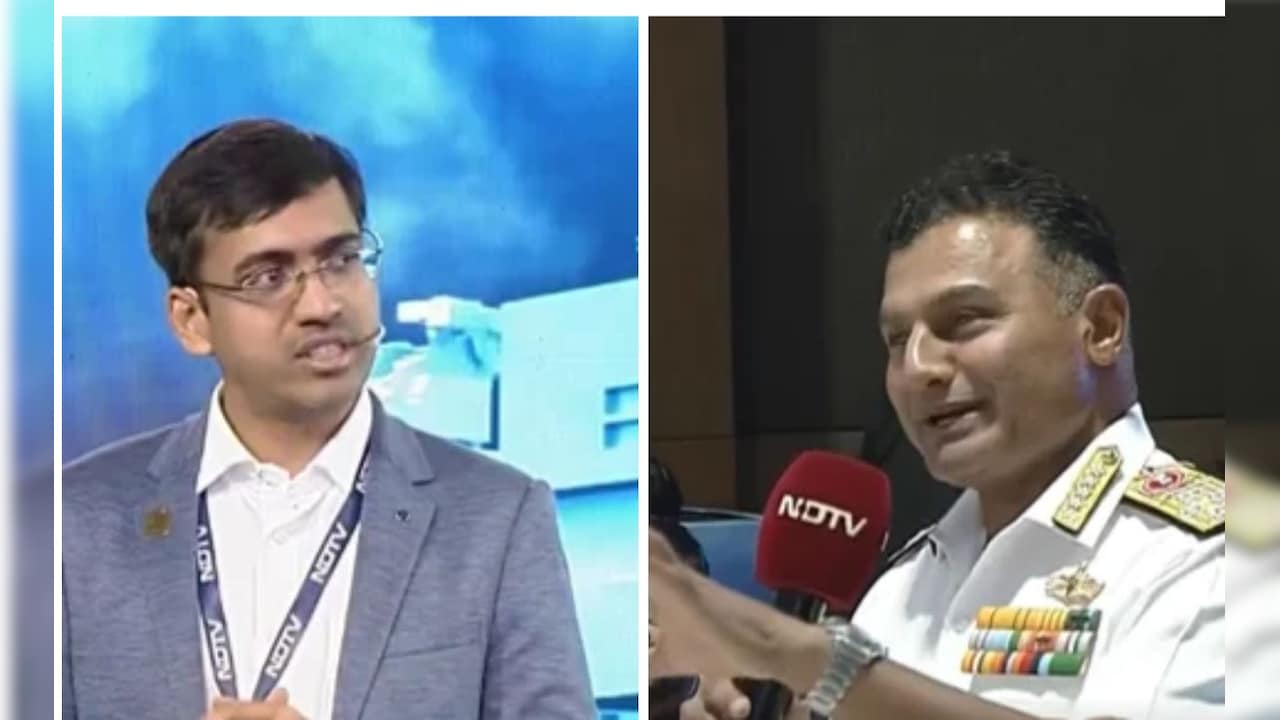
Indian Navy chief Vice Admiral Krishna Swaminathan has invited private space technology start-up Skyroot Aerospace to collaborate in "mission mode" to understand the defense-specific requirements in the country and help develop world-class, sovereign space capabilities over the next 20-25 years.
Speaking to Skyroot chief Pawan Kumar Chandana at the NDTV defence Summit, Vice Admiral Swaminathan said the Indian navy relies heavily on space technologies for surveillance, targeting, and weapon sensor fusion. He emphasized the need to integrate with domestic space players, saying in future, the Navy will operate in a "very complex technological environment".
"So, what we would like you to do is please come and interact with us, integrate with us, understand us better, understand the peculiar requirements of the Indian defense forces," he said.
"We request you to please integrate with us on a mission mode, understand our requirements, and make us world beaters in the next 20 or 25 years," he added.
About India's reliance on foreign providers for battle damage assessment imagery -- the most recent instance being Operation Sindoor, both Swaminathan and Chandana stressed on the importance of self-reliance, domestic data ownership, and classified security operations.
In a situation where everything is classified, working with domestic firms will ensure confidentiality and help the Navy to discuss matters more freely, the Navy chief said.
"We want Indian players to become global leaders, spread space, spread themselves everywhere, get the capacities, the capabilities to serve the Indian Defence Forces and the Indian industry," he said.
"There's a huge requirement of space-based resources, and I think we need to scale up. We need to scale up in technologies, in numbers, in persuasiveness, in persistence and in availability, reliability, analysis, all of that," he added.
Asked what was Skyroot's plans for the defence sector, Chandana said he saw one study that said there are 10 times more satellites funded than the launches available. The situation has been made worse by SpaceX's recent announcement that they are going to wind down their vehicle.
So with 50 per cent of the cases being sovereign requirements, including defense capability, Skyroot has new requirements to launch every month.
Now with India planning to launch a large constellation of 52 satellites, Chandana said he is hopeful that some of the launches could be handled by Skyroot.
KioskNews shows a cleaned-up reading view extracted from the publisher’s page — the original always lives on their site, not ours.