The nightmare of the 1992 election is coming back to haunt Netanyahu
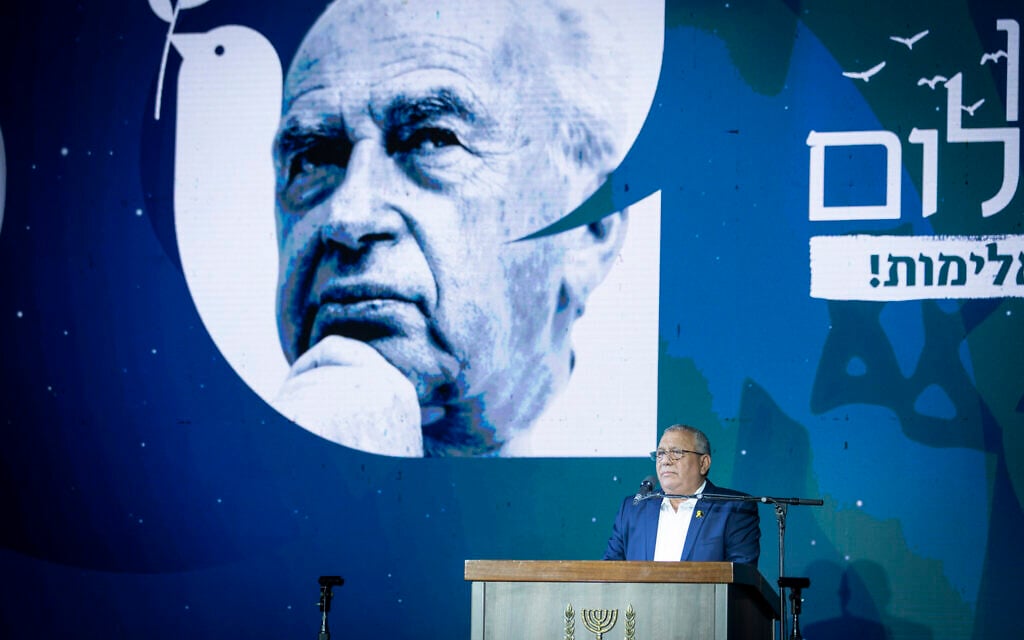
Over the past few days, daily life within the Likud party has revolved around allegations of primary fraud, double-counting, recounts, grave claims of institutional corruption, complaints to the police, proceedings before internal party tribunals, and mutual accusations that are sometimes difficult to stomach.
It all looks like a direct continuation of events that preceded the primary, when Prime Minister Benjamin Netanyahu and senior Likud figures were caught up in an extraordinary bout of political wheeling and dealing. That effort was aimed at undermining the democratic character of the internal elections and dictating the party slate from above through a system of backroom horse-trading.
Science and Technology Minister Gila Gamliel, who is now fighting for her political life amid efforts to push her down the slate, gave a vivid description of the rot inside the ruling party in an interview with the Kan Bet radio station.
Promoted: Sheba saved Shon's lifeKeep WatchingSkip Ad
“They are stealing the internal elections,” she said. “Minister Haim Katz is determined to get Eti Atia into the next Knesset at all costs. First it was an appointments committee, then the [fight over] districts, then deals designed to put only her in at the expense of other women.”
Likud MK Atia previously served as Katz’s chief of staff at the Israel Aerospace Industries union and remains his most loyal political proxy. Gamliel was referring to the various procedural maneuvers Katz allegedly deployed to guarantee Atia a safe seat on the Likud slate – from attempting to use a closed organizing committee to bypass primary voters entirely, to manipulating regional district slots, to ultimately brokering backdoor deals that edged out rival female candidates competing for the party’s reserved spots for women.
Get The Times of Israel's Daily Edition by email and never miss our top stories
By signing up, you agree to the terms
Gamliel is now protesting the decision to conduct a recount at two polling stations in Be’er Yaakov, after which she fell from a potentially realistic 25th place to an unrealistic 35th on Likud’s Knesset slate, and Atia took her spot. As far as Gamliel is concerned, it was outright fraud.
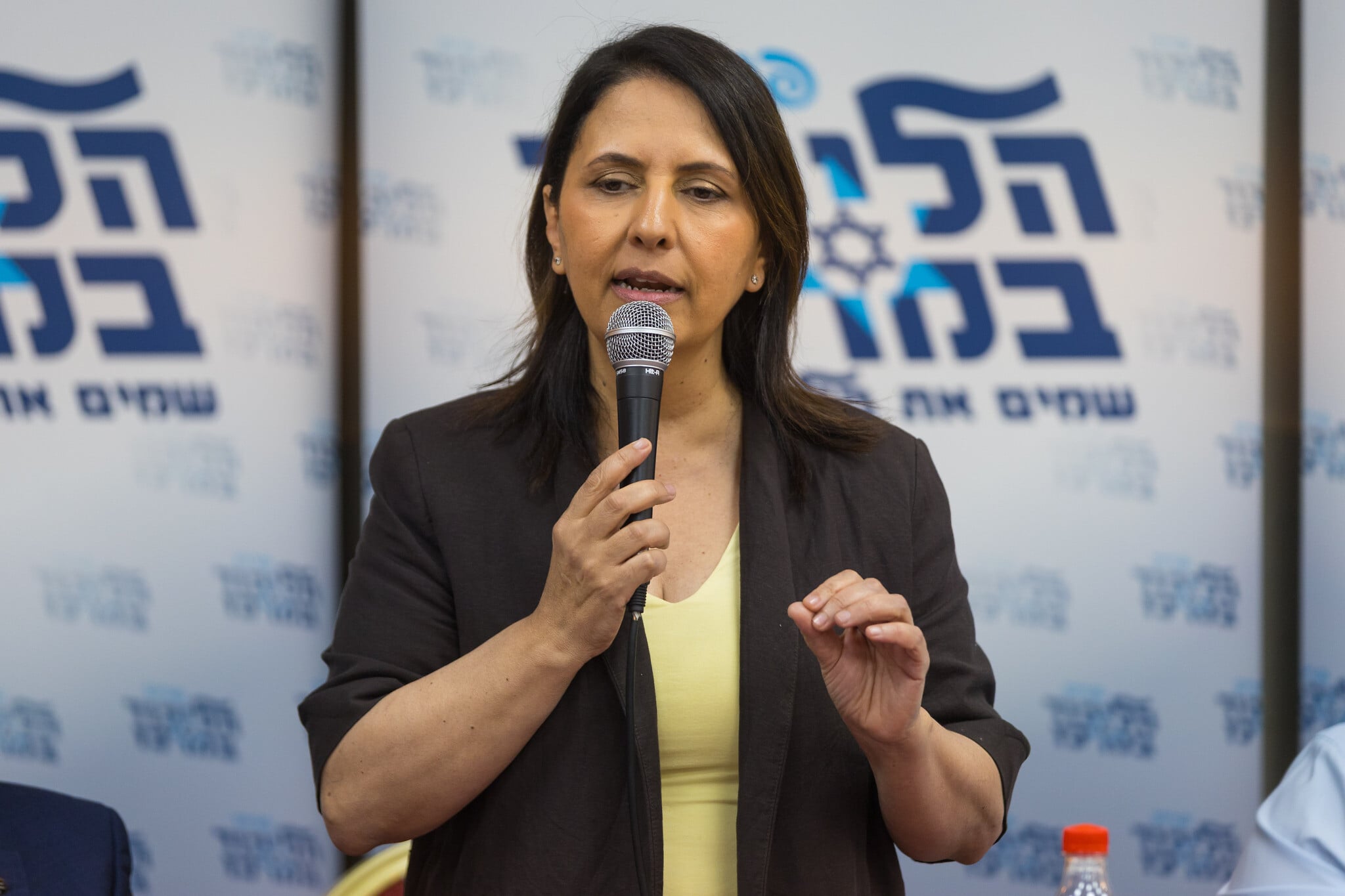
“There is a gap of 600 votes between me and Atia,” Gamliel noted. “Haim Katz chose a specific polling station and brought in a company that found different results there. A lot of things were changed. This is corruption and an attempt to steal ballot boxes. The company he brought in also works with Israel Aerospace Industries.”
Katz is not just a cabinet minister; for two decades, he served as the powerful head of the IAI workers’ union. By mass-registering thousands of union members into Likud, he engineered a massive, organized voting bloc, transforming himself into one of the party’s supreme “vote contractors” capable of making or breaking political careers.

“In Likud, people are afraid to talk about these methods,” Gamliel continued. “We are a democratic movement, and they are intimidating IAI employees. This requires a police investigation. I demand justice. Ballot boxes disappeared here for eight days, internal changes were made, and 170 votes were added for Eti Atia. We are witnessing a hostile takeover.”
Katz responded by directing Gamliel to the police. “If anyone has complaints, here is the address: Ofek Park, 1 Pesach Lev Street, Lod,” Katz said, giving the location of the Lahav 433 national crime unit’s headquarters. He knows the address quite well, having been questioned there for many hours in 2017 on suspicion of corruption at the IAI.

Echoes of a previous fall from power
The broader developments in this election campaign, and within Likud in particular, are a near replica of the events preceding the June 1992 Knesset election, when the party lost power 15 years after its historic 1977 upset victory.
In November 1991, following the Gulf War – during which Israel absorbed Iraqi Scud missile attacks while demonstrating strategic restraint – and the Madrid Conference, as well as an unprecedented US-backed peace summit that brought Israel to the negotiating table with Arab and Palestinian delegations for the first time, Likud soared to nearly 50 seats in opinion polls while Labor, the leading opposition party, sank to just 22.
Then, the collapse began.
At the end of 1991 and the beginning of 1992, the Tehiya, Tzomet, and Moledet parties bolted the government and the coalition over the Madrid Conference, driven by the sense that Israel was negotiating there with the PLO and submitting to Arab and Palestinian dictates.
That historic withdrawal by the right-wing factions is still feeding Netanyahu’s anxieties today, as he made clear in a video released this week following the launch of Ofer Winter’s new right-wing party, People of Israel.
“In the right-wing government of 1992, people were angry at [then-prime minister Yitzhak] Shamir for all kinds of reasons and formed parties to the right of the right. Some of them failed to cross the electoral threshold, and the left came to power,” Netanyahu warned in a video posted on his social media accounts on Monday.
Prime Minister Benjamin Netanyahu addresses voting for new and small right-wing parties in a video posted on his official Telegram account on August 24, 2026 (Video in Hebrew, with English subtitles added by ToI)
“Splinter parties on the right brought down the right-wing government,” Netanyahu continued. “We must not create splinter parties that will only burn our votes, bring the left to power, and allow Gadi Eisenkot, Yair Golan, and Mansour Abbas to hold a fire sale of the country. Those splinter parties will disappear without a trace. We must not vote for them.”
But it was not only the splinter factions on the right. Likud lost power in the June 1992 election for other reasons as well.
In February 1992, the Labor Party embraced the Direct Election Law – a sweeping electoral reform that would allow citizens to vote directly for the prime minister on a separate ballot from their party vote, which at the time was seen as a major political innovation. The Likud Central Committee rejected the law, contrary to Netanyahu’s own position at the time.
That same month, Yitzhak Rabin defeated Shimon Peres in a hard-fought Labor primary. Rabin enjoyed broad public popularity at the time, serving as the ultimate antithesis to the disgraceful political horse-trading and turmoil that were simultaneously erupting within the Likud Central Committee.
In Likud’s leadership election, Yitzhak Shamir defeated Ariel Sharon and David Levy, with Levy plummeting to 19th place on the party slate. In March 1992, Levy resigned as foreign minister and fumed that Likud treated him and his supporters “like a monkey that came down from the trees.” No less.
This was not just a bizarre personal grievance. The Moroccan-born Levy was the ultimate political symbol of Likud’s working-class Sephardic and Mizrahi base. His “monkey” comment tapped into explosive ethnic tensions, highlighting how the Ashkenazi Likud elite was alienating the very voters who had brought them to power – a demographic rift that directly fueled their June 1992 defeat.
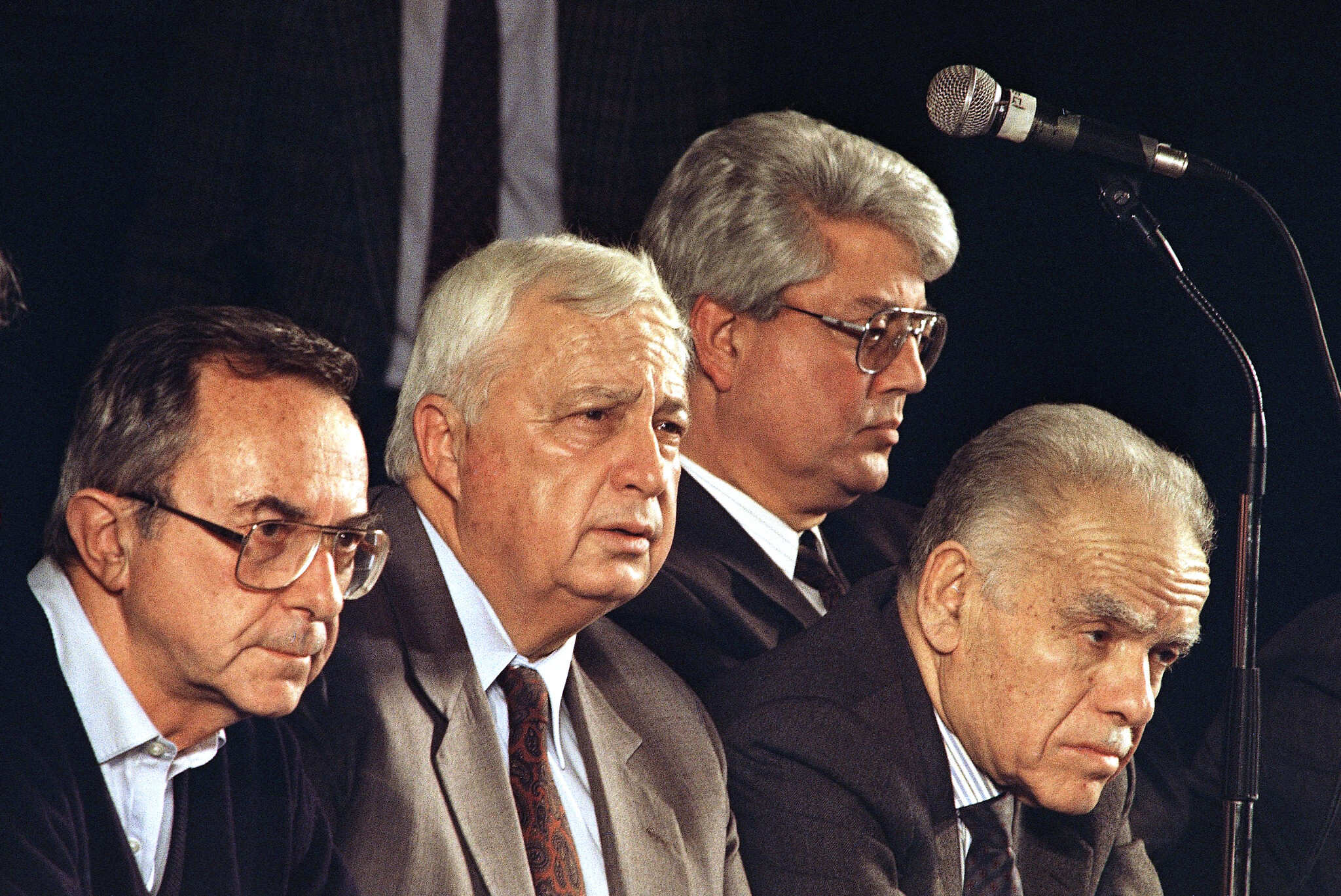
Labor, meanwhile, for the first time held primaries for its Knesset slate and managed to present the public with a new democratic system, featuring new candidates from the geographic periphery who secured realistic positions on the ticket. As a result of all these developments, Likud continued to bleed support in the polls against Labor.
In April 1992, a report by State Comptroller Miriam Ben-Porat effectively decided the election. The report exposed widespread corruption in the Housing Ministry, then controlled by Ariel Sharon and his allies. It also addressed the Likud Central Committee, which had acquired the unsavory nickname “the contractors’ central committee.”
A series of press investigations revealed how Central Committee members were snatching up government tenders and construction permits. The political rot once associated with the historic Mapai party, the predecessor to Labor, had firmly attached itself to Likud.

For Israelis, comparing Likud to Mapai – Israel’s founding socialist party that ruled uninterrupted for three decades and became synonymous with institutionalized cronyism – is the ultimate political insult. It signaled that Likud had become the exact bloated, corrupt establishment it had originally sworn to dismantle.
Nowadays, corrupt conduct has become emblematic of government ministries. A prime minister is standing trial, while ministers and Knesset members are investigated with exhausting regularity. Gamliel and others are providing insider testimony about exactly what happens at the Likud convention and how political fates are decided there.
Following the state comptroller’s report in 1992, Likud fell further and ultimately won 32 seats in the election, a punishing loss of eight seats. Labor rose from 39 to 44 seats and took power.
No one is explicitly saying that the same result will necessarily repeat itself in this election, but the glaring similarities between the events so far are keeping Netanyahu awake at night. He may also see Eisenkot as a Rabin-like figure – the leading candidate of the center-left bloc who is also a former IDF chief of staff and a man of integrity enjoying broad public support.
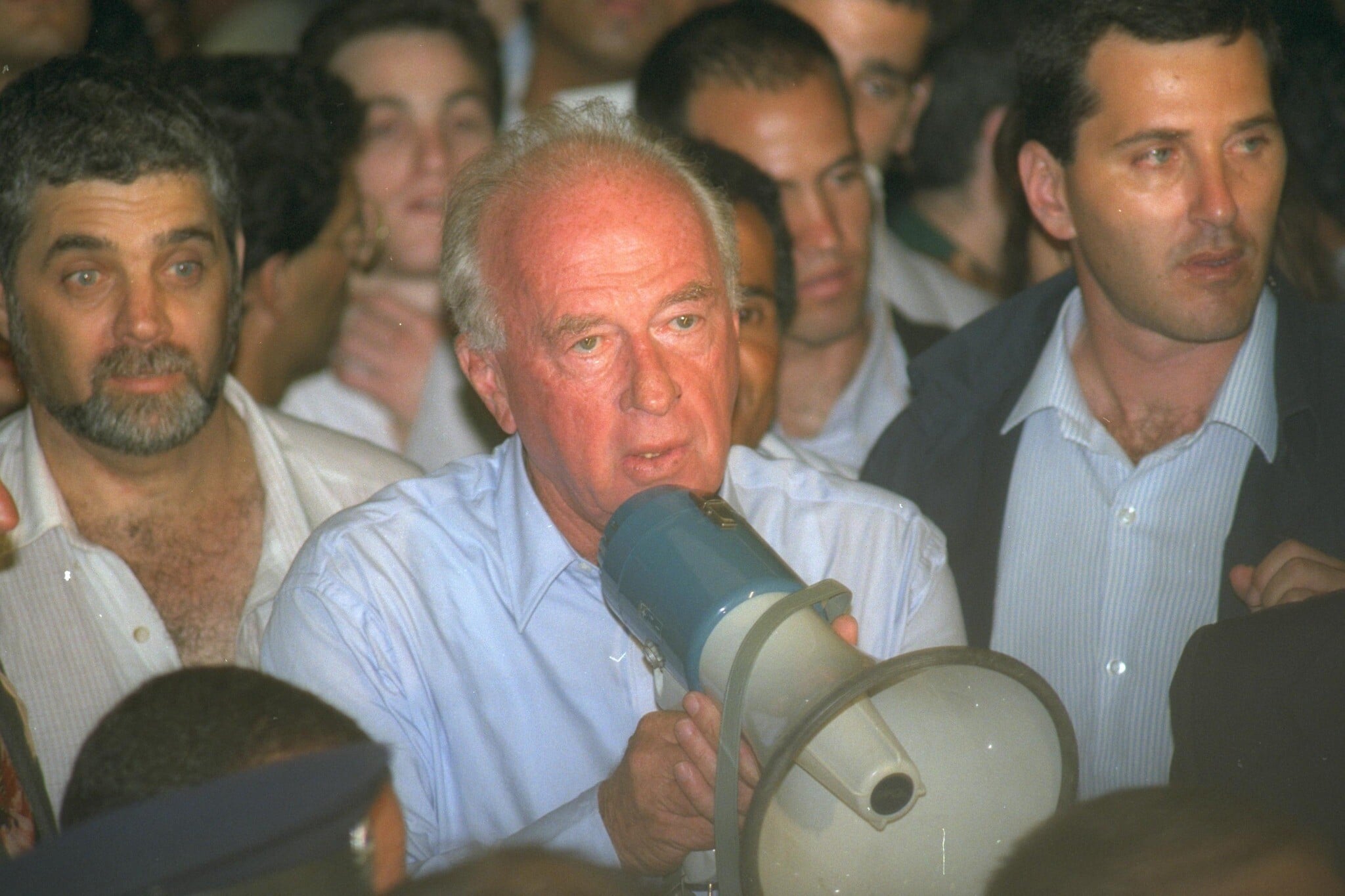
Incidentally, Rabin only narrowly won the 1992 election, subsequently assembling a blocking coalition against Likud, the other right-wing parties, and the ultra-Orthodox factions. That blocking alliance consisted of Labor with 44 seats, Meretz with 12, and the outside support of five Arab Knesset members. Altogether, it secured 61 of 120 seats.
Relying on Arab non-Zionist parties to form a government remains one of the most radioactive, heavily weaponized taboos in Israeli politics today. Netanyahu has spent the last decade aggressively delegitimizing center-left coalitions by warning they will rely on Arab factions, making the 1992 parallel his ultimate political nightmare.
Shas, the most pragmatic of the ultra-Orthodox factions in 1992, quickly joined the Rabin coalition, giving it stability. Rabin successfully presented his government to the Knesset on July 13, 1992, just three weeks after the elections.
KioskNews shows a cleaned-up reading view extracted from the publisher’s page — the original always lives on their site, not ours.