Xi Jinping demands ‘safer’ China as Communist Party prepares for leadership reshuffle
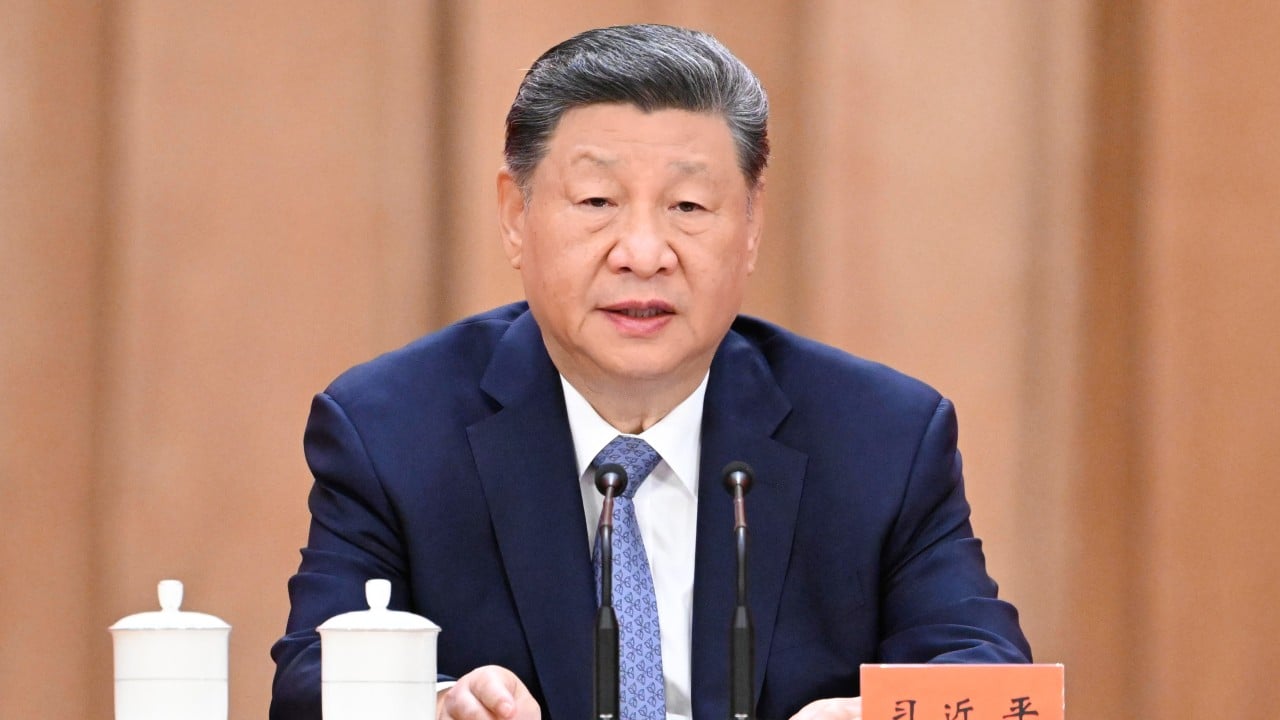
President Xi Jinping has ordered China’s security and legal apparatus to relentlessly eliminate risks and build a “safer” country a year ahead of the pivotal 21st Communist Party congress, which will usher in a major leadership reshuffle.
The latest instruction, published by state news agency Xinhua on Monday night, is also the Chinese leader’s first major domestic directive since his state visit to Washington last week, signalling a pivot back to the domestic agenda – especially stability.
In a written directive relayed at a high-level meeting, Xi said the security and law enforcement apparatus must advance the “Peaceful China Initiative to a higher level” to ensure “steady and sustained progress in China’s modernisation”. The initiative was first launched in 2013 with the goal of reducing security risks by mobilising all the country’s resources.
These bodies must “prevent and defuse various risks” by addressing both symptoms and causes, Xi instructed. He urged officials to improve grass-roots governance, strengthen rule-of-law frameworks, and rely more on “technological empowerment” to maintain social order and mitigate potential unrest.
The ultimate goal, according to Xi, is to achieve continuous visible progress in four key metrics: making the country more secure, society more orderly, governance more effective, and the people more satisfied.
Xi hailed the security apparatus for its steadfast work since he took the helm at the 18th party congress in 2012, asserting that under his leadership, the nation had become “one of the safest countries in the world”.
The instructions arrive at a critical domestic political juncture, as the Communist Party lays the groundwork for a seamless political transition at the national party congress, where a new leadership line-up will be unveiled.
The ruling party is expected to convene its fifth plenary session at the end of next month, when the party will endorse “Xi Jinping Thought on Party Building” – a new branch of the leader’s political thought focused on improving party governance.
China’s top security official Chen Wenqing, a Politburo member and head of the party’s powerful Central Political and Legal Affairs Commission, ordered his subordinates to “unswervingly implement” Xi’s instructions.
He said the security system must “combine punishment with prevention, address both symptoms and causes, ensure coordinated efforts and synergy”, and strive to realise Xi’s security goals.
Public Security Minister Wang Xiaohong also pledged to anchor the ministry’s work to the president’s new goals. Wang stressed the need to strengthen grass-roots policing and innovate law enforcement methods to maintain an iron grip on stability.
Monday’s top-level gathering was attended by senior officials of the country’s law enforcement, judicial and security apparatus, including Zhang Jun, president of the Supreme People’s Court, and Supreme People’s Procuratorate head Ying Yong, according to Xinhua.
Security has been one of Beijing’s top priorities in recent years as China continues to navigate complex domestic headwinds, including structural economic disruptions by AI, an ageing population and sluggish domestic consumption.
In July, China officially launched a year-long intensive campaign to deepen a crackdown on organised crime and “evil forces”, specifically targeting new forms of crime that use online platforms.
KioskNews shows a cleaned-up reading view extracted from the publisher’s page — the original always lives on their site, not ours.