10 Greatest Action Thriller Movies Set In Skyscrapers, Ranked
Action thrillers thrive on confinement, making a single skyscraper and endlessly adaptable location. While sprawling cities, remote islands, and speeding trains have all provided memorable action thriller battlegrounds, few settings create tension as effectively as a skyscraper. Hundreds of feet above the ground, escape routes become limited, every window becomes a hazard, and entire floors can transform into combat zones.
A great skyscraper thriller turns architecture into an active participant in the story, forcing heroes and villains to navigate elevators, stairwells, maintenance shafts, and unfinished construction sites as danger closes in from every direction. The disaster movies of the 1970s emphasized humanity's vulnerability inside increasingly ambitious architectural marvels.
Later action films transformed high-rises into vertical playgrounds where lone heroes fought impossible odds. More recent entries have used apartment towers and mega-complexes to create claustrophobic arenas for brutal close-quarters combat and survival horror. The best examples understand that the building itself is often as important as the characters occupying it.
This list focuses on action thrillers where the skyscraper, tower block, or high-rise is central to the narrative rather than merely a backdrop for a handful of scenes. Ranging from disaster epics and dystopian shootouts to martial arts masterpieces and one of the most influential action movies ever made, these films suggest that sometimes the most exciting adventures happen when characters have nowhere to go but up.
The Tower (2012)

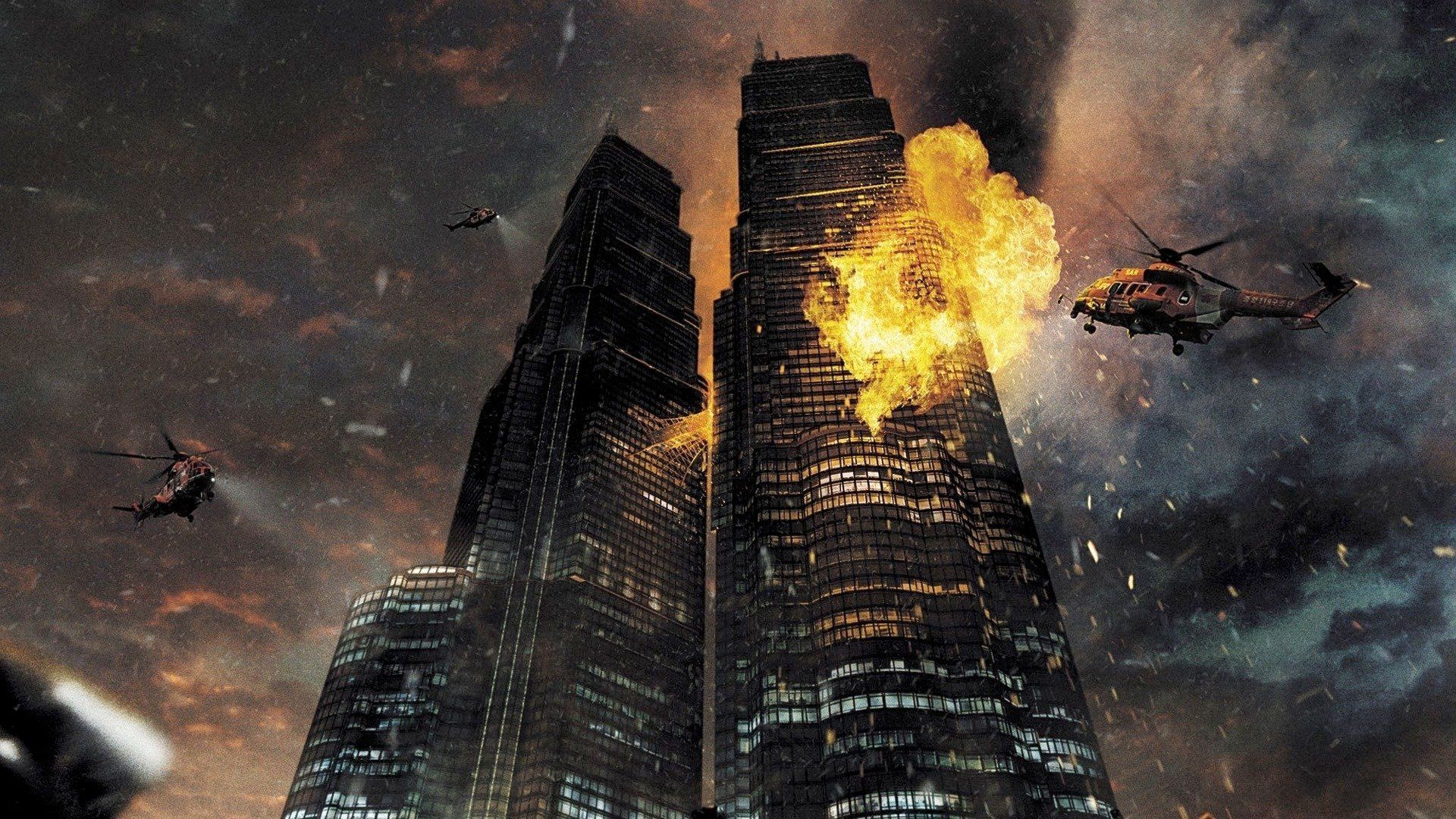
South Korean disaster blockbuster The Tower effortlessly combines large-scale spectacle with surprisingly effective human drama. Set on Christmas Eve inside the luxurious Tower Sky complex in Seoul, it follows the residents, employees, and emergency responders trapped when a fire rapidly spreads throughout the building.
Director Kim Ji-hoon clearly draws inspiration from classic disaster cinema, but he updates the formula with modern visual effects and a stronger emphasis on interconnected character stories. It constantly shifts between different floors and groups of survivors, creating the sense that an entire vertical city is collapsing around them.
The Tower’s action sequences are large enough to feel genuinely overwhelming, yet it never loses sight of the ordinary people trapped inside the inferno. The Tower may not have the genre-defining influence of higher-ranked entries, but as a skyscraper survival thriller, it delivers both scale and emotional investment.
Lockdown Tower (2022)

Lockdown Tower stands out because it approaches the skyscraper thriller from a distinctly dystopian angle. Guillaume Nicloux's French film (released as La Tour) begins with the residents of a tower block awakening to find their building completely sealed off by a mysterious black barrier.
Rather than relying on a single villain or large-scale action spectacle, Lockdown Tower generates tension through the gradual collapse of order. As supplies become scarce and communication with the outside world disappears, the tower's residents form competing groups and fight for control of limited resources.
Lockdown Tower ranks below the genre's true classics because its pacing is uneven, and it lacks the iconic action sequences of higher entries. However, its clever use of confinement, escalating paranoia, and bleak atmosphere make it one of the more memorable modern skyscraper thrillers.

Dwayne Johnson's Skyscraper embraces the "Die Hard in a giant building" comparison and delivers exactly the kind of crowd-pleasing spectacle audiences expect. Johnson plays former FBI hostage rescue specialist Will Sawyer, who must save his family after criminals set the world's tallest building ablaze.
Skyscraper's greatest strength is its setting. The Pearl is an enormous futuristic mega-structure packed with observation decks, cutting-edge technology, and dizzying heights. Several sequences make particularly effective use of verticality, especially Sawyer's attempts to enter the burning tower from the outside.
Skyscraper understands that audiences want impossible stunts and delivers them with confidence. It may not reinvent the genre, but it succeeds as a modern blockbuster interpretation of classic skyscraper-action formulas. Few recent films have made such enthusiastic use of a high-rise setting.
High-Rise (2015)

Ben Wheatley's adaptation of J.G. Ballard's novel approaches the skyscraper concept from a very different angle. High-Rise transforms a luxury residential tower into a battleground for class warfare and social collapse. Tom Hiddleston stars as Dr. Robert Laing, a newcomer to a futuristic apartment complex where wealth determines which floor residents occupy.
As tensions between different social groups escalate, the building gradually descends into violence, anarchy, and outright madness. While it contains less traditional action than some other entries, High-Rise earns its ranking through atmosphere and imagination.
Wheatley presents the tower as a self-contained society that slowly turns against itself. Elevators become contested territory, communal spaces become war zones, and the building's sleek modern design begins to resemble a prison. Few movies use vertical architecture so effectively as a metaphor for power and social division.
The Towering Inferno (1974)

Few films did more to establish the skyscraper as a cinematic danger zone than The Towering Inferno. The all-star disaster epic follows the opening night of the Glass Tower, the tallest building in the world, as an electrical fire spirals into a catastrophe that threatens hundreds of lives.
Steve McQueen and Paul Newman anchor the film as a fire chief and architect forced to confront the consequences of dangerous shortcuts and engineering failures. Their differing perspectives create compelling drama amid the escalating crisis. However, it’s the scale that remains impressive even decades later.
Practical effects give the inferno genuine weight, and the filmmakers consistently find new ways to exploit the dangers posed by the building's immense height. Many later skyscraper thrillers borrowed heavily from The Towering Inferno's blueprint.
Shivers (1975)

David Cronenberg's Shivers takes the skyscraper thriller in a disturbing direction. Set almost entirely within an upscale apartment complex, it depicts residents who become infected by parasites that trigger violent and uncontrollable impulses. Unlike traditional action thrillers, the danger spreads from within.
Cronenberg uses the building's interconnected design to demonstrate how quickly chaos can consume an isolated community. The apartment tower feels increasingly claustrophobic as the infection spreads floor by floor. Residents who once viewed the building as a symbol of luxury discover they are trapped inside an environment perfectly designed for contagion.
While undeniably more horror-oriented than many films on this list, Shivers is a landmark example of vertical suspense. Its influence can be seen in countless later stories that use high-rise buildings as self-contained ecosystems vulnerable to collapse from within.
Attack The Block (2011)

Attack the Block unleashes vicious extraterrestrial predators on a South London council estate and follows a group of teenagers forced to defend their home turf. The apartment complex becomes an urban battlefield, providing the perfect terrain for ambushes as the residents attempt to outsmart creatures that are faster and stronger than they are.
Attack the Block is particularly notable for making (the oft-maligned) London youths the heroes, rather than the police or highly trained specialists. Their familiarity with the environment becomes their greatest advantage, they understand every corner and how they might use that to save the day.
This flipped the usual script of dangerous London youths loitering in residential tower blocks and intimidating the locals. Now they are courageous heroes armed with insider knowledge, fiercely protecting their home and neighbors. While other entries feature larger explosions or more elaborate set pieces, Attack the Block earns its ranking through creativity and a fresh approach to the skyscraper thriller formula.
Dredd (2012)
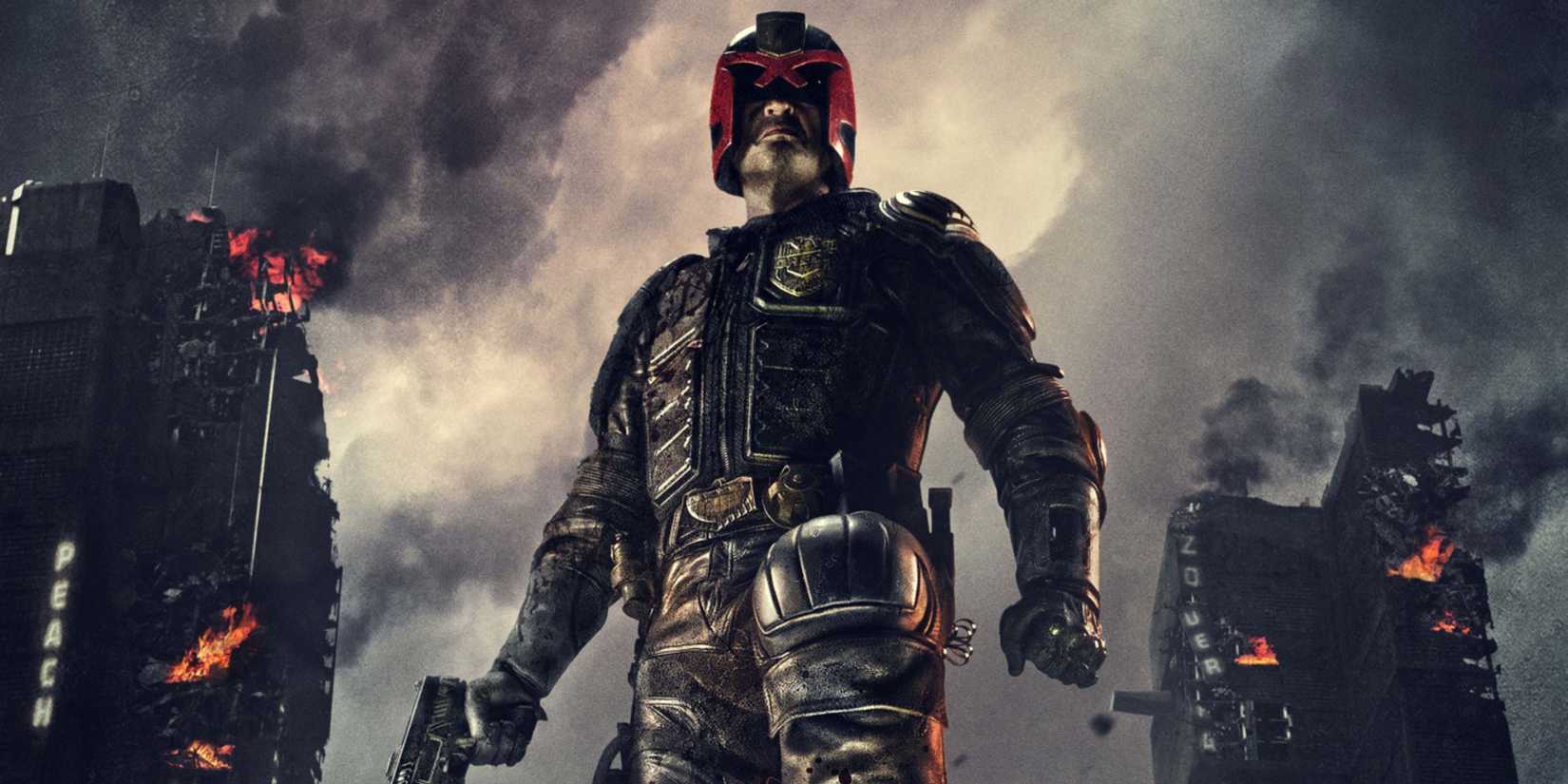
Few action thrillers use a tower block as effectively as Dredd. Set in the dystopian Mega-City One, it traps Judge Dredd and rookie Anderson inside Peach Trees, a 200-story housing complex controlled by ruthless drug lord Ma-Ma. Once the building is sealed, escape becomes impossible.
The setup is brilliantly simple. Dredd and Anderson must fight their way upward while every resident and gang member is encouraged to hunt them down. Each level presents a new challenge, transforming the tower into a relentless vertical gauntlet. Director Pete Travis and writer Alex Garland combine explosive shootouts with the visually striking effects of the Slo-Mo drug, creating a unique aesthetic identity.
Dredd is ruthlessly efficient. There is virtually no wasted movement. Every scene advances the climb toward Ma-Ma's penthouse, maintaining tension from beginning to end.
The Raid (2011)

Before Dredd reached theaters, Gareth Evans delivered what many consider the definitive high-rise action thriller. The Raid follows a SWAT team attempting to arrest a crime lord who controls an apartment block packed with heavily armed criminals. The mission immediately goes wrong, leaving the officers trapped and outnumbered.
The premise could hardly be simpler, but Evans executes it with astonishing precision. Every floor becomes a battlefield as survivors push higher toward their objective. The martial arts choreography is among the finest ever filmed. Close-quarters combat feels brutal, fast, and genuinely dangerous.
Iko Uwais offers a star-making performance, while the supporting cast helps turn each confrontation into a memorable set piece. The Raid’s influence on modern action cinema cannot be overstated. Countless movies have attempted to replicate its formula, but few have matched its intensity, clarity, or relentless momentum.
Die Hard (1988)
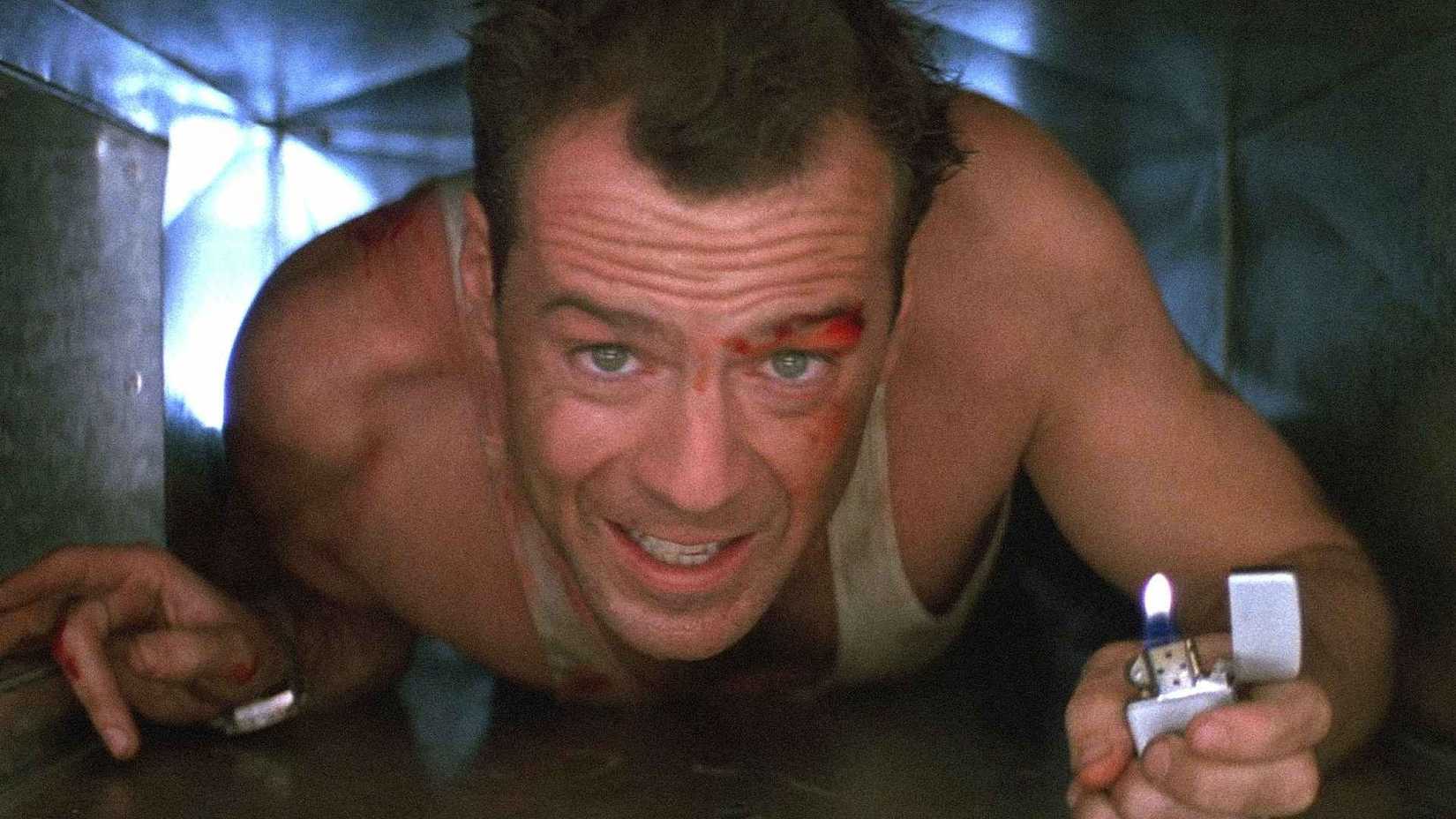
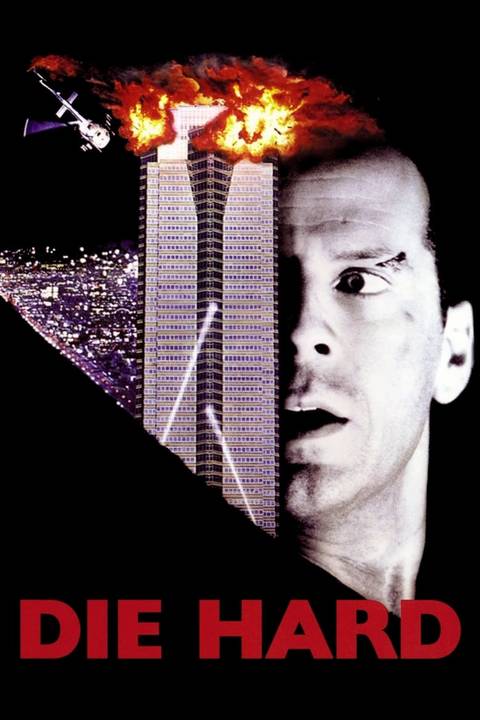
The undeniable pinnacle fo skyscraper thrillers is, of course, the iconic Die Hard. John McTiernan's masterpiece takes place almost entirely within Nakatomi Plaza, where New York police officer John McClane finds himself battling a group of heavily armed thieves led by Hans Gruber during a Christmas Eve hostage crisis.
Bruce Willis transformed the action hero archetype by portraying McClane as vulnerable, exhausted, and constantly improvising. Most importantly, the building itself becomes an integral part of the narrative. Air ducts, elevator shafts, unfinished floors, rooftops, and stairwells all play crucial roles in the conflict.
For decades, Hollywood pitched action films as "Die Hard on a plane," "Die Hard on a ship," or "Die Hard on a train." That formula exists because Die Hard perfected it first. Nearly forty years later, it is still the gold standard for action thrillers set inside a skyscraper.
- Release Date
- July 15, 1988
- Runtime
- 132 minutes
- Director
- John McTiernan
- Writers
- Jeb Stuart, Steven E. de Souza, Roderick Thorp
- Producers
- Lawrence Gordon, Joel Silver
KioskNews shows a cleaned-up reading view extracted from the publisher’s page — the original always lives on their site, not ours.