Middle East energy shock puts greater ASEAN cooperation in focus
Speaking to CNA’s Roland Lim at the Gastech 2026 energy conference in Bangkok, government and industry leaders said countries will need more diverse energy supplies and stronger regional links as disruptions expose Asia’s vulnerability to supply shocks.
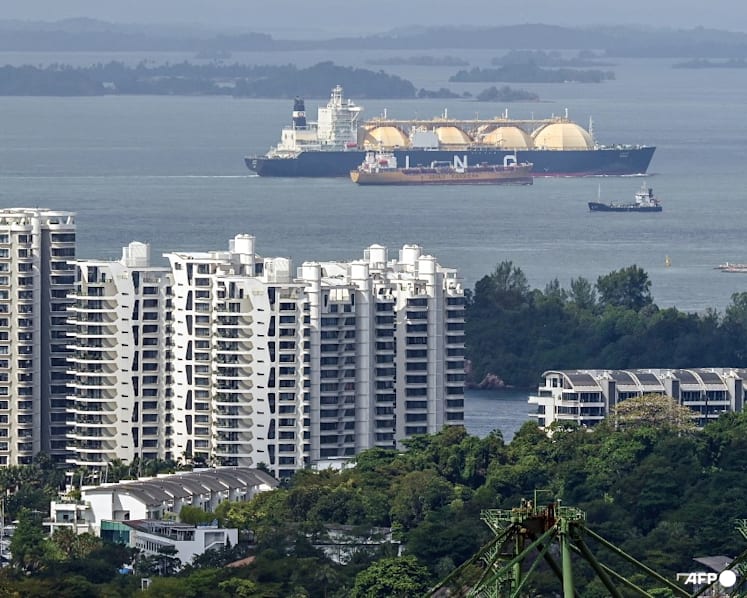
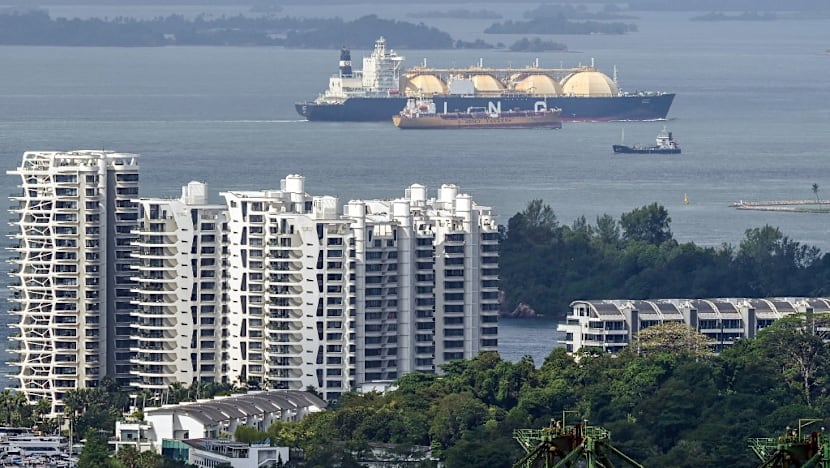
A vessel transports liquefied natural gas past the coast of Singapore in 2024. (Photo: AFP/Roslan Rahman)
New: You can now listen to articles.

This audio is generated by an AI tool.

17 Sep 2026 04:26PM (Updated: 17 Sep 2026 04:28PM)
BANGKOK: Disruptions to energy supplies from the Middle East are prompting Southeast Asian countries to look at closer regional cooperation to strengthen energy security, including more flexible gas supplies and cross-border electricity trade.
At the Gastech energy conference in Bangkok this week, government and industry leaders said the crisis has exposed the region’s vulnerability to supply shocks.
They pointed to the need for more diverse sources of energy, as countries grapple with keeping supplies affordable and reliable amid growing demand.
GREATER RELIANCE ON NEIGHBOURS
Tengku Muhammad Taufik, president and CEO of Petronas, Malaysia’s state-owned energy company, said the pressures facing the energy system could lead countries in Asia to rely more heavily on one another.
“I think Asia will be far more regionalised rather than still be reliant on a global ecosystem,” he said during a panel moderated by CNA on Monday (Sep 14).
Taufik said the pressures facing the region would encourage policies aimed at greater self-sufficiency and energy security.
“So there's going to be a lot more reliance on neighbours, friends, long-term partners,” he said, adding that countries with the greatest energy needs would increasingly work together and become more pragmatic about cross-border cooperation.
His comments come after months of disruption around the Strait of Hormuz, where the Middle East conflict has severely disrupted shipments of oil and liquefied natural gas to Asia.
Taufik added that energy supplies need to be both available and affordable, particularly in a region where demand continues to grow.
At the same time, he said producers also have to respond to policies calling for energy to be delivered more cleanly.
SINGAPORE SEEKS MORE FLEXIBLE GAS SUPPLIES
That need for greater cooperation is also shaping Singapore's approach to securing its gas supplies.
Speaking to CNA on the sidelines of the summit on Tuesday, Singapore GasCo CEO Alan Heng said that the Middle East crisis, along with the global energy disruption that followed Russia’s invasion of Ukraine, had prompted Singapore to rethink how it builds resilience into its energy system.
About 95 per cent of Singapore's electricity is generated using natural gas, which is imported by pipeline from Malaysia and Indonesia as well as in the form of liquefied natural gas from global suppliers.
Heng said Singapore GasCo intends to build a portfolio drawing on a diverse range of locations and suppliers to help manage future disruptions.
But he said countries in the region also need to work together.
“This is one of those things where we can't do it alone,” Heng said when asked about greater cooperation within the Association of Southeast Asian Nations (ASEAN) on gas procurement and emergency supplies.
“And if you want to do it alone, it'd be expensive.”
Heng said ASEAN was moving towards becoming a net importer of gas, creating a greater need for flexibility and cooperation among countries in the region.
One option would be to change the terms under which gas is bought.
Heng said future contracts should have enough flexibility to allow liquefied natural gas cargoes to be diverted to a neighbouring country without additional cost when supplies are needed there.
“This is not the current situation, but it will have to change with time,” he said.
At the same time, Heng said Singapore would continue using long-term gas contracts, which provide greater price stability, while retaining the ability to buy cargoes from the spot market when necessary.
SARAWAK SEES OPPORTUNITY IN REGIONAL POWER TRADE
Greater regional cooperation could extend beyond gas.
Sarawak Premier Abang Johari Openg outlined the Malaysian state’s ambitions to expand electricity exports to its neighbours during a fireside chat at the conference on Monday.
Sarawak is targeting about 10 gigawatts of power generation capacity by 2030 and 15 gigawatts by 2035, Abang Johari said.
With local consumption below those levels, he said the surplus could support efforts to build a more interconnected ASEAN electricity system.
Sarawak is working on plans to supply electricity to Singapore through an undersea cable. It already exports electricity to West Kalimantan in Indonesia.
But Abang Johari said building physical connections between countries is only part of the challenge.
“ASEAN has to have (a) framework, common platform, common understanding among member countries for this interconnection,” he said.
Countries would also have to agree on how electricity traded across borders should be priced, he added.
Asked whether the regulatory framework was a bigger obstacle than financing, Abang Johari agreed, saying a common understanding among ASEAN countries would allow them to move ahead with greater electricity interconnection.
By 2030, he said he wanted Sarawak to be known for “energy supply for ASEAN and sharing of energy”.
US COULD PLAY BIGGER ROLE IN ASIA’S ENERGY SUPPLY
The United States could also play a larger role in meeting Asia’s energy needs as buyers seek more diverse sources of liquefied natural gas.
But that comes as the country faces rising energy demand of its own, driven in part by the rapid expansion of artificial intelligence and data centres.
The growth of data centres – and the electricity needed to run them – was a recurring theme at Gastech, with executives discussing how power generation and grid infrastructure would keep pace.
Laura Swett, chairman of the US Federal Energy Regulatory Commission, said on Tuesday that the US could increase gas exports to Asia even as growing electricity demand from AI data centres puts pressure on the American power system.
Asked whether the US could power its own AI boom while increasing gas exports to Asia, Swett replied: “Yes, absolutely.”
She said the US had large natural gas reserves and that infrastructure was the main constraint on getting more of that gas to market.
Her agency had received a record number of applications for liquefied natural gas export terminals and pipelines, she said, and was approving them faster than before.
By 2030, Swett said, significant infrastructure should have been built, while existing LNG export terminals were also seeking major expansions.
Asked whether the US could meet Asia's liquefied natural gas needs by 2030, she said: “I think we very much can.”
KioskNews shows a cleaned-up reading view extracted from the publisher’s page — the original always lives on their site, not ours.