School bullying cases in Hong Kong rise 32% to nearly 500 a year
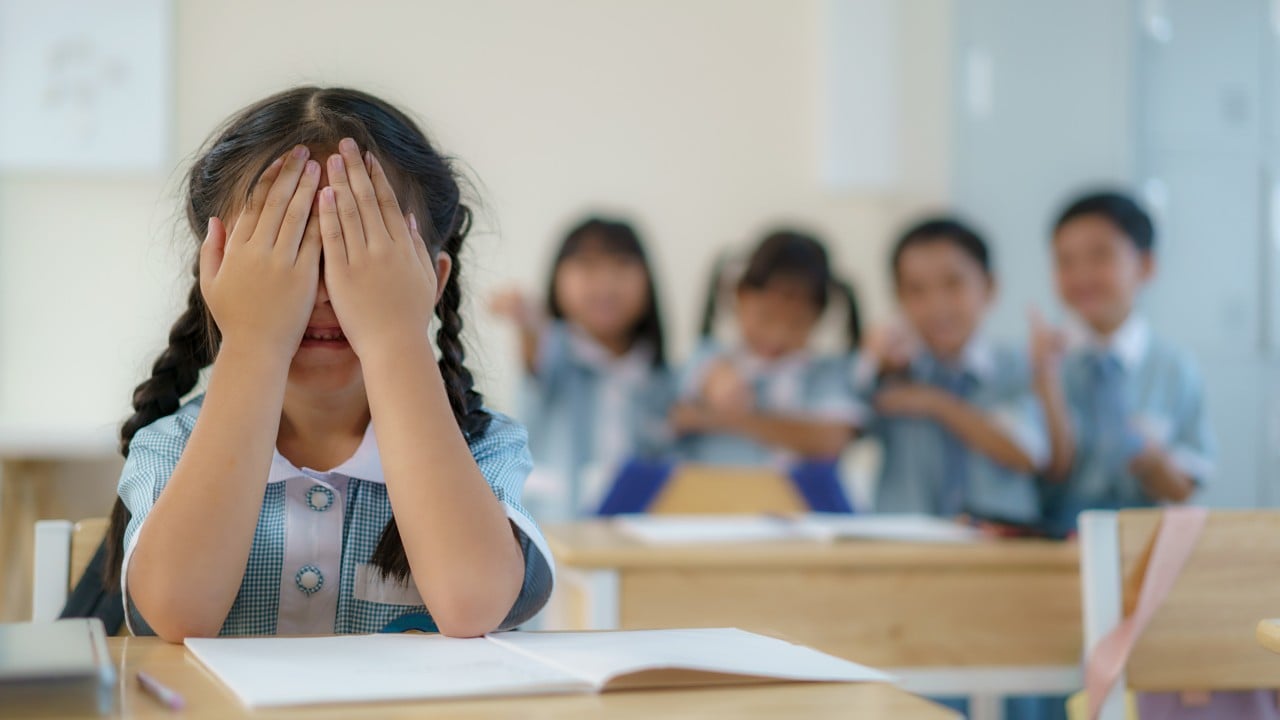
Hong Kong schools handled an average of 496 bullying cases each academic year from 2022 to 2025 – a 32 per cent jump compared with the previous three years, according to the Education Bureau.
A youth group attributed the increase to greater reporting driven by heightened mental health awareness, but also students struggling to distinguish playful jokes from bullying.
According to the bureau, public primary and secondary schools recorded an average of 496 bullying cases each year between 2022 and 2025, up 32 per cent from the 377 recorded annually from 2019 to 2022.
The bureau told the Legislative Council in 2023 that the number of cases involving school bullying, including cyberbullying, from the 2019-20 to 2021-22 school years was 411, 306 and 413 respectively. The average number for these three school years was 377.
The figures were based on information contained in the bureau’s annual questionnaire surveys on guidance and discipline cases in schools.
The bureau did not provide any annual breakdown for the years between 2022 and 2025. It said the data for the current school year was still being compiled.
“The number of student cases involving school bullying, including cyberbullying, handled by schools averaged 496 per year between the 2022–23 and 2024–25 school years, with the annual figures remaining generally stable,” a bureau spokesman said.
But he said comparing the two sets of figures for 2019–22 and 2022–25 might not be appropriate, as the first triennium was marked by the Covid pandemic, during which students attended some classes online.
Last month, the Programme for International Student Assessment, a worldwide study of 15-year-olds’ learning and education by the Organisation for Economic Cooperation and Development (OECD) revealed that 22.2 per cent of students in Hong Kong aged 15 reported experiencing some form of bullying at least a few times a month.
The city’s overall figure was higher than the OECD average of 19.6 per cent.
Hong Kong ranked 32nd among the 86 surveyed countries and cities, including ones that were not members of the organisation.
The Hong Kong Federation of Youth Groups has been commissioned by the bureau to provide advice and counselling services on peer conflict management to students and parents at all primary and secondary schools this academic year.
The group also has social workers stationed in 59 primary and secondary schools.
Andy Chan Ying-kit, head of service at the youth group, partly attributed the rise in bullying cases to greater public concern driven by increased awareness of student mental health.
“Some research indicates mental health issues related to bullying cases lead to emotional distress and social withdrawal,” he said.
Chan added that younger generations often struggled to distinguish playful joking from bullying, such as creating altered images targeting victims or repeatedly kicking classmates out of chat groups.
He said resolving cases had become significantly more difficult with some students airing their grievances on social media and drawing comments from other online users.
“The victim faces severe public scrutiny and media pressure, making mediated resolutions far harder to achieve,” he said.
Chan noted that some cases became more complicated because victims might turn into bullies themselves when seeking revenge, making it harder for teachers and social workers to determine fault or mediate effectively.
He said parents were also paying much closer attention to their children’s well-being, and their dissatisfaction with how schools handled cases often led to confrontation with administrators.
Parents should prioritise their children’s emotional well-being instead of prematurely escalating the situation, he advised.
“Focus first on comforting your child, listening to their feelings and addressing their mental health. While seeking justice or investigating what happened is important, demanding immediate consequences will not resolve your child’s emotional distress,” he said.
Schools should assign different staff members or social workers to handle various tasks, with some managing students’ emotions and others supporting and reassuring parents, Chan said.
He noted that junior secondary school students recorded higher rates of bullying as they needed to rebuild their social circles during the transition and were more prone to having interpersonal conflicts and misunderstandings.
A bureau spokesman said it maintained a “zero-tolerance” policy towards school bullying.
“The Education Bureau provides clear guidelines for schools detailing the principles, procedures, methods and follow-up work required when handling bullying incidents, and mandates that schools handle every single case with utmost seriousness,” he said.
KioskNews shows a cleaned-up reading view extracted from the publisher’s page — the original always lives on their site, not ours.