Lenku faces NCIC remedial action over remarks on Maasai political representation
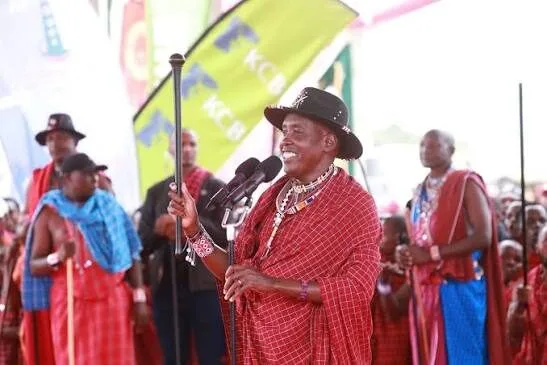
NAIROBI, Kenya, Nov 20 – The National Cohesion and Integration Commission (NCIC) has faulted Kajiado Governor Joseph Ole Lenku over remarks in which he described political parties that fail to give the Maasai community senior leadership positions as enemies, warning that the statements risked undermining peaceful coexistence.
In its Determination No. 5 of 2026, the commission found that Lenku’s remarks, made during a political gathering in Kajiado County on August 22, 2026, promoted political exclusion and threatened adverse consequences against individuals who chose alternative political paths.
The commission took issue with the governor’s use of the words “adui wetu” (our enemies) to describe political formations that did not accommodate Maasai interests in party leadership and nominations.
It also raised concerns over his warning that those who chose a different political direction would “utajipata taabani” (find yourself in difficulty), saying the language introduced an element of intimidation into political participation.
According to the commission, the remarks went beyond advocating for the political representation of the Maa community and risked alienating other communities living in Kajiado, which is home to people from diverse ethnic backgrounds.
“The remarks fell below the constitutional standard of responsible leadership and posed a risk to peaceful coexistence in Kajiado County,” the commission said.
The inquiry followed a video recording of the political forum in which Lenku addressed the place of the Maasai community in party leadership and nomination processes, particularly positions considered to belong to the Maa community in Kajiado and Narok counties.
Lenku appeared before the commission on September 17, 2026, accompanied by his lawyers and county officials, where he confirmed the factual accuracy of the remarks attributed to him.
However, through his lawyers, AMA Advocates LLP, the governor argued that his statements were made in his capacity as an elected leader and spokesperson for the Maa community, seeking to address historical injustices, land dispossession, marginalisation and political representation.
His legal team maintained that the remarks were directed at political parties and choices rather than ethnic communities, arguing that expressions such as “adui”, “hatuna uhusiano na wewe” and “taabani” referred to political association and electoral competition and did not amount to threats of violence, incitement or ethnic hatred.
The commission, however, rejected the argument that the political context placed the statements beyond its mandate, maintaining that political discourse must comply with constitutional standards on national cohesion and the rights of other citizens.
It said the governor’s position as an elected leader and influential political figure increased the potential impact of his statements, particularly their ability to mobilise supporters and deepen divisions.
The NCIC further acknowledged that demands for community representation, equitable political participation and redress for historical injustices were legitimate issues that could be raised in public debate.
However, it cautioned that such grievances could not justify language that intimidated people or portrayed those pursuing alternative political choices as enemies.
In its assessment, the commission cited Articles 27, 33(3) and 38 of the Constitution, which provide for equality and freedom from discrimination, responsible exercise of freedom of expression and the right to political participation.
Following its findings, the commission issued Lenku with a Notice of Remedial Conciliation proposing corrective, preventive and restorative measures aimed at addressing the concerns raised by his remarks.
The governor has been given seven days from the date of the determination to communicate in writing whether he accepts the proposed terms or wishes to suggest variations.
The commission clarified that its determination was administrative and conciliatory in nature and did not amount to a criminal conviction or a judicial finding of guilt. The proposed measures also do not carry criminal punishment.
It further emphasised that the findings do not restrict the Maasai community or any other group from advocating for political representation, addressing historical injustices or demanding equitable participation in public institutions.
Instead, the commission urged political leaders to pursue such demands through dialogue, democratic engagement and lawful political processes without threatening or excluding other communities.
The determination comes amid continuing political competition over community representation and party leadership in the Maa-dominated counties of Kajiado and Narok, where political alignments and nomination processes have remained sensitive issues.
The NCIC reiterated that political differences should not be allowed to undermine the rights, dignity and security of residents from different communities.
KioskNews shows a cleaned-up reading view extracted from the publisher’s page — the original always lives on their site, not ours.