[Korea travels] Island escape without the ferry: 3 Incheon islands to explore
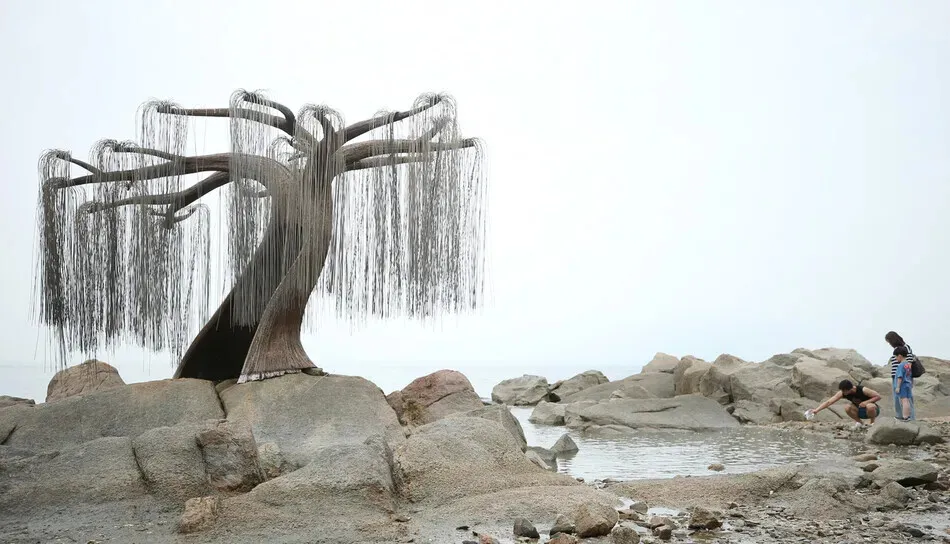
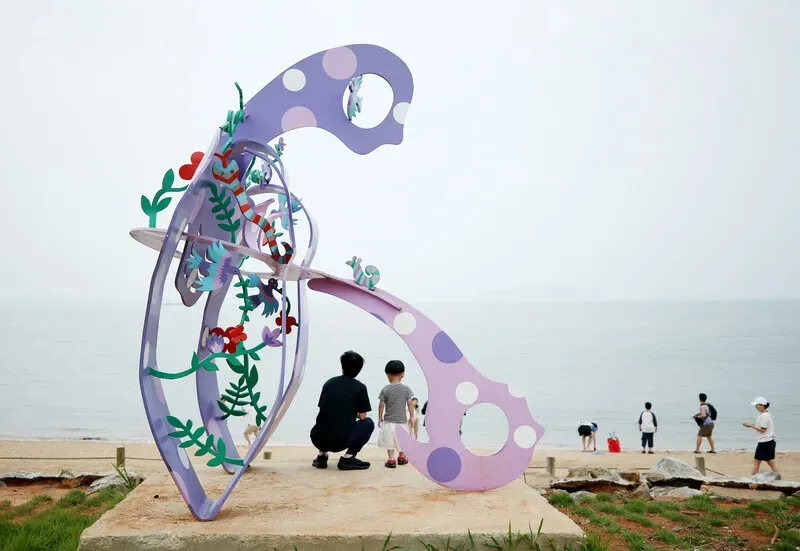
“Master Willow,” an art installation on Mo-do adds to the island shore’s allure. (Park Mee-hyang/Hankyoreh)
Islands are a little taste of paradise.
Their removal from the mainland evokes flights of fancy — provided, of course, their isolation is viewed as a source of peace, rather than pain.
So what happens when a bridge links an island to the mainland?
On July 14, Sin-do Peace Bridge opened up for traffic between Incheon’s Sin-do and Yeongjong-do islands (in Bukdo Township, Ongjin County).
The four-lane bridge runs for 3.26 kilometers with a width of 13.5 meters. My first view is a marvelous one. Traffic cops are on hand to direct a long line of vehicles bound for the island, which has become something of a tourist mecca.
But Sin-do isn’t the only draw here. It’s part of a trio of islands, along with Si-do and Mo-do to the west. Together, they’re one of the top island destinations off the coast of Incheon.
The “three island brothers,” as they’ve been dubbed, are already linked by bridges and are regarded as a prime spot for cyclists.
Sin-do Peace Bridge has greatly improved access to the islands, which formerly required a 10-minute ferry ride from Sammokseon Terminal on Yeongjong-do, with only 13 rides each day.
Just as human brothers have distinct personalities, each of the three island brothers offers its unique charms.
The well-traveled offer the following breakdown: Sin-do has the hiking, Si-do has the beaches and Mo-do has the artwork.
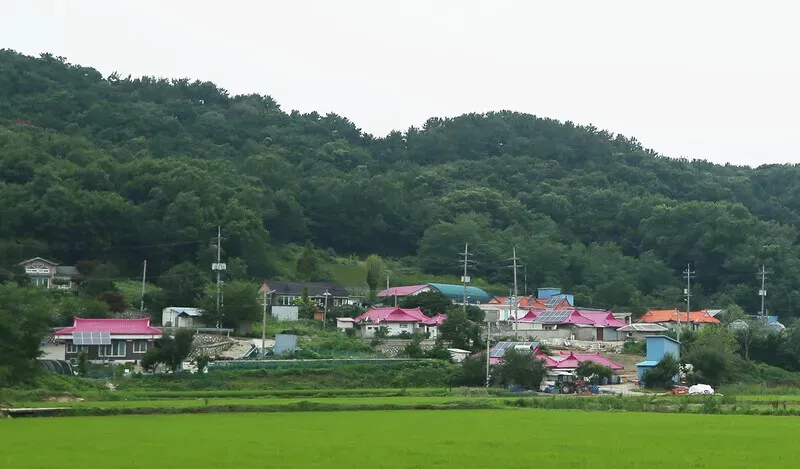
Pink rooftops of the village are the first thing visitors see when they arrive on Si-do. (Park Mee-hyang/Hankyoreh)
The breeze on the islands is sweltering when I arrive on July 17 — unsurprisingly, given the oppressive heat wave blanketing Korea at the time.
Still, it’s enough to wipe the sweat from the traveler’s brow. The breeze is a boon companion for the many hikers I see on the island’s trails.
My tour begins with Sin-do, the biggest of the three islands. Hikers on Sin-do are sure to notice Mount Gubong, a manageable 179.6 meters above sea level.
I’m accompanied on the whole hike by the lush greenery around me. On the trail, my fatigue seems to melt away.
The climax of this climb (more of a walk, really) is a pavilion called Gubongjeong. Visitors have an excellent view of airplane traffic at Incheon International Airport, on nearby Yeongjong-do. With the addition of the Sin-do Peace Bridge, the view is even better.
The “Sin” in Sin-do comes from the Chinese character 信, which means “trust” or “belief.” The island residents place great trust in each other, a quality they often extend to travelers as well.
Prior to my hike on Mount Gubong, the first thing I spot are the pink roofs of the local homes. There’s something endearing about them.
I spot an unassuming Catholic church here, just as in many countryside tourist towns. These churches often become tourist destinations in their own right because of their architectural features.
But I draw up short before an unexpected sign with an entreaty for mainlanders: “This is not a tourist site.”
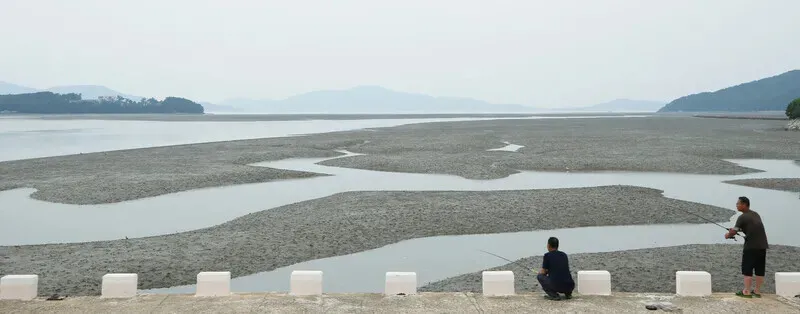
Visitors cast their hooks on the bridge connecting the islands. (Park Mee-hyang/Hankyoreh)
Crossing over to Si-do, I seem to smell the aroma of fresh bread. I’m on the track of Harabora, a coffee shop with a good selection of baked goods that has become a must-stop for travelers.
Harabora is a mainstay for pastry connoisseurs in the Incheon area. A sandwich board outside the café advertises “chimney bread.” Better known as “spit cake,” the establishment’s signature pastry is as long as a grown man’s arm.
The “Si” in Si-do is the Chinese character for arrow (矢), a name that supposedly dates back to the Goryeo dynasty (918-1392). When archers drilled on Mount Mani, on Ganghwa-do, they supposedly used Si-do as their target. Exaggerated perhaps, but an entertaining story nonetheless!
One of the top draws on Si-do is Sugi Beach. For a tiny island with a total area of 2.4 square kilometers, this is a remarkable find.
The beach was the filming location of “Full House,” the 2004 drama starring Rain (real name Jung Ji-hoon) and Song Hye-kyo. The set built for the drama is no longer standing, however.
Then and now, this is not a place for mingling with the crowds, but for enjoying some peace and quiet. Secluded as it may be, it still provides the basic amenities, including bathrooms and rinse stations.
The shallow water here is ideal for young children, but there’s also a dedicated kiddie pool on the beach.
Sugi Beach is a favorite spot with the camping crowd, who make good use of a clutch of wooden platforms for pitching tents.
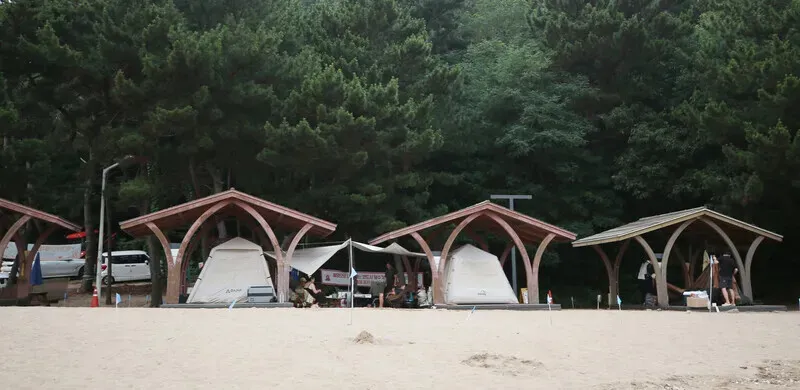
Camping lots are available on the shore of Si-do. (Park Mee-hyang/Hankyoreh)
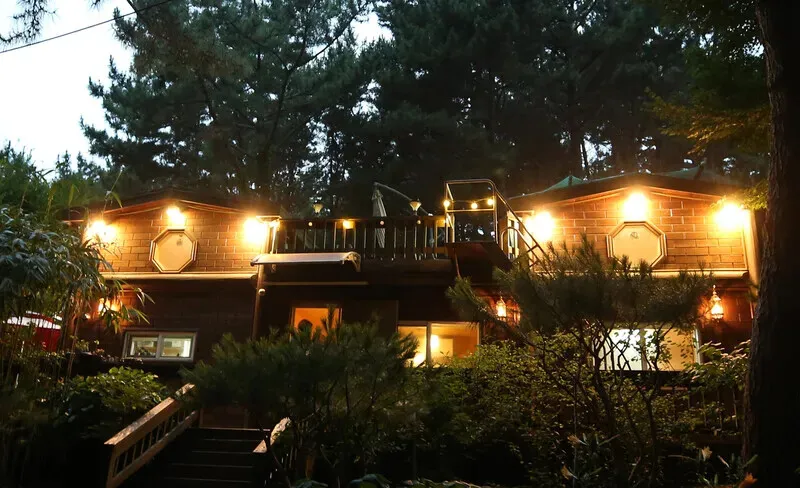
Café Solhyang sits on a hill near Si-do’s Sugi Beach. (Park Mee-hyang/Hankyoreh)
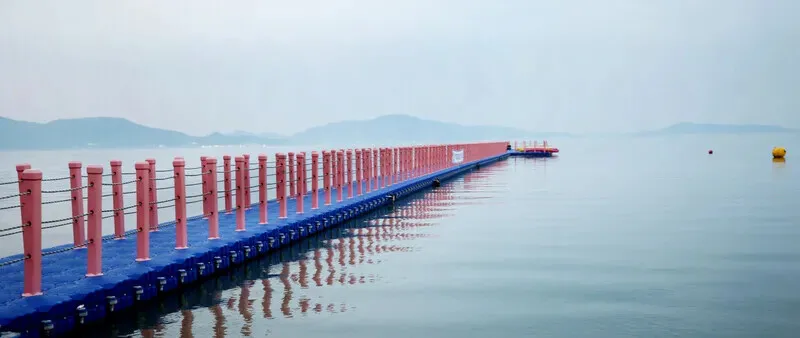
The view from Sugi Beach. (Park Mee-hyang/Hankyoreh)
On the hill behind the beach is Café Solhyang, meaning “the fragrance of pine trees.” After dusk, the café is illuminated by gentle lights sure to set the mood. There’s even a romantic swing on the path leading up to the coffee shop.
The café invites visitors to leave their cares at the door. It’s not fancy or flashy, but as tidy and cozy as if your own grandmother were in charge. The owners, a married couple, explained that they built the café some time ago to be their retirement home.
The third and smallest of the islands, Mo-do, derives from the Chinese character for cogon grass (茅).
There’s a story behind that name, too. When fishermen of the past cast their nets near Mo-do, they apparently tended to catch more cogon grass than fish.
As mentioned earlier, Mo-do has an artistic draw, exemplified by Baemikkumi Sculpture Park, located on Baemikkumi Beach. (The dialect word “baemikkumi” refers to a hollowed portion on the bottom of a ship.)
The sculpture park, which charges 2,000 won for admission, was created by the artist Lee Il-ho. Born in Boryeong, South Chungcheong Province, Lee is a veteran sculptor who has taken the remarkable form of the human body to explore our nature and hidden sensations.
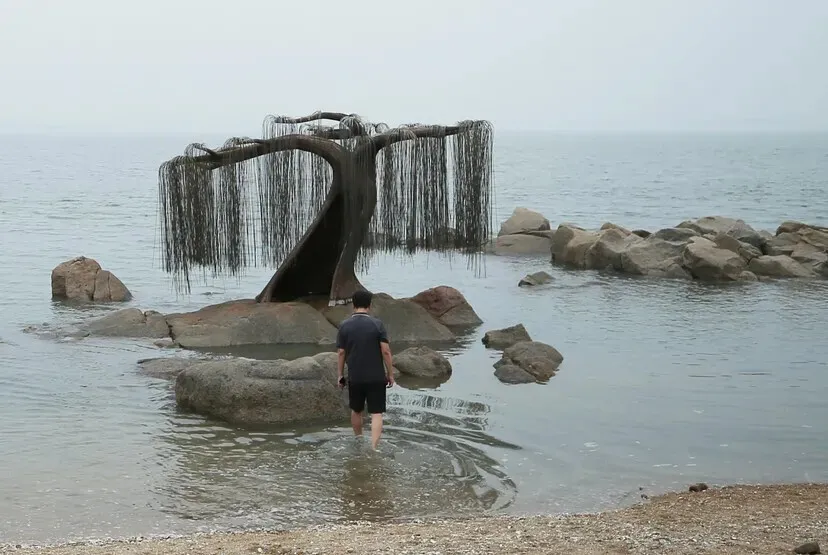
“Master Willow,” an art installation on Mo-do adds to the island shore’s allure. (Park Mee-hyang/Hankyoreh)
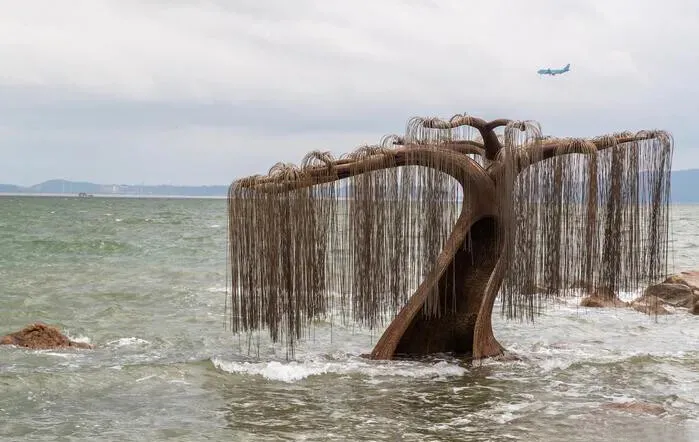
“Master Willow,” an art installation on Mo-do adds to the island shore’s allure. (Park Mee-hyang/Hankyoreh)
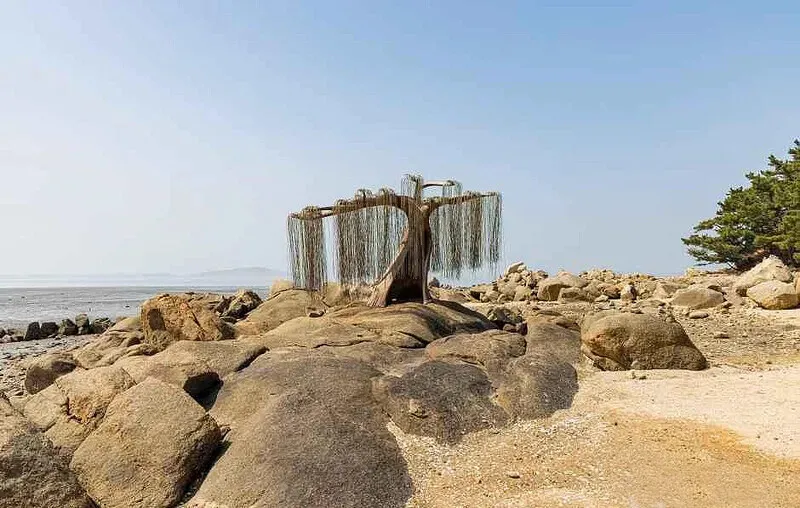
“Master Willow,” an art installation on Mo-do adds to the island shore’s allure. (Park Mee-hyang/Hankyoreh)
A variety of Lee’s sculptures are displayed on the beach, but the standout piece is “Master Willow,” a metal creation of a willow tree. The piece can look a little creepy after dark, but at high tide, the willow seemingly floating on the water assumes a surreal quality.
“When the water comes in, take a few long exposures and combine them in photoshop to get a really unique image,” Lee suggests.
When I visit, a dozen or so 60-year-olds have set up a tripod in front of the willow sculpture. They’re members of a Naver online community called “Clearer Photographs,” which has a 20-year-history.
The group is led by club manager Kim Tae-yeong, a 60-year-old photographer.
“This is one of the best spots for photographs,” Kim said, noting that he hadn’t gotten to visit much before because of the ferry schedule.
Club members all said they planned to come again.
The same location can inspire vastly different photographs, depending on the season and the angle.
A visitor surnamed Yu, from Gimpo, said he’d been drawn by the bridge opening. Yu and his wife and daughter were piling up stones on one end of the beach.
“We came because it’s not so far,” he said, adding that the ferry would have probably kept them away.
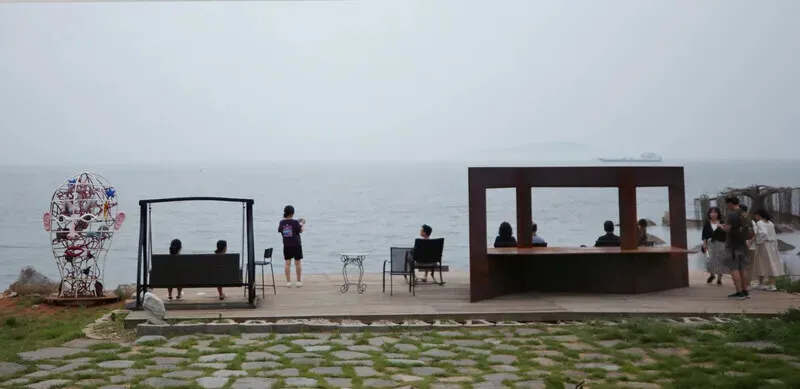
Baemikkumi Sculpture Park features rest points that offer a great view of the water. (Park Mee-hyang/Hankyoreh)
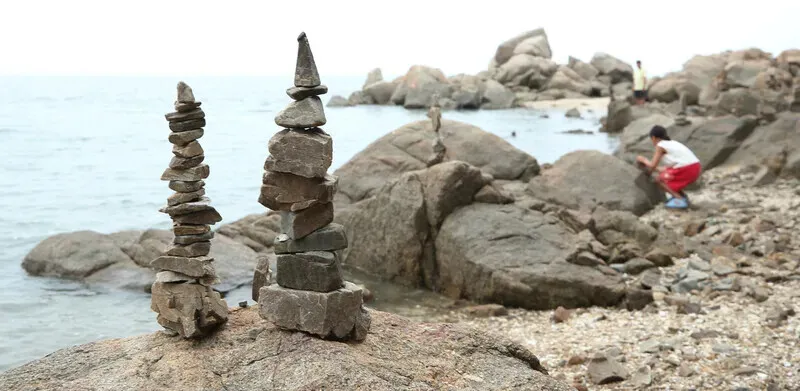
Visitors will find rocks stacked into little cairns all across the shore at Baemikkumi Sculpture Park. (Park Mee-hyang/Hankyoreh)
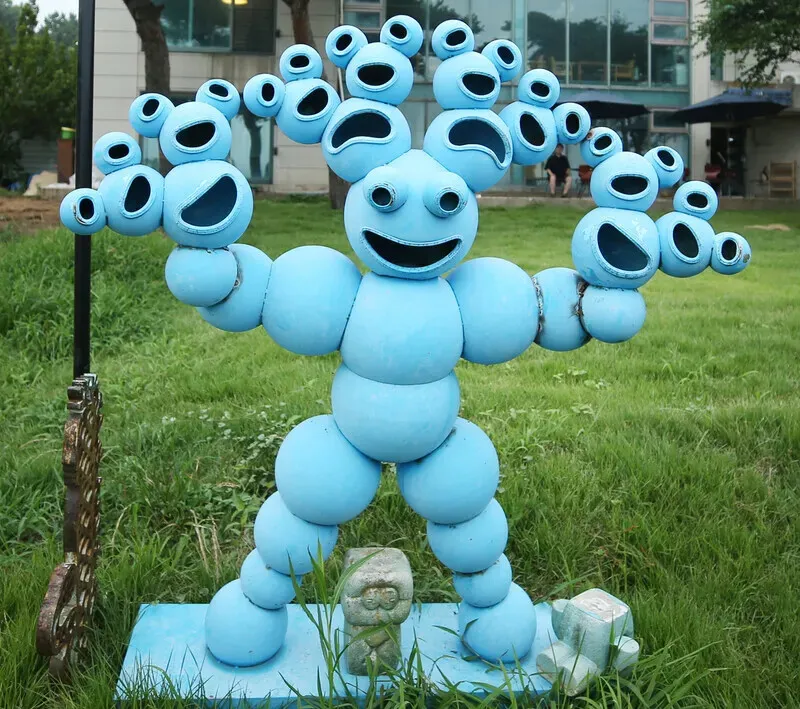
Baemikkumi Sculpture Park houses all sorts of fascinating sculptures. (Park Mee-hyang/Hankyoreh)
Baemikkumi Sculpture Park houses all sorts of fascinating sculptures. (Park Mee-hyang/Hankyoreh)
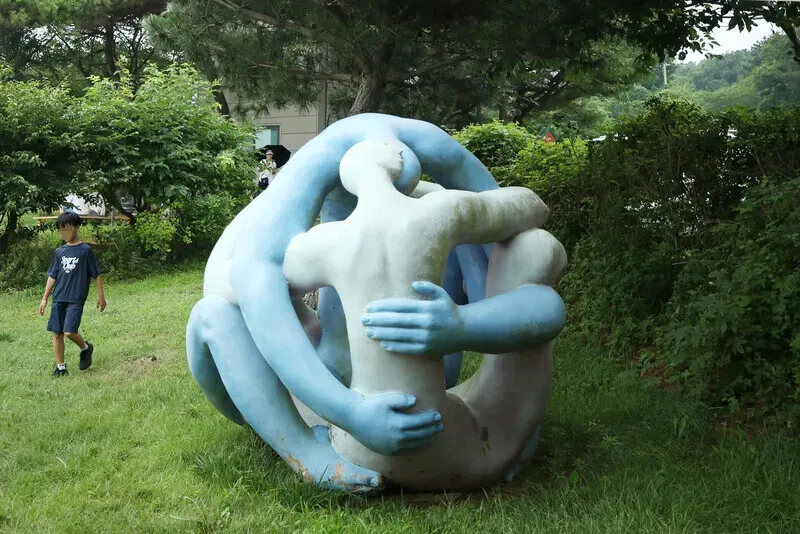
Baemikkumi Sculpture Park houses all sorts of fascinating sculptures. (Park Mee-hyang/Hankyoreh)
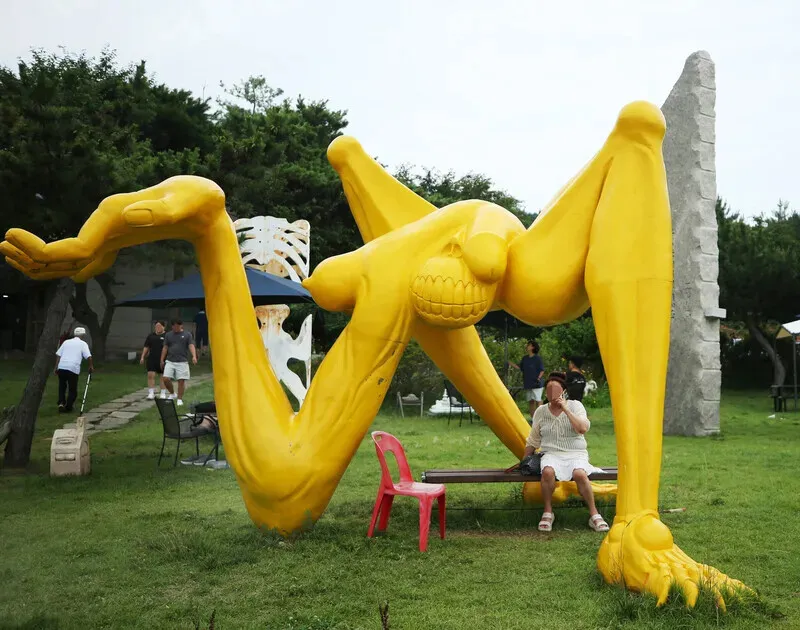
Baemikkumi Sculpture Park houses all sorts of fascinating sculptures. (Park Mee-hyang/Hankyoreh)
Last but certainly not least is the question of food.
Perhaps the most famous of the restaurants on the three brother islands is Seom Sarang Gul Sarang (roughly meaning “love the island, love the oysters”), which has featured on several television shows.
The signature dish here is a turban shell spread (two servings for 55,000 won). The spread includes several turban shell preparations (steamed, raw, over rice, and in a salad) along with an ample selection of side dishes.
Seom Sarang Gul Sarang is run by Kim Geun-seong, 66, and Kang Seok-hwa, 64. The couple opened the restaurant over three decades ago to support Kang’s mother, who passed away five years ago.
Kim and Kang source most of their ingredients from nearby farms. Along with a range of dishes highlighting the turban shell’s rich flavor and toothsome texture, the menu features a spicy seafood stew called maeuntang.
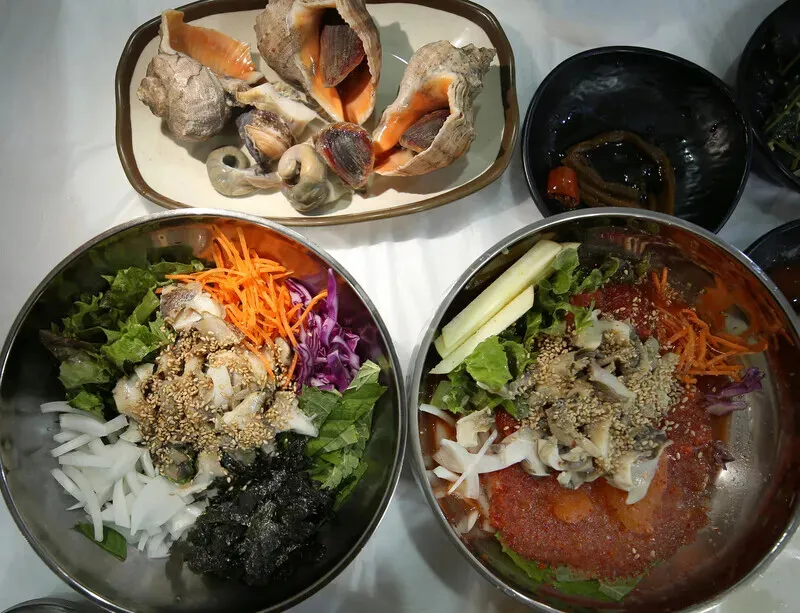
There’s so many places to get good food on the islands, but you can’t go wrong with Seom Sarang Gul Sarang or Chamsora Hansang. (Park Mee-hyang/Hankyoreh)
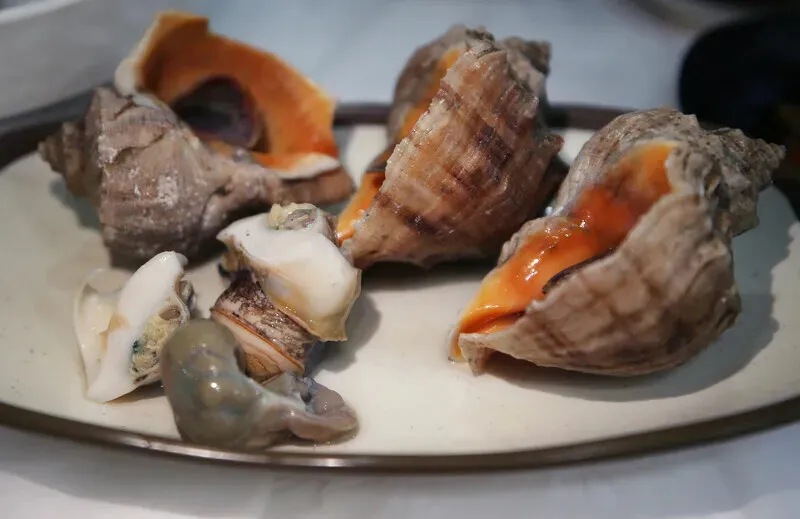
Steamed turban shell at Seom Sarang Gul Sarang. (Park Mee-hyang/Hankyoreh)
As night settles on the island, tourists begin to make their way home. The islands are perfect for a day trip, with casual visitors apt to discover unexpected delights.
Though that’s to be expected with islands!
By Park Mee-hyang, senior staff writer
Please direct questions or comments to [english@hani.co.kr]
KioskNews shows a cleaned-up reading view extracted from the publisher’s page — the original always lives on their site, not ours.