China’s R&D spending keeps up steady rise as No 1 US seeks further funding cuts
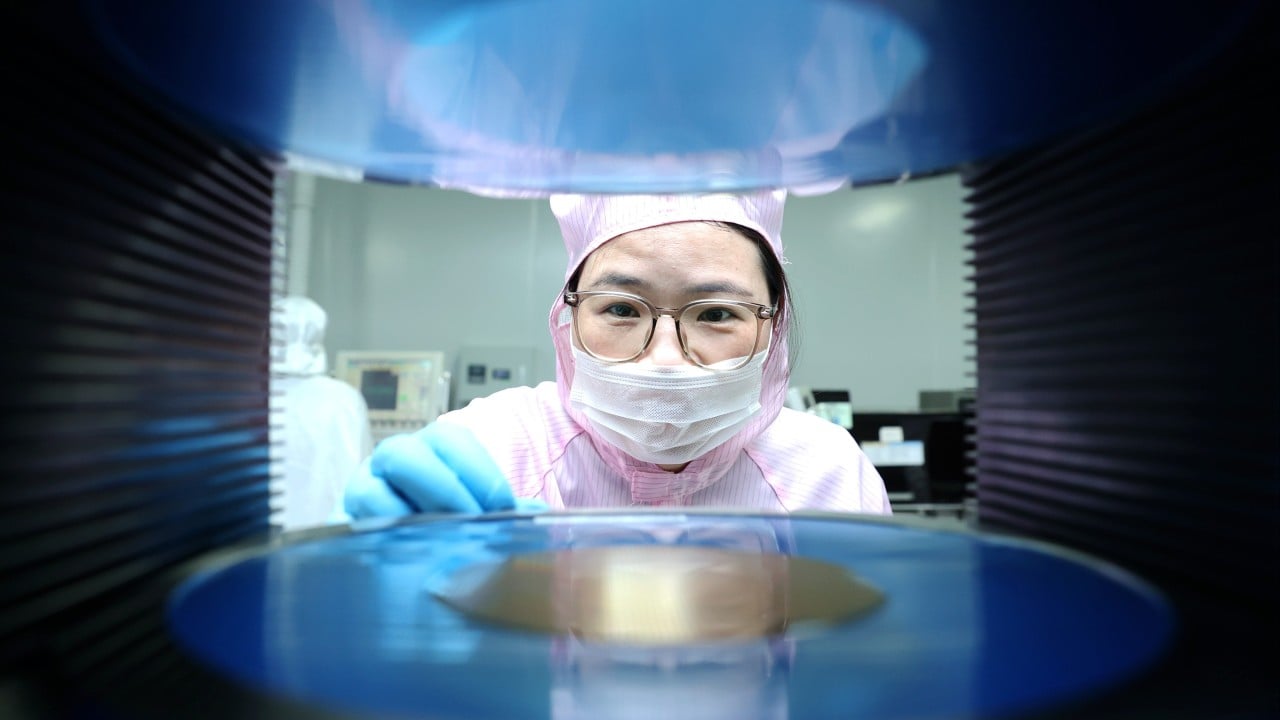
China’s R&D investment grew by 8.2 per cent last year – fuelled by double-digit growth in fundamental science and university funding – in sharp contrast with deep budget cuts across the US research sector.
Total investment in research and experimental development crossed 3.9 trillion yuan (US$583 billion) in 2025, “maintaining a trajectory of steady growth”, the National Bureau of Statistics said when releasing the data on Friday.
State news agency Xinhua noted on Friday that in the five years to 2025, China’s R&D spending grew at an average annual rate of 10 per cent, placing it at the forefront of the world’s major economies.
Friday’s data puts China behind only the United States in total research and development expenditure, outspending Germany by 3.4 times and Japan by 3.5 times.
Notably, China has seen substantial increases in funding for basic research and higher education at a time when the US is significantly scaling back government support.
Basic research grew the fastest among the three R&D categories – outpacing both applied research and experimental development with a 13.3 per cent year-on-year increase. However, at 283.46 billion yuan, the total allocated amount accounted for just over 7 per cent of the overall national figure.
R&D spending by higher education institutions reached 340.7 billion yuan, rising by 11 per cent from 2024.
Meanwhile, sweeping cuts to scientific research funding initiated under President Donald Trump continue in the US.
A Harvard Business School article earlier this month said the Trump administration had frozen or terminated some US$3 billion in National Institutes of Health (NIH) grants in early 2025, affecting about 3,800 projects.
02:59
Trump to steer billions from elite universities to AI to counter China
The administration’s proposed 2026 budget calls for reducing NIH spending by 39 per cent and cutting National Science Foundation funding by 55 per cent. In response, multiple universities have announced cuts to doctoral programmes, and some have laid off staff.
Over in China, Science and Technology Minister Yin Hejun last month outlined plans to strengthen basic scientific research, describing this as essential for achieving technological breakthroughs, boosting national security and addressing other strategic priorities.
Beijing will further intensify efforts to resolve bottlenecks in critical sectors such as semiconductors, industrial machinery and high-end instruments, according to Yin. Research into frontier technologies – including artificial intelligence, quantum technology, biotechnology and brain-computer interfaces – will also receive greater support as China seeks a competitive edge in emerging fields.
The corporate sector drove the bulk of China’s R&D investment last year, with enterprise spending crossing 3 trillion yuan for the first time to make up over 77 per cent of the total.
Government-affiliated research institutions, universities and other entities accounted for the rest.
The spending was heavily concentrated in China’s developed coastal provinces and tier one cities. The provinces of Guangdong, Jiangsu, Zhejiang and Shandong, alongside Shanghai and Beijing, each recorded R&D investments exceeding 200 billion yuan.
During the annual legislative sessions in March, the central government boosted science funding by 10 per cent year-on-year.
KioskNews shows a cleaned-up reading view extracted from the publisher’s page — the original always lives on their site, not ours.