"I'm Here, With You": Venezuela Opposition Leader Machado Returns To Caracas
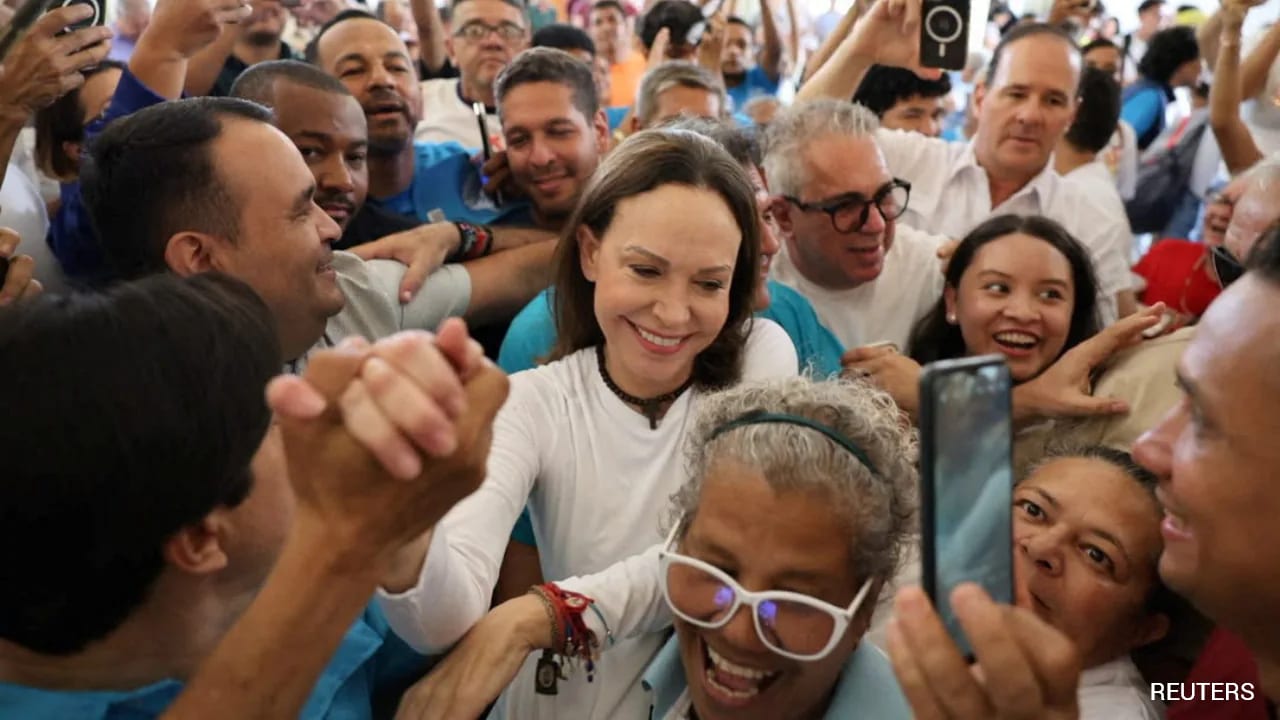
Venezuelan opposition leader Maria Corina Machado returned to Caracas in a surprise move that could pose the biggest test yet to acting President Delcy Rodriguez's political opening and the Trump administration's strategy for post-Maduro Venezuela.
"I'm here, with you," Machado posted on X on Sunday, confirming her return after months abroad.
Estoy aquí. Con ustedes
— María Corina Machado (@MariaCorinaYA) October 25, 2026
She gave no details on how she entered Venezuela, but her party shared photos and videos of her arriving at a church in Lara state, where emotional supporters embraced her and said, "She will be the next president of Venezuela."
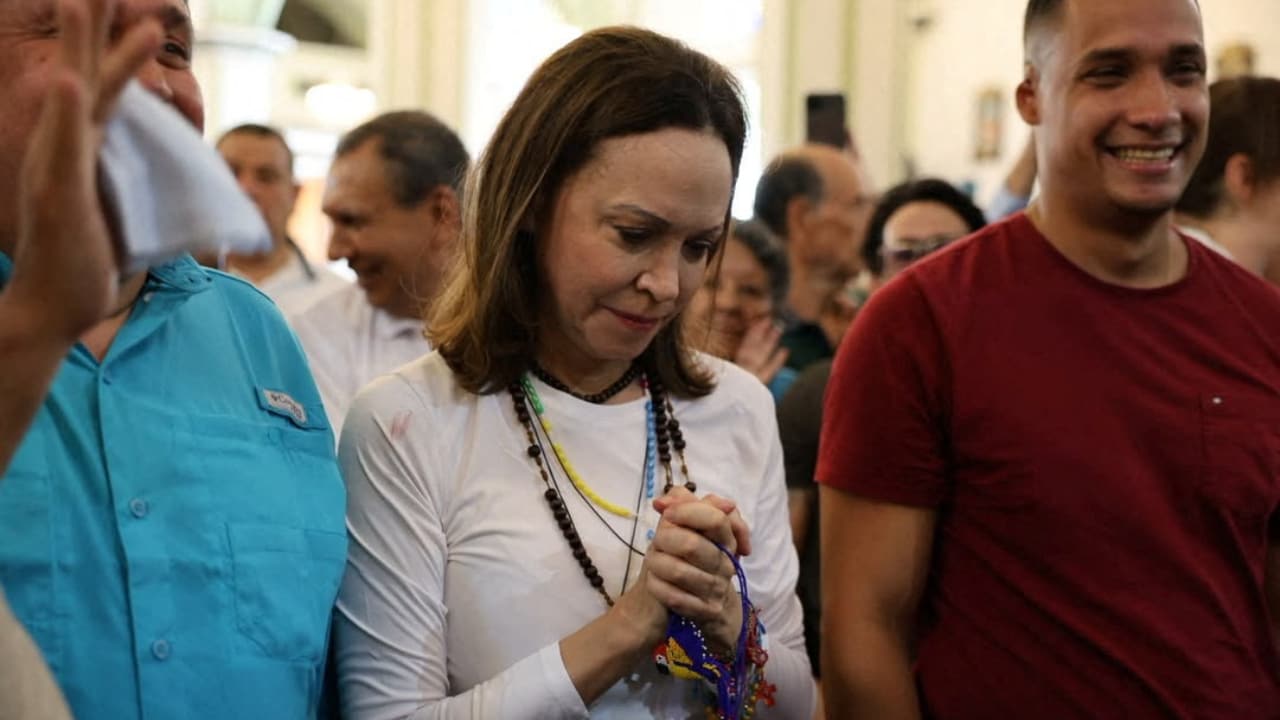
Photo Credit: Reuters
Machado's team thanked President Donald Trump and Secretary of State Marco Rubio for their support, signaling an effort to underscore her ties with Washington even as her return risks complicating the administration's Venezuela strategy.
Trump, speaking to reporters as he left the White House, said he didn't know about Machado's return. Other US officials, including her longtime ally, Representative Maria Elvira Salazar of Florida, celebrated the move, with Salazar calling it "the beginning of a new chapter."
Rubio said Machado's return is the "direct result of the US supported reconciliation talks."
"The United States expects the freedoms of all sectors of Venezuelan politics to continue to be respected," Rubio said on X. "Likewise, we expect all political actors to support these talks which represent the best chance Venezuela has had in thirty years to peacefully achieve not just a free and fair election but an enduring democracy."
The move confronts Rodriguez with a difficult choice over how much political space to give her most formidable rival.
Her government has allowed politicians, activists and journalists who spent years in exile to return, including some of Machado's closest allies. Allowing Machado to organize and campaign freely would mark the most consequential expansion yet of that opening. Detaining her or restricting her activities, in contrast, could put pressure on Washington to respond.
Machado's ability to mobilize supporters "adds a new layer of complexity" for the interim government, said David Smilde, a sociology professor and Venezuela expert at Tulane University in New Orleans.
"The big absent voice so far this year has been the voice of the Venezuelan people," Smilde said. Machado's return, he added, could spur greater public mobilization and demands for a return to democracy.
An official from Venezuela's Information Ministry didn't immediately respond to a request for comment.
Signs of Machado's impact quickly emerged. Her party called on supporters to gather in Caracas later Sunday to welcome her as she made her way from western Venezuela toward the capital in a caravan escorted by motorcycles.
People gathered along the route, singing the national anthem, chanting and reaching out to touch Machado as she greeted them from the window of the SUV carrying her.
In Caracas, supporters carrying Venezuelan flags gathered in Altamira, an area in the city's east long associated with the opposition. Some chanted "The leader has arrived," while passing drivers honked their horns amid music and the blare of vuvuzelas.
Machado had a 61% positive rating in the latest AtlasIntel survey for Bloomberg News. The same poll showed her leading Rodriguez 52% to 19% in a hypothetical presidential election.
Washington has prioritized economic stability and rebuilding Venezuela's oil industry alongside a gradual political transition, while relying on Rodriguez to maintain order and negotiate changes to the country's political institutions. The approach has culminated in a major energy agreement giving the US access to as much as 65 billion barrels of Venezuela's crude reserves.
The political process has largely advanced without Machado. US-backed talks between Rodriguez's government and a faction of the opposition ended their latest round this week with agreements to begin reviewing laws governing political disqualifications, political parties and public demonstrations, among other measures.
Opposition negotiator Dinorah Figuera also met Rodriguez at the Miraflores presidential palace following the talks, a striking image of engagement between the government and some of its political opponents even as Machado remained outside the process.
Figuera celebrated Machado's return in a social post, saying the opposition will continue "without interruption in the conversation process until achieving a real and sustainable democracy in Venezuela."
Machado had been signaling that her return was imminent. In a recent interview with the New York Times, she suggested she intended to mobilize Venezuelans ahead of eventual elections.
She has also criticized parts of the US transition strategy, including the energy deal with businessman Alejandro Betancourt, potentially complicating an agreement that has become central to the administration's plans for Venezuela.
The timing may also be significant. She is returning less than two weeks before US midterm elections that could shift control of Congress and subject the administration's Venezuela policy to greater scrutiny.
Machado's arrival follows fresh opposition protests in several Venezuelan cities demanding a presidential election date. Authorities briefly detained at least seven people and blocked a route ahead of demonstrations in Caracas, testing the limits of the government's political opening.
Machado went into hiding shortly after the disputed 2024 presidential election, saying she feared for her life as Nicolas Maduro's government targeted opposition leaders. She left Venezuela late last year in a clandestine operation to collect her Nobel Peace Prize.
(Except for the headline, this story has not been edited by NDTV staff and is published from a syndicated feed.)
KioskNews shows a cleaned-up reading view extracted from the publisher’s page — the original always lives on their site, not ours.