8 Flawless TV Shows Inspired By Philip K. Dick

Memory Ngulube joined Screen Rant in April 2024 as part of the Movies and TV team. Since then, she has written for the Perennials and Streaming team, covering a wide range of topics from new releases to old movies and TV shows. Memory is currently a Classic TV writer.
Before joining Screen Rant, Memory was a freelance copywriter who specialized in email marketing and social media management. While she enjoyed her job, her true passion was always movies and TV.
When she isn’t writing for Screen Rant, Memory can be found reading, baking (which is one of her passions), or watching her favorite K-drama.
Philip K. Dick’s influence on the science fiction genre cannot be overstated. With 44 novels and over 100 short stories, Dick’s books still influence the sci-fi genre today, with many of his themes explored in TV shows like Black Mirror, Altered Carbon, and The Peripheral. Despite the depth and revolutionary ideas featured in his novels, not all movies and TV shows inspired by his work have been a smashing success. This isn't entirely surprising, as sci-fi is often tricky to get right, either on the small or big screen.
Not every series inspired by Dick's ideas directly adapts one of his stories. Some draw on his recurring themes, exploring artificial consciousness and alternate versions of reality without naming him in the credits. Others take a more direct approach, bringing his fictional universes to the small screen. Five of Dick’s books have been adapted into TV shows, but only three of those adaptations are truly flawless.
Total Recall 2070 (1999)

Best known for its film adaptations, mainly the 1990 film of the same name starring Arnold Schwarzenegger and a 2012 remake, many people don't realize the Total Recall franchise includes a TV series titled Total Recall 2070, which premiered in 1999. The TV show might not be the best Dick-inspired story out there, but it has many positives, particularly its blend of cyberpunk and crime. It follows a senior detective who is partnered with a young, inexperienced officer who is secretly an android.
Although the series borrows elements from the Total Recall franchise and Philip K. Dick's broader science fiction legacy, it is not a direct adaptation of one specific Dick story. Instead, it expands Total Recall's futuristic world while incorporating themes and concepts most prominently associated with Ridley Scott's cult classic Blade Runner, loosely adapted from Dick's seminal novel, Do Androids Dream of Electric Sheep?
Philip K. Dick’s Electric Dreams (2017-2018)

The success of Netflix’s Black Mirror proved audiences want TV shows that explore alternate realities, as long as they're relatable on a human level. Spurred by Black Mirror's popularity, Prime Video commissioned Philip K. Dick’s Electric Dreams, an anthology series adapting ten of Dick's short stories into standalone episodes, each exploring a different futuristic world filled with unsettling technological possibilities and questions about what it means to be human.
The best thing about Electric Dreams is that it plays out like 10 mini-movies, since the episodes are not connected. The show's greatest strength is that it understands that Dick's stories are rarely about technology alone. His imagined futures might feature technology still unknown to man, but these inventions are narrative tools to examine loneliness, agency, and grief.
Black Mirror (2011-Present)

When Black Mirror premiered on Channel 4 in the UK in 2011, it quickly became one of the decade's best shows. Many argue the series lost its touch after a few seasons on Netflix, but it remains one of the most creative shows to use science fiction to mirror the human experience. Black Mirror is not a direct adaptation of Philip K. Dick's work. However, its themes and storytelling approach frequently evoke the ideas that made the legendary sci-fi author so influential. Dick spent much of his career exploring the fragility of reality, powerful corporations, and identity.
Charlie Brooker's Black Mirror approaches similar questions and themes through the lens of modern technology, examining how digital systems can distort human relationships and challenge the very definition of what it means to be alive. As an anthology series, Black Mirror has more room to explore some of Dick’s most interesting ideas and turn them into something more than straightforward "humanity vs. technology" storytelling.
Altered Carbon (2018-2020)

Many credit William Gibson for pioneering the cyberpunk genre with his novel, Neuromancer. That's true to an extent, but Philip K. Dick’s Do Androids Dream of Electric Sheep? played a huge role in the popularity of these types of stories. Cyberpunk TV shows are usually very similar, mainly because they share the same aesthetic, but Netflix’s Altered Carbon is one of the best in the subgenre.
The series isn’t based on any novel by Dick, but Altered Carbon explores the same themes he explored in his work. In books such as Do Androids Dream of Electric Sheep?, Dick explored whether consciousness and personal identity could be separated from biological existence. Altered Carbon approaches a similar question through its technology of transferable consciousness.
Severance (2022-Present)

At first glance, Severance and Dick’s work seem to come from totally different worlds, but upon closer inspection, they are actually pretty similar. Created by Dan Erickson, the Apple TV psychological thriller imagines a world in which employees can undergo a medical procedure that surgically separates their work memories from their personal lives. One of Philip K. Dick's defining themes is questioning what makes someone the same person over time.
Severance explores this idea through the division between innies and outies. Though both identities occupy the same physical body, they possess different memories, experiences, and perspectives. Mark's outie knows about his life outside Lumon but has no knowledge of his daily experiences at work. Meanwhile, his innie develops relationships and emotions that remain entirely separate from the life he leads outside the building.
Tales From The Loop (2020)

Prime Video’s Tales from the Loop isn't one of the streamer's best-known TV shows, but it deserves a spot on any sci-fi buff’s watchlist, especially because it's so different from many series in the genre. Inspired by the artwork of Swedish artist Simon Stålenhag, the show imagines a small Ohio town built above an experimental research facility known as the Loop, where scientists conduct extraordinary experiments that seem to bend the fundamental laws of nature.
Dick's stories are famous for destabilizing reality, often introducing extraordinary developments into ordinary environments. Tales from the Loop takes a similar approach by placing extraordinary scientific phenomena in a recognizable small-town setting. The residents of Mercer live alongside machines and discoveries that appear to defy the natural laws governing everyday life. Yet the series rarely treats these developments as spectacular miracles. It forces characters to reconsider what they believe about their existence.
The Peripheral (2022)

Developed by Scott B. Smith and based on William Gibson's 2014 novel, Prime Video's The Peripheral follows Flynne Fisher, a gifted gamer living in a struggling rural community in the near future. Flynne spends much of her time helping her brother, Burton, earn money through highly immersive virtual reality simulations. When Burton gets a chance to test an advanced new device, Flynne takes his place in what initially seems like another futuristic gaming experience. However, the simulation soon becomes something much more disturbing.
As two of the most respected science fiction authors, Gibson's and Dick's work was bound to overlap. The Peripheral is the kind of entertainment that is hard to look away from. It constantly challenges audiences with its perfect balance of philosophical musings and exciting science fiction storytelling.
The Man In The High Castle (2015-2019)
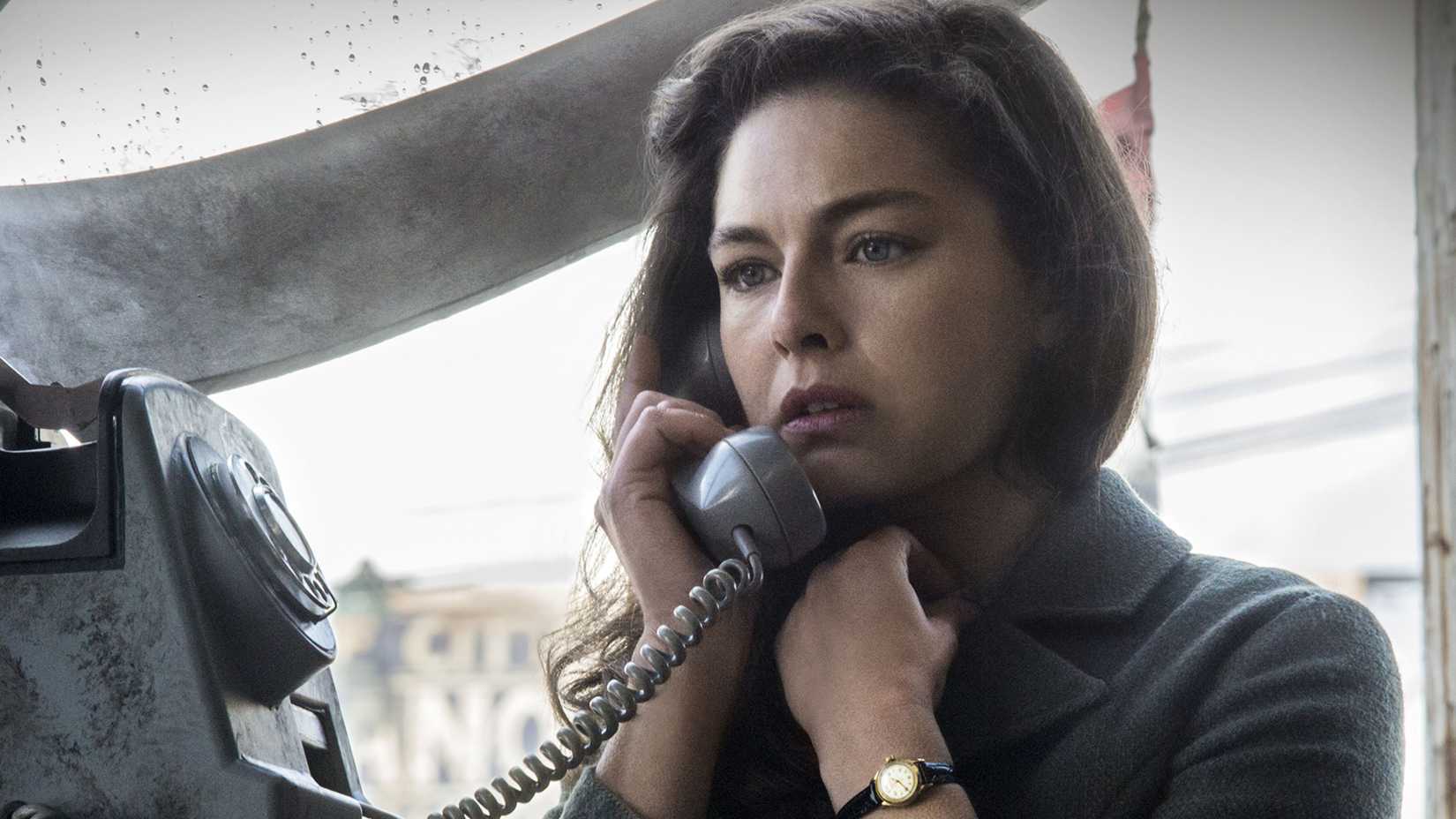
Set primarily in the 1960s, The Man in the High Castle takes place in an alternate version of America where the Axis powers won World War II and the United States is divided. Nazi Germany controls the eastern United States, while Imperial Japan occupies the West Coast. Dick has always been fascinated by alternate realities. Prime Video's The Man in the High Castle series is an excellent interpretation of the author's original work.
The show's themes and concepts are disturbing, but they provoke viewers to challenge assumptions about existence itself. Beneath the theme of power is a philosophical series about how political systems can shape collective memory and how people can come to regard even extreme injustice as an ordinary part of life.
The Man in the High Castle isn't a page-for-page adaptation, as it makes changes to the original story, which is relatively compact. What it does brilliantly is take Dick’s work and build an intriguing, serialized story that explores relevant political issues and nuanced characters. It's one of the best adaptations of Philip K. Dick’s work, period.
KioskNews shows a cleaned-up reading view extracted from the publisher’s page — the original always lives on their site, not ours.