Finance Minister Nirmala Sitharaman open to investor concerns, weighs case for foreign capital
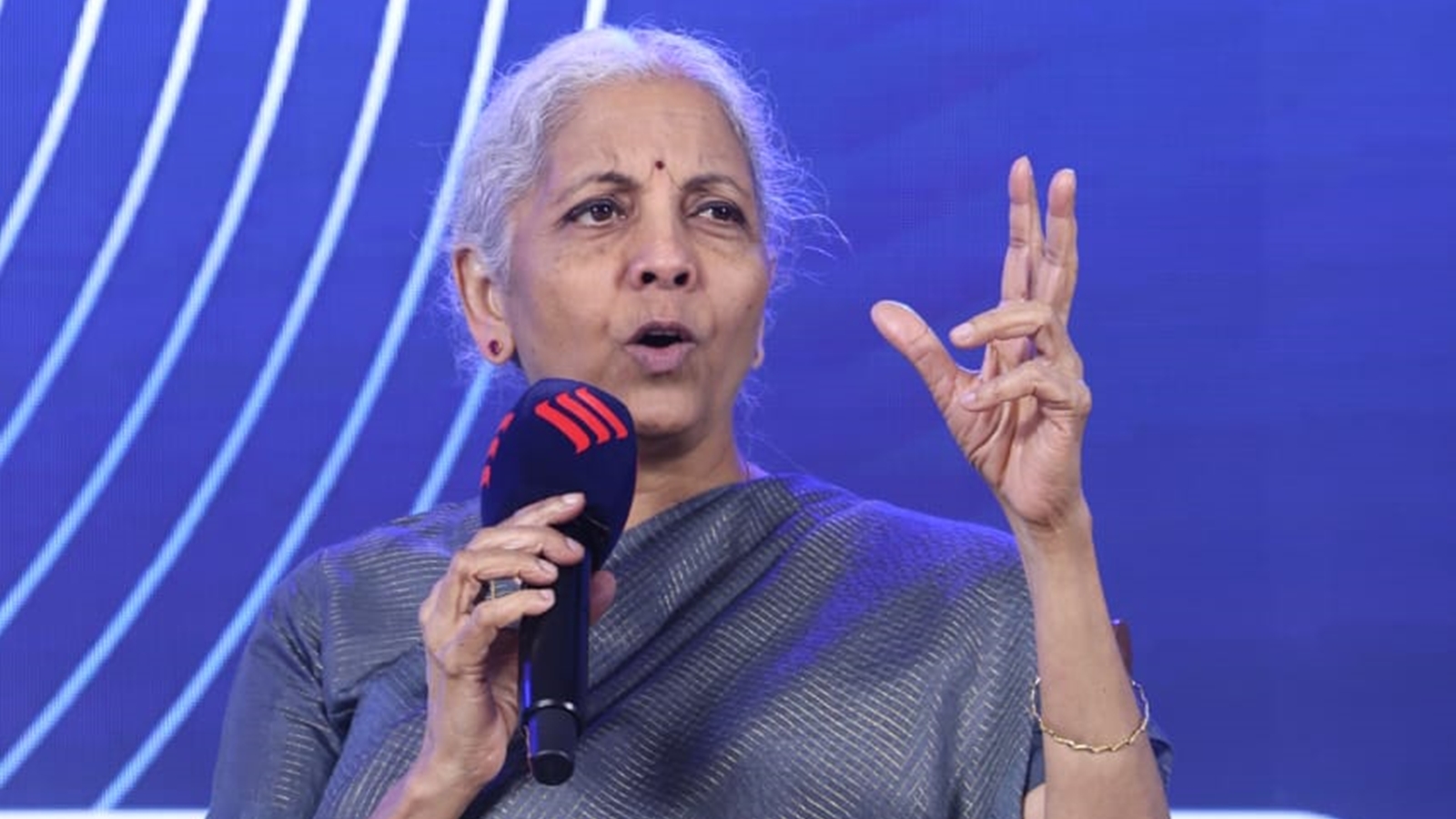
Union Finance Minister Nirmala Sitharaman on Monday acknowledged growing anxiety among retail investors and equity market participants over stretched Indian stock valuations and the capital gains tax regime, and said their concerns would be considered. She, however, cautioned against viewing tax concessions as the principal driver of capital market performance.
Her remarks come amid renewed calls for a review of long-term capital gains (LTCG) tax on equities against the backdrop of sustained foreign portfolio investor (FPI) outflows and concerns over the relative attractiveness of Indian stocks.
Sitharaman, who was the chief guest at the inaugural Financial Express Leadership Awards in Mumbai, made the remarks at a ‘fireside chat’ with Financial Express Editor Shyamal Majumdar.
Ahead of her 10th consecutive Union Budget, likely to be presented on February 1, Sitharaman said the government would hear stakeholders before deciding on any possible action, indicating that their representations would be taken into account.
“I realise the sensitivity and anxiety prevailing among retail investors, especially equity participants, while not being biased either way,” she said.
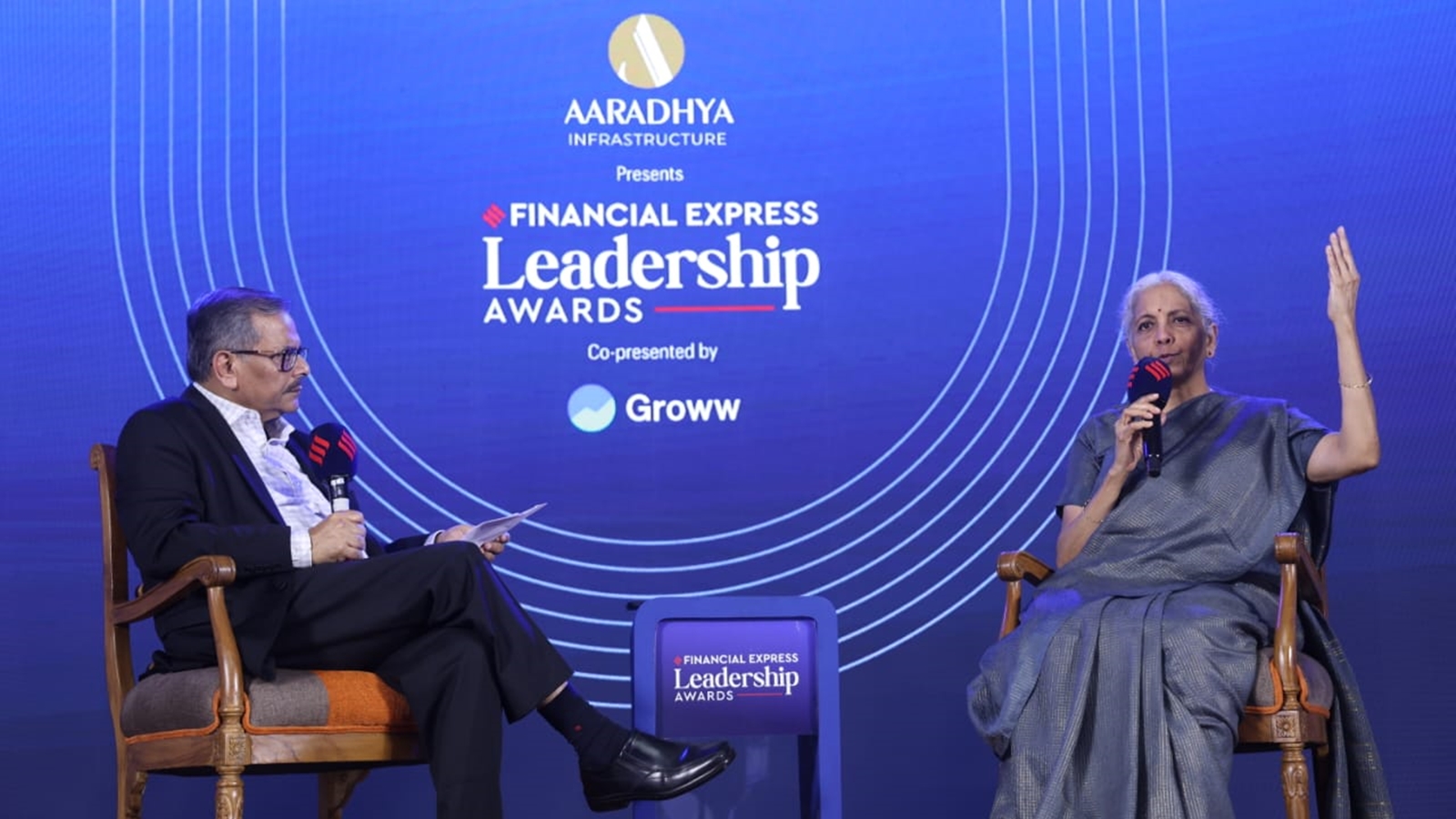 Union Finance Minister Nirmala Sitharaman at the Financial Express Leadership Awards in Mumbai, Monday. (Express photo by Amit Chakravarty)
Pointing out that India witnessed strong FPI inflows with the same capital gains tax structure in 2023-24, she said capital markets thrive on strong fundamentals, not necessarily on tax sops. She, however, acknowledged that circumstances had since changed and challenges had grown, and referred to the net FPI outflows over the past few quarters, even as flows may have turned around only recently.
“The stakeholders are voicing their concerns louder. I will consider all this,” she said.
Story continues below this ad
Sustaining economic growth at 7% or above remained paramount, Sitharaman said, underlining that “for that, we need capital”. While policy attention in recent years had focused on deepening India’s underdeveloped corporate bond market, she acknowledged the need to address concerns in the equity market as well. “Equity market also needs support, I recognise that voice,” she reiterated.
Asked whether foreign capital needed a red carpet to attract inflows, Sitharaman cautioned against a policy approach that could be seen as favouring one class of investors over another. “If you pitch for dollar (investors), what about rupee (domestic) investors?” she asked. “Hear all the stakeholders, what the government can really do, and we’ll do that. First, hear them, and then see what we can act on,” she said.
Union Finance Minister Nirmala Sitharaman at the Financial Express Leadership Awards in Mumbai, Monday. (Express photo by Amit Chakravarty)
Analysts attribute the FPI pullout partly to stretched valuations of Indian stocks and weaker earnings growth, while some also flag LTCG taxation as a factor affecting investor sentiment. Alternative investment avenues have remained attractive to foreign capital, with the yield on the US 10-year Treasury, for instance, hovering around 5% in recent weeks.
On the ongoing differences within the Tata Group, Sitharaman described it as a “delicate matter”, expressing the hope that the dispute would be resolved amicably without government intervention at this stage.
Story continues below this ad
Praising the Parsi community’s role in building the Tata Group into a global brand, she highlighted the conglomerate’s wide-ranging business interests and the scale of its investments. Describing the group as a “critical component” of the Indian economy, she said she expected normalcy to be restored at the earliest, without allowing the conflict to spill into the public domain. She also expressed the expectation that commercial wisdom and business acumen would prevail in resolving the differences.
“I wouldn’t readily say (anything at this point),” the minister said.
Her remarks come in the backdrop of differences between Tata Sons and its controlling shareholder, Tata Trusts, over the reappointment of N Chandrasekaran as chairman and whether the holding company should go public. The board’s decision on September 17 to grant Chandrasekaran another five-year term, despite objections from Tata Trusts chairman Noel Tata, has triggered a governance dispute. While conciliatory efforts are reportedly under way, the next Tata Sons board meeting, scheduled for November 26, could emerge as a key flashpoint.
Separately, Sitharaman criticised the Opposition over its protests and allegations against the government on Sunday, accusing it of undermining parliamentary processes and creating an impression of instability. She said the Opposition should hold the government accountable through debates in Parliament rather than resorting to street protests and mock Parliaments.
Story continues below this ad
“To be in the Opposition and put the government on the mat to answer questions is absolutely right. I’m not against that. I would want more of that to happen in Parliament rather than in mock Parliaments,” she said. “You (Congress party) are the Opposition, with 100 MPs elected by the people of India to function in Parliament, and you resort to mock Parliament.”
Turning to the forthcoming Budget, Sitharaman said the responsibility of delivering a Budget that makes a difference to people’s lives remained paramount. Bridging the skills gap among young job seekers, accelerating private investment and strengthening the contribution of micro, small and medium enterprises (MSMEs) would remain important priorities as India works towards Viksit Bharat, she said.
As she prepares to present her 10th consecutive Budget, Sitharaman said the milestone brought with it an overwhelming sense of responsibility rather than personal achievement. “It’s always an overwhelming feeling of the responsibility to deliver a proper Budget, which means a lot to the people, helps growth and faces the challenges,” she said.
She credited the policy direction of successive Budgets and the stability provided by Prime Minister Narendra Modi’s leadership for helping the economy navigate challenges. Every Budget, she said, had benefited from the experience gained through implementation, public feedback and consultations at different levels of government. “The responsibility to deliver something that will make a difference to people’s lives is what is at the top of my mind,” she said.
Story continues below this ad
On employment, Sitharaman said the government would continue to focus on skilling to bridge the gap between employers’ expectations and the capabilities of young job seekers. “Training youth and giving them the skill sets so that they are job-ready is what we want to spend time on,” she said, adding that the government had already begun to address the issue through its previous two Budgets.
On private investment, the minister said she was beginning to see industry come forward with fresh investments, marking a shift from her earlier assessment that companies were holding back despite strong balance sheets. She attributed the improvement partly to the next-generation GST reforms, which, she said, had strengthened consumption and made demand more visible to businesses. “Industry today has the confidence that it can see demand in the market. It can invest and produce, and therefore reach the level it wants to reach,” she said.
Citing the October GST collection, which she described as the highest, Sitharaman said domestic consumption was holding up the economy and giving companies greater confidence to expand capacity. “Consumption having really come up has given that clear visibility, and therefore, I’m seeing investments happening from the private sector,” she said.
Responding to concerns that India’s economy was increasingly dominated by a handful of large business groups, Sitharaman pointed to the growth of MSMEs and startups as evidence that expansion was taking place across different layers of industry.
Story continues below this ad
She also urged industry to maintain regular engagement with the government rather than limiting its interaction to annual pre-Budget consultations. “They are welcome to ask the government for anything they want,” she said. “But after that, I would also want them to keep engaging with us to say whether they’re moving forward or not. Are there more troubles? Are there more challenges? That interaction should be active and live,” she said.
On regulatory reforms, Sitharaman said the government was taking the Economic Survey’s observations seriously and working with states to address industry concerns. Procurement rules, tender conditions and project execution requirements were being reviewed to improve transparency and ease of doing business, she said.
Reiterating the government’s policymaking approach, she said trust in businesses, industry and taxpayers would remain central. “Whichever policy we make, trust the business, trust the industry, trust the taxpayer. That will be our charter,” she said.
KioskNews shows a cleaned-up reading view extracted from the publisher’s page — the original always lives on their site, not ours.