Bill postponing barangay and SK polls, fixing officials’ term reaches Senate plenary
Already have Rappler+?
to listen to groundbreaking journalism.
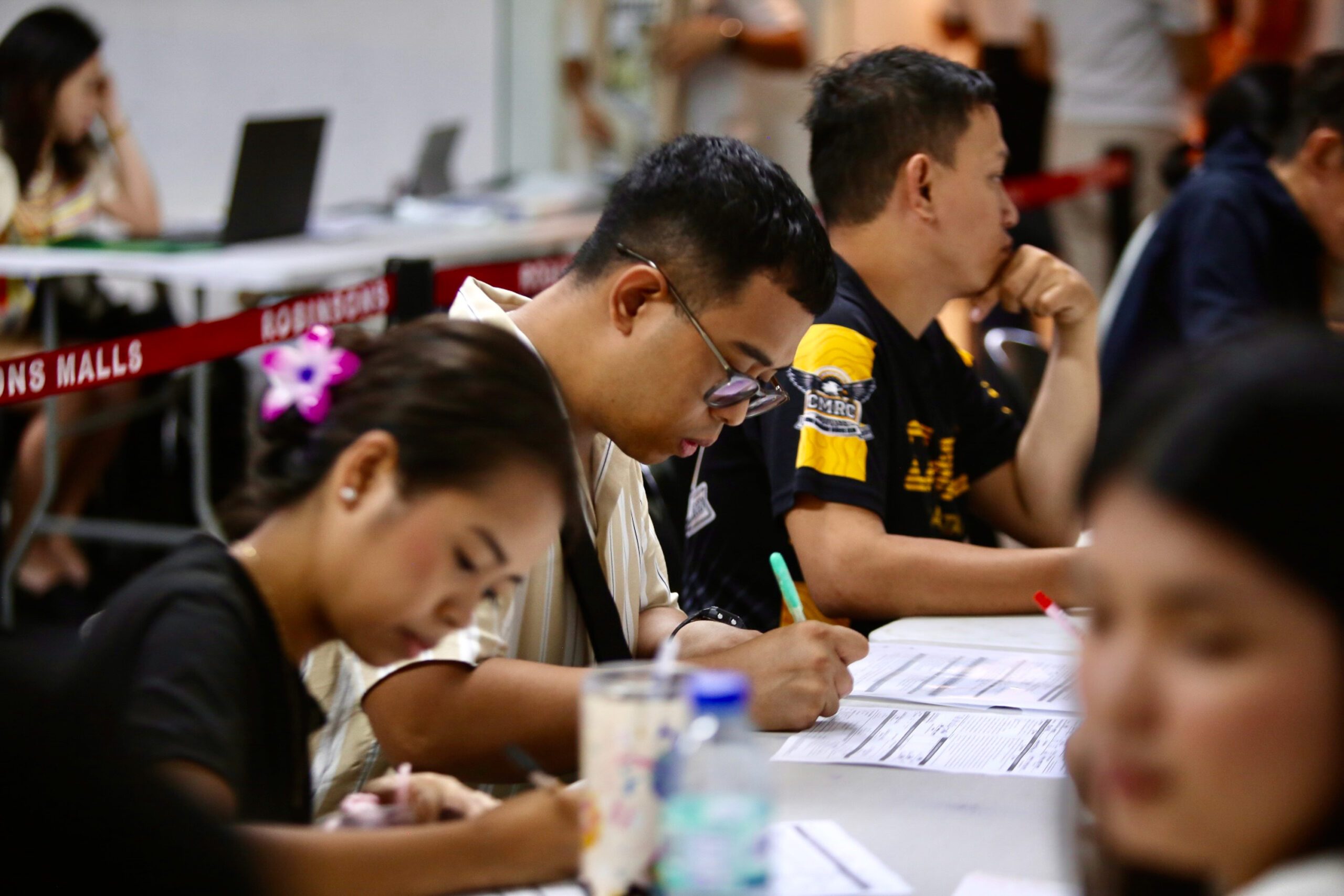
REGISTRATION. Eligible voters line up at a Commission on Elections satellite registration site on the final day of registration to secure their eligibility for the upcoming barangay and Sangguniang Kabataan elections (BSKE), at a mall in Cebu City on May 18, 2026.
Jacqueline Hernandez/Rappler
With the barangay and Sangguniang Kabataan elections slated for November 2, the Senate only has over two months to conduct plenary debates and put the measure to a vote
AT A GLANCE
- A bill to fix the term of office for barangay officials and Sangguniang Kabataan members to five years has been introduced in the Philippine Senate.
- Senator Francis Escudero sponsored the bill, which also proposes to postpone the upcoming barangay and SK elections to November 2028, allowing officials more time to implement their programs.
- The Senate committee on local government has endorsed the bill, which will undergo plenary debates before being voted on.
This is AI-generated. Read the article for full context. Report any errors.
MANILA, Philippines – A bill fixing the term of office of barangay officials and members of the Sangguniang Kabataan (SK) to five years has reached the Senate plenary.
Senator Francis “Chiz” Escudero, author of Senate Bill (SB) No. 2387, sponsored the committee report on Tuesday, August 25. The measure also seeks to postpone the November 2 barangay and SK elections to the second Monday of November 2028 and every five years thereafter.
“Having heard the views of our stakeholders, both for and against, the committee has concluded that a five-year term strikes the better policy balance, and accordingly submits the present measure for the consideration and approval of this chamber,” Escudero said in his sponsorship speech. Escudero filed the proposed measure, which seeks to amend Republic Act (RA) No. 12232, earlier in August.
The Senate committee on local government endorsed the committee report to the plenary. It was signed by 16 senators.
According to Escudero, the five-year term would provide barangay and SK officials — whom he described as “planners, implementers, first responders, peacekeepers, conciliators, and frontline service providers” — a sufficient period to “formulate, implement, evaluate, and refine their programs before the next electoral transition.”
He also said fixing such a term for the local officials was not unprecedented, citing the instances when the Congress prescribed similar terms in 1988 and 1998.
Elected barangay and SK officials serve a four-year term under RA No. 12232.
“In other words, this bill is a term-setting measure, enacted in the exercise of the power expressly conferred upon Congress by Article X, Section 8 of the Constitution, and reflecting the policy considerations recognized in Macalintal v. Senate,” Escudero said.
“The corresponding adjustment of the election date is merely incidental. Elections remain regular, periodic, and certain: the electorate knows when the next election will occur, can hold officials accountable at definite intervals, and retains full democratic control over barangay governance,” he added.
With the barangay and SK elections slated for November 2, the Senate only has over two months to conduct plenary debates and put the measure to a vote.
Once the upper chamber approves its own version of the bill on third reading, it will be transmitted to the House of Representatives for consideration.
If the houses’ versions of the bill differ, a bicameral conference committee will be convened to reconcile them. The final approved version will be transmitted to the President for his signature. – Rappler.com
KioskNews shows a cleaned-up reading view extracted from the publisher’s page — the original always lives on their site, not ours.