Sharp increase in CPI likely temporary: DGBAS
PRICE SHOCK: Food prices rose 2.64 percent due to heavy rainfall, while housing costs were pushed up by a 1.72 percent increase in rent and utility fees, data showed
By Crystal Hsu / Staff Reporter


Taiwan’s consumer prices rose at the fastest pace in 31 months last month, driven largely by a surge in vegetable costs after heavy rainfall, although the government said the increase was temporary and did not signal broad-based inflation.
The consumer price index (CPI) increased 2.73 percent from a year earlier, marking the fifth straight month above the central bank’s 2 percent inflation target, the Directorate-General of Budget, Accounting and Statistics (DGBAS) said yesterday.
Vegetable prices contributed 0.53 percentage points to the overall increase, DGBAS Department of Statistics Deputy Director Tsai Hsiu-hui (蔡秀慧) said.
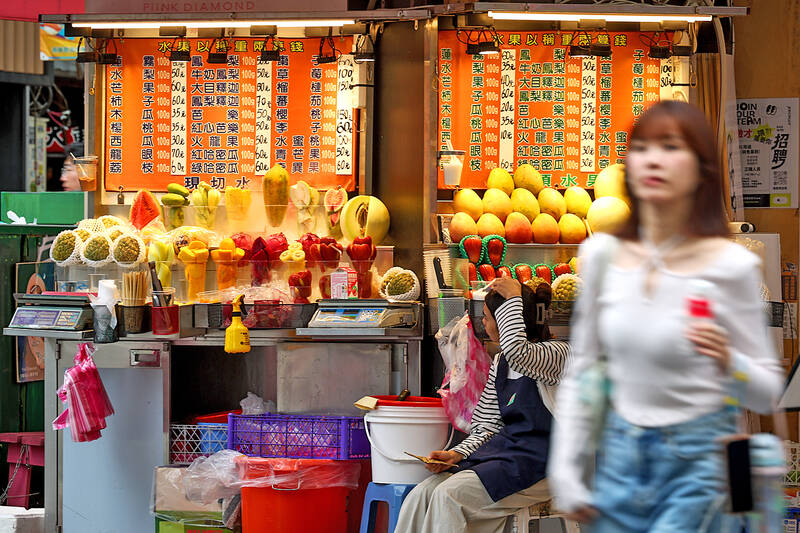
A woman walks past a fruit stand in Taipei’s Ximending shopping area yesterday.
Photo: CNA
Because vegetables can generally be replanted and harvested within about a month, the price shock is likely to fade quickly, she said.
“We expect the increase in inflation to be a short-term phenomenon, with the CPI growth rate likely to ease in October,” Tsai told a news conference in Taipei.
For inflation to be considered entrenched, price increases need to be broad-based, significant and persistent, Tsai said. While some items posted sharp gains last month, the overall data did not meet all three criteria, she said.
Transportation and communications costs rose 4.07 percent, the most among the major CPI categories. Fuel prices jumped 12.72 percent from a year earlier, while airfares rose 13.83 percent as higher fuel surcharges and airport service fees pushed up travel costs amid tensions in the Middle East, Tsai said.
Prices of education and entertainment equipment, including computers and related products, climbed 9.75 percent, the fastest increase in 44 years, as memory prices surged.
However, Tsai said that such products have a relatively small weighting in the CPI and are not purchased frequently, limiting their impact on overall inflation.
Food prices increased 2.64 percent, with restaurant meals up 3.04 percent as heavy rainfall pushed up costs of agricultural products. Housing costs rose 2.38 percent, led by a 1.72 percent increase in rent and higher household gas, electricity and management fees.
Core CPI, which excludes volatile food and energy prices, rose 2.52 percent from a year earlier, indicating that underlying price pressures remain somewhat elevated.
This month, consumer inflation is expected to ease partly because of a shift in the timing of the Mid-Autumn Festival, which fell in September this year, but October last year, Tsai said.
Even so, CPI growth is likely to remain above 2 percent this month, while the outlook for vegetable prices would depend largely on weather conditions, she said.
Producer prices also accelerated sharply last month, as the producer price index (PPI) rose 18.12 percent from a year earlier, driven by higher prices for petroleum and coal products, computers and electronic and optical products, chemicals, pharmaceuticals and electronic components, the DGBAS said.
Higher natural gas prices charged to industrial electricity users also contributed to the increase, it said.
In the first nine months of the year, CPI rose 1.94 percent from a year earlier, while PPI increased 10.16 percent, DGBAS data showed.
KioskNews shows a cleaned-up reading view extracted from the publisher’s page — the original always lives on their site, not ours.