China and North Korea to open border bridge after unexplained 12-year delay
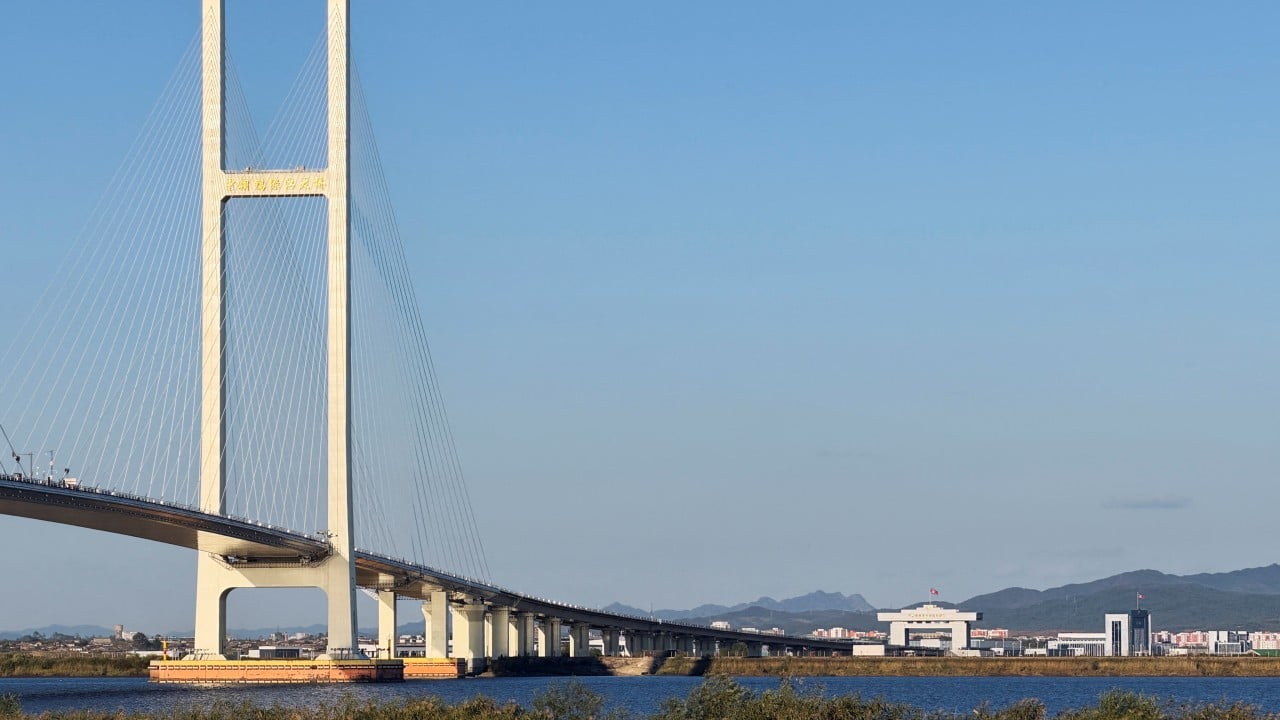
The two countries will hold an opening ceremony to mark the official opening of the New Yalu River Bridge, Chinese state news agency Xinhua reported on Wednesday morning.
Last week, signs that the bridge would soon open were spotted, including vehicles crossing and traffic lights and bridge indicators being activated, according to South Korean newspaper The Chosun Daily.
The bridge links the Chinese city of Dandong with Sinuiju and is expected to become a major trade route between the two countries.
It was originally slated to open in October 2014, but this was stalled for a decade with no official explanation.
Currently, traffic between the two cities must pass through the Sino-Korean Friendship Bridge, an ageing bottleneck that cannot support trucks weighing more than 20 tonnes and has only a single lane.
The new four-lane crossing is expected to become China’s largest economic and trade gateway with North Korea. State-run China News Service reported in 2014 that it would handle up to 80 per cent of trade between the two countries.
The delayed opening was caused by incomplete road connections, customs and logistics facilities on the North Korean side, compounded by strained relations and Covid-related border closures, according to The Chosun Daily.
However, diplomatic ties between Beijing and Pyongyang have warmed in recent years, with passenger rail services and direct commercial flights between Beijing and Pyongyang resuming.
Chinese President Xi Jinping also visited North Korea in June following a visit by Kim Jong-un to Beijing in September last year.
01:14
North Korea marks 81st anniversary of ruling party with modest celebrations
The opening of the bridge coincides with Pyongyang’s rapid expansion of land connections with Russia.
Last month, North Korea and Russia held an opening ceremony for their first road bridge over the Tunmen River, which connects the cities of Rason and Khasan.
The two bridges could allow the North to deepen economic integration with its neighbours, Lim Eul-chul, a professor at Kyungnam University’s Institute for Far Eastern Studies, told The Korea Herald last month.
Establishing major overland corridors allows Pyongyang to capitalise on strategic competition between Beijing and Moscow and maximise its own economic gains, Lim said.
KioskNews shows a cleaned-up reading view extracted from the publisher’s page — the original always lives on their site, not ours.