Ho Chi Minh City seeks to convert 4.6 hectares of protective mangrove forest for $3.9B metro developed by Vingroup company
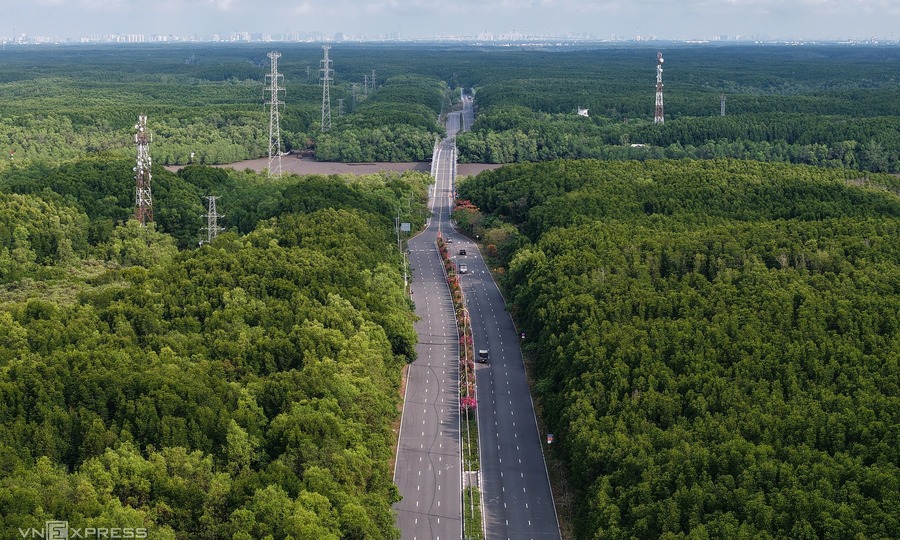
Ho Chi Minh City authorities asked the city's People's Council on Sept. 21 to approve converting 4.57 hectares of mangrove forest for the Ben Thanh-Can Gio metro line.
All of it is classified as protection forest, made up of about 1.4 hectares of natural mangrove and 3.17 hectares of planted mangrove.
The affected forest lies in An Thoi Dong and Can Gio communes, where the route passes through the buffer zone of the Can Gio Mangrove Biosphere Reserve but stays out of its core.
The project is being developed by VinSpeed, a company of Vietnam's largest conglomerate Vingroup. The city approved it and named VinSpeed as investor on Dec. 5, 2025.
The project broke ground two weeks later and is targeted for completion in 2028.
 |
|
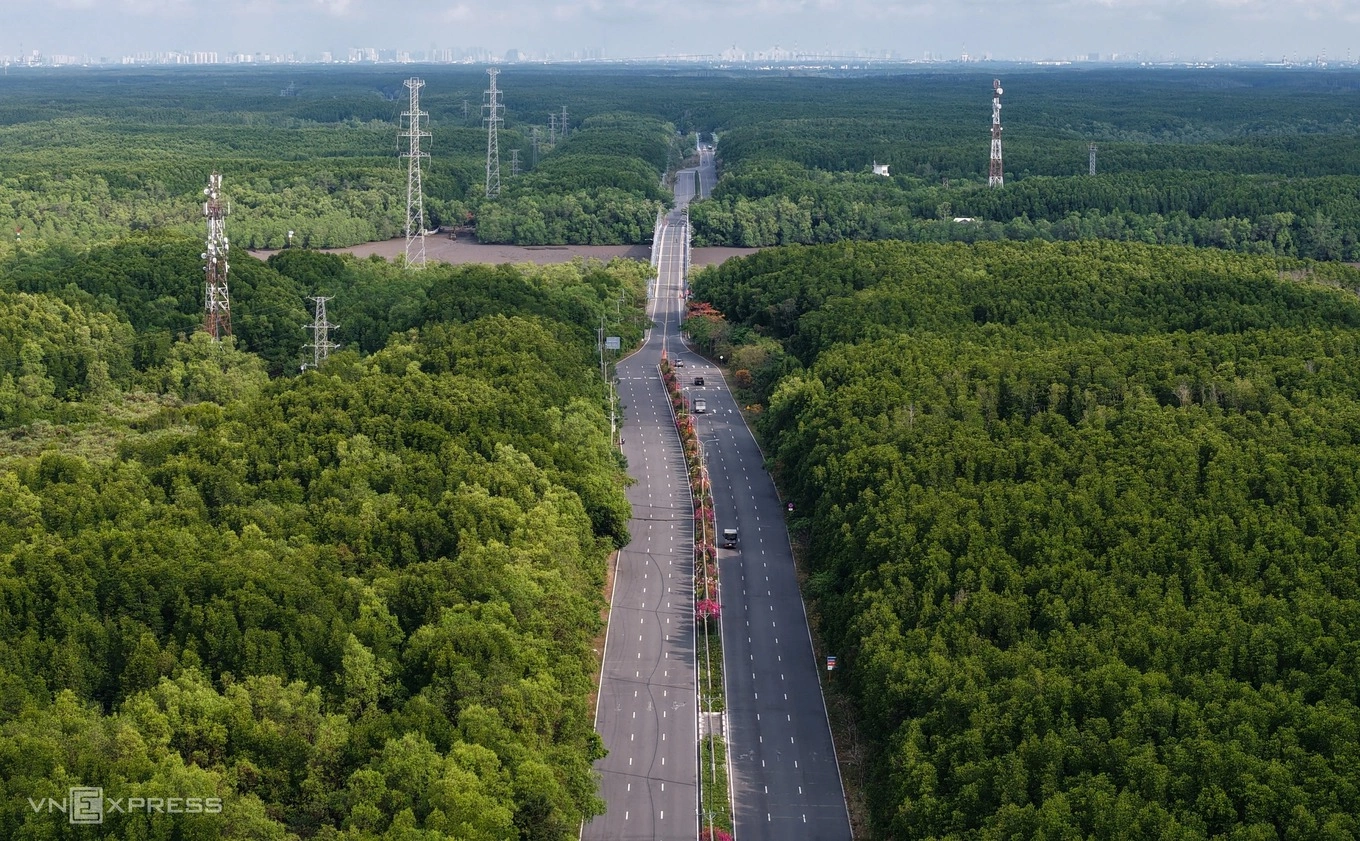
Rung Sac Road in Can Gio, Ho Chi Minh City. Photo by VnExpress/Quynh Tran |
The roughly 54 km double-track line will run from the Ben Thanh area in the city center to Can Gio, ending beside a land reclamation township on the coast. It is designed for a top speed of 350 kph.
It will open with two stations, Ben Thanh and Can Gio, and a 39-hectare depot. Four intermediate stations will be considered at a later stage.
The project has an estimated total investment of VND102.43 trillion ($3.94 billion), excluding site clearance, which the city budget covers.
An updated feasibility study in May put site clearance at about VND9.83 trillion ($378 million), nearly VND3 trillion below the initial estimate.
The People's Committee said the metro qualifies as an urgent transport project, a category that allows natural forest to be converted under current rules. It added that the line conforms to the city's master plans.
VinSpeed has pledged to plant replacement forest. The project's environmental impact assessment has been approved.
KioskNews shows a cleaned-up reading view extracted from the publisher’s page — the original always lives on their site, not ours.