What to expect at 4th ICC status conference in Rodrigo Duterte's case
PRAGUE, Czechia – The International Criminal Court (ICC) Trial Chamber III will convene the fourth status conference on Tuesday, October 13, to discuss procedural matters before the trial of former President Rodrigo Duterte on crimes against humanity charges.
Trial Chamber III is scheduled to sit from 10 a.m. to 11:30 am local time (5 p.m. to 6:30 p.m. Manila time), with another block from noon to 1:30 p.m. (7 p.m. to 8:30 p.m. Manila time) if more time is needed.
Will Duterte attend the status conference?
According to the ICC Public Affairs Unit, Duterte is expected to be present at the hearing. This will be his third appearance before the court overall.
How can the public watch the conference?
Yes. The ICC will stream the hearing on its website with a 30-minute delay.
The ICC Public Affairs Unit said it will make available the audiovisual links from the hearing afterward.
What would be the daily sitting schedule during the trial?
At the status conference, the judges are expected to discuss how long the Court should sit for opening statements and the first block of evidence in December 2026.
In its October 8 decision, the Chamber adopted a flexible, case-by-case approach, balancing considerations of Duterte’s health with the needs of witnesses, such as those testifying via video link from the Philippines.
The Registry initially proposed the following reduced sitting hours (in local and Manila time):
11:00 a.m.-12:00 noon (6:00-7:00 p.m., Manila)
2:00-3:00 p.m. (9:00-10:00 p.m., Manila)
3:30-4:30 p.m. (10:30-11:30 p.m., Manila)
These sitting hours, alongside a “bloc” schedule (e.g., sitting for three weeks followed by two weeks off), were recommended by the Registry based on the expert panel’s medical examination of Duterte.
What’s the update on the Prosecution’s List of Witnesses?
Trial Chamber III will ask the prosecutors how many witnesses they plan to call and how many hours they expect to need to present their case. The defense and the Common Legal Representatives of Victims will also give their estimates.
Following a judicial ruling on October 9, the Chamber ordered the Prosecution to update its witness list, evidence list, and Trial Brief by October 16 to reflect the formal exclusion of Incident 57.
The Chamber decided on October 2 that for Rule 68(3) witnesses, the Prosecution’s supplementary examination of witness P-1100 was capped at 1 hour, reducing the Prosecution’s requested 2 hours to avoid defeating the purpose of streamlined Rule 68 testimony.
However, the Chamber rejected four associated items that were not adequately explained or used in the witness's statement.
The Defense is expected to present its response to Rule 68 applications and requests for in-court protective measures.
The Chamber previously warned the Prosecution and Defense to conduct rigorous assessments before filing future Rule 68 applications to avoid over-inundating the record with repetitive or minimally relevant material.
Where are the proceedings at now about the disclosure of evidence?
The judges will return to disclosure and the prosecution’s List of Evidence, including recent filings that have raised disputes over how material was reviewed and turned over to the defense.
Based on the Defense’s September 22 motion, the case record currently sits at 62,130 items (over 320,000 pages), with 19,238 listed on the Prosecution's List of Evidence.
The Defense argued that the record is flooded with untriaged, illegible, or duplicate documents, primarily from a 44,400+ item dataset on what it emphasized as “drug-related deaths”. It has asked the Chamber to order a new case record capped at 10,000 items. A decision on this is pending.
However, the Prosecution countered in its October 5 response that the volume is necessary to establish contextual elements of widespread attacks against civilians.
The Prosecution also revealed it had offered a set of agreed facts that would have removed approximately 42,511 items from the case record, but the Defense rejected the proposal.
The Chamber has yet to decide on the Defense’s October 9 request to respond to the relevance and review of the Prosecution’s dataset.
In response to Defense’s arguments that thousands of documents in Tagalog or Cebuano lack English translations, the Prosecution noted that 1,591 of these items were disclosed under Rule 77/exculpatory obligations, which do not require official court translation. The Prosecution also said approximately 130 are silent video clips (such as CCTV footage), and remaining metadata linking issues are being corrected.
Is the Defense ready for the trial?
The Chamber has specifically included the defense’s readiness for trial on the agenda, giving Duterte’s lawyers an opportunity to explain whether they are prepared for the proceedings and whether outstanding issues still affect their preparations.
At the third status conference, the Defense maintained that proceeding with the November 30 trial start date severely prejudices Duterte, given that nearly 57,000 items were disclosed in the final months before trial.
The Defense emphasized the massive time burden required for trial preparation, estimating that reviewing the 62,130 disclosed items would take roughly 16,000 person-hours.
On September 25, the Defense proposed that the Chamber order the Prosecution to liaise with the Registry to create a case record capped at 10,000 items as a compromise to keep the 30 November trial date feasible.
The Chamber reiterated in its October 2 decision that the Defense retains full discretion over how to use its allocated questioning time during trial.
Meanwhile, the Prosecution maintained that the volume of evidence is “reasonable” and that the trial should commence on November 30 as scheduled.
How about the Victims’ Representatives?
The Common Legal Representative for the Victims (CLRV) stated they do not oppose reasonable health accommodations for Duterte, provided they do not prejudice other participants.
The Victims Participation and Reparations Section also highlighted the “strong interest” of victims and affected Philippine communities in following the trial live.
What will the Registry discuss during the status conference?
The Registry is expected to brief the judges on what support it can provide for the trial process. It will also update the court on interpretation arrangements for the start of the trial, an essential practical issue in proceedings involving parties, witnesses, and participants who may use different languages.
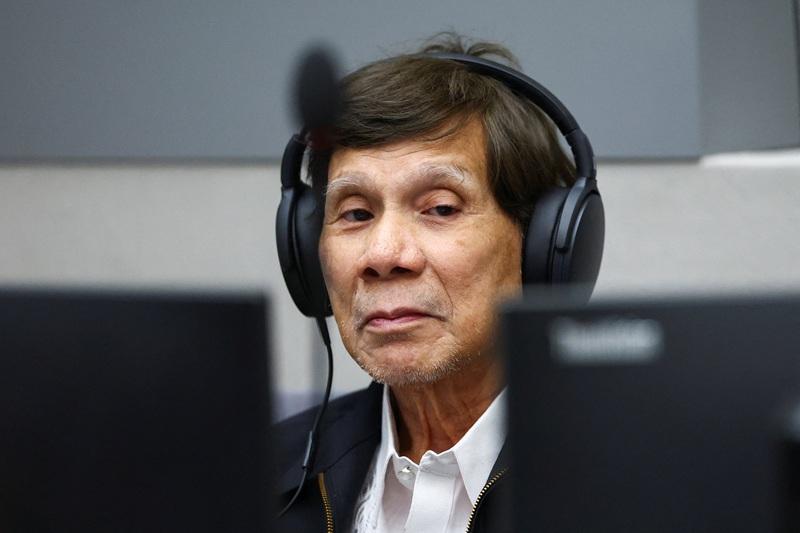
In its October 7 filing, the Registry confirmed it can provide an over-ear noise-canceling headset for hearing/interpretation, nursing staff support during breaks, and mobility/seating assistance in court.
If required, the Registry has also prepared protocols to enable Duterte to appear remotely via video link from the ICC Detention Center, complete with dedicated privileged telephone lines for counsel consultation.
Will the public see Duterte in the courtroom during trial?
The Public Information and Outreach Section (PIOS) recommends that the Chamber regularly provide public explanations if Duterte is authorized to leave the courtroom during hearings to mitigate speculation and public concern in the Philippines.
The Registry has ensured that there is no broadcast of Duterte walking into or out of the courtroom. — VBL, GMA News
KioskNews shows a cleaned-up reading view extracted from the publisher’s page — the original always lives on their site, not ours.