NDR 2026: Parents to get up to 12 days of childcare leave each
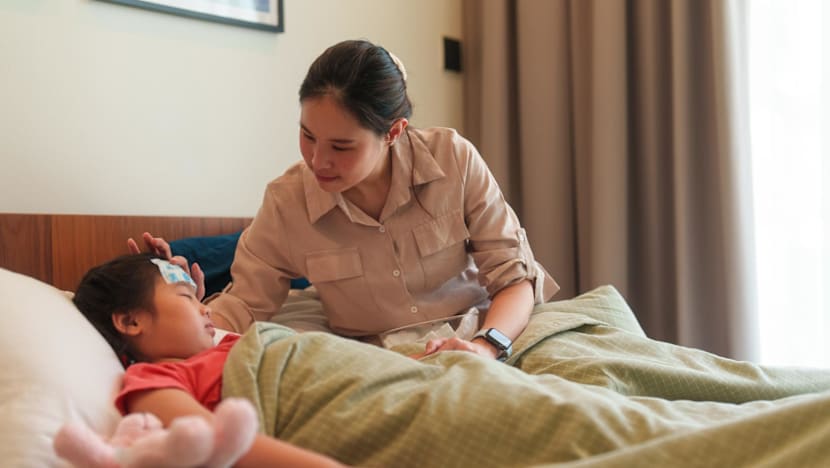
SINGAPORE: Parents will enjoy more childcare leave, with more days off for larger families, as part of efforts to give them more time with their children, Prime Minister Lawrence Wong announced on Sunday (Aug 23) at the National Day Rally.
Each parent will get eight, 10 or 12 days of leave a year if he or she has one, two or three or more children respectively. The children must be Singaporean and up to 12 years old.
This is up from the current six days of leave a year for each parent with children aged six and below, or two days a year if the children are between seven and 12 years old.
With these changes, Mr Wong said a working couple with three primary school children would go from having a combined four days of childcare leave under current provisions, to 24 days under the new scheme.
“This will give parents more time and much greater flexibility to care for their children,” he said.
Going forward, the government will also pick up the full tab for employers’ costs during statutory child-related leave schemes, up to its reimbursement limit.
Currently, maternity leave, paternity leave and shared parental leave provisions add up to a total of about seven-and-a-half months of paid leave.
“Can we go further? I won’t rule it out,” Mr Wong, who is also finance minister, told the audience at ITE College Central.
“But these leave arrangements have just been introduced, and employers do need time to adapt. So we will let these changes settle in first.”
The enhancements to childcare leave and government reimbursement are among the first set of recommendations from the Marriage and Parenthood Reset Workgroup to be accepted by the government.
The workgroup, chaired by Minister in the Prime Minister’s Office Indranee Rajah, will release a fuller set of recommendations in early 2027.
MORE CHILDCARE LEAVE
Many parents say that current childcare leave provisions are not enough because having more children means greater caregiving responsibilities, said Mr Wong.
“Older children still need their parents – the needs are different, but they do not go away. So parents often end up using their own annual leave,” he added.
The higher baseline of eight days’ leave ensures both parents have enough combined childcare leave to cover mandated preschool and primary school closures, with a buffer for unplanned sick days, said the National Population and Talent Division (NPTD).
Legislative amendments are needed for these changes. The start date of the new leave entitlements will be announced later, NPTD and the Ministry of Social and Family Development (MSF) said in a factsheet.
They encouraged parents to discuss leave plans with employers early where possible, so that caregiving needs and business operations can be managed well.
GOVERNMENT PICKS UP MORE OF THE TAB
To help employers support working parents, the government will enhance reimbursements and cover employers’ costs for the full duration of all statutory child-related leave schemes, regardless of the child’s birth order.
This will apply to maternity leave, paternity leave, shared parental leave, adoption leave and childcare leave.
It will also apply to self-employed parents claiming compensation for income lost in the duration of these statutory child-related leave schemes.
The reimbursements will continue to be capped at S$500 (US$390) a day or S$2,500 a week, including Central Provident Fund contributions.
“With the government paying for the leave, let us be very clear, employers should be more supportive of employees who are parents,” said Mr Wong.
“So I ask all employers to do your part. Support parents in your organisations and give them confidence to take the leave they are entitled to.
“Help them settle back into work afterwards. Make sure that becoming a parent never becomes a disadvantage in someone’s career,” he said.
“Remember – parents who feel supported are better able to give their best, at home and at work.”
Currently, employers pay working parents the gross rate of pay and are not reimbursed for the full duration under three leave schemes:
- Maternity leave (16 weeks) – not reimbursed for first eight weeks for the first and second child
- Adoption leave (12 weeks) – not reimbursed for first four weeks for the first and second child
- Childcare leave for younger children (six days) – not reimbursed for first three days
Employers are already reimbursed for the full duration of paternity leave (four weeks), shared parental leave (six or 10 weeks) and childcare leave for older children (two days).
In 2024, the take-up rate of childcare leave was 54 per cent for fathers and 59 per cent for mothers, according to data from MSF.
The take-up rate for statutory paternity leave was 61 per cent. It was 77 per cent for statutory maternity leave.
KioskNews shows a cleaned-up reading view extracted from the publisher’s page — the original always lives on their site, not ours.