No Rain, No Relief: Weather Chief Dashes Pollution-Hit Delhi's Hopes
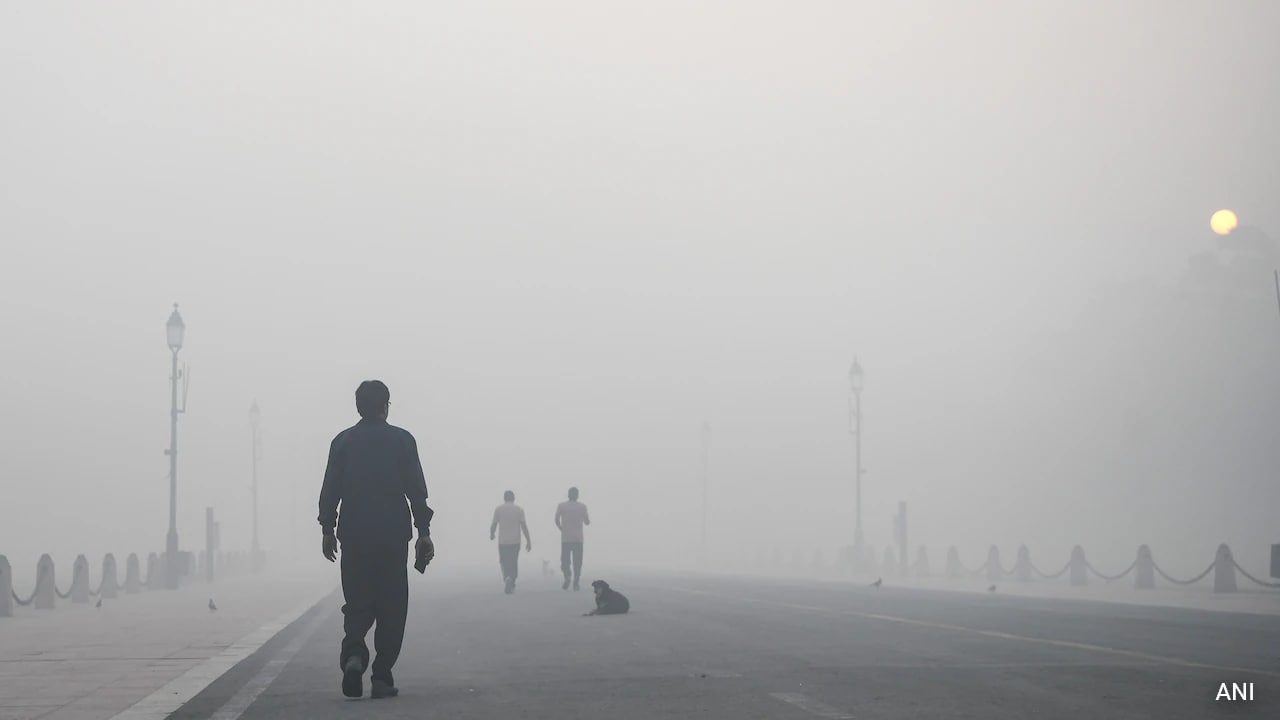
The northern plains are choking from pollution and a billion Indians living there are looking at the skies. All are hoping for rain that may wash away the toxic cloud hanging overhead. But the weather office ended that hope today, saying rain is unlikely in the plains. There might be some over the Himalayan region, but none is expected in Delhi, where the pollution has reached severe levels.
This also ruins the IIT Kanpur's cloud seeding plan, India Meteorological Department chief Dr Mrutyunjay Mohapatra, told NDTV.
Western Disturbance Coming But...
What is expected to bring rains over Himalayas is a Western disturbance -- a moisture-laden weather pattern that emerges from the Mediterranean Sea and comes from the west.
Mohapatra, however, told NDTV that it is unlikely to bring the kind of widespread rain needed to wash out the noxious haze over the Indo-Gangetic plains, including Delhi and its surrounding areas.
The Western Disturbance will bring rain and snowfall in Jammu and Kashmir, Himachal Pradesh and Uttarakhand. There might be some isolated rainfall over northern Punjab. Areas most affected by severe pollution across the plains are unlikely to receive significant rain, he said.
The forecast comes as air quality levels across much of northern India continue to hover in very poor and severe categories. Several cities across the Indo-Gangetic plain have recorded hazardous Air Quality Index levels in recent days as calm winds, cooler temperatures and atmospheric conditions trap pollutants close to the surface.
Mohapatra warned that a Western Disturbance accompanied by clouds but lacking meaningful rainfall can sometimes aggravate pollution.
Delhi could be overcast on November 12 and 13, but there will not be enough precipitation. "Once the Western Disturbance approaches, there will be moisture. But rain is not likely. I am talking about Delhi and neighbouring areas," Mohapatra said.
IIT Explores Cloud-Seeding
The possibility of a cloud seeding operation is being considered by researchers from the Indian Institute of Technology (IIT), Kanpur and the Delhi Government.
Dr Mohapatra, however, cautioned that the current weather conditions may not provide the right type of clouds needed for an effective operation.
"Cloudiness will be there. There will be partly cloudy skies," he said. But the expected cloud layers will be unsuitable, he said.
"It will be mainly medium and high clouds. It is not the convective cloud. Therefore, the yield (from cloud seeding) will be less," Dr Mohapatra said.
The assessment could prove significant because successful cloud seeding depends heavily on cloud structure, moisture content and atmospheric conditions. Without suitable convective clouds, even well-planned operations may produce only limited rainfall.
Will There Be A Cyclone?
Apart from the Western Disturbance, meteorologists are closely monitoring another developing weather system over the Bay of Bengal.
According to the IMD, a deep depression is expected to form around November 15 or 16, which could intensify into a cyclonic storm. Its eventual path remains uncertain as of now, but it offers some hope for the pollution-hit regions.
"There are two opinions now. One is that it may move towards Andhra Pradesh. The other that many models are suggesting, is that it will go towards Bangladesh," said Dr Mohapatra.
Should the system go towards Bangladesh and attain a more northerly position, it may help strengthen north-westerly winds over northwest India and the Indo Gangetic plain. Stronger winds are often capable of dispersing pollutants and preventing their accumulation near the surface.
Mohapatra said this is the only possible scenario that might help but it depends entirely on how the Bay of Bengal system evolves over the coming days.
For now, the IMD is forecasting generally calm or very light winds over northern India. "It will not support the dispersal of pollutants," Dr Mohapatra said.
KioskNews shows a cleaned-up reading view extracted from the publisher’s page — the original always lives on their site, not ours.