Singapore to streamline community mental health services under new HealthierMind SG network
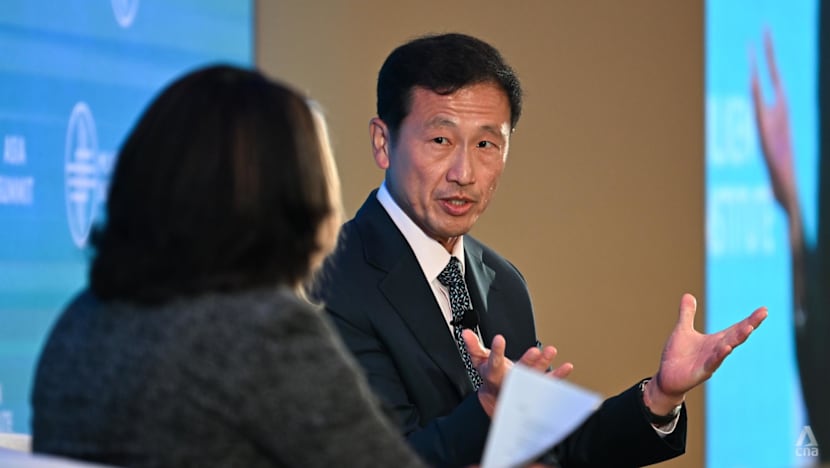
SINGAPORE: Singapore will bring its community mental health services under a new network called HealthierMind SG, in a move to simplify access to care, improve coordination among providers and provide more stable funding for organisations delivering mental health support.
Health Minister Ong Ye Kung announced on Thursday (Oct 22) that existing community mental health teams will be brought together under a single framework covering funding and key performance indicators (KPIs), replacing current arrangements involving different schemes and requirements.
Speaking at the second Singapore Systemic Family Therapy Conference, Mr Ong, who is also Coordinating Minister for Social Policies, said the move is part of a broader effort to strengthen community-based mental health support, with greater emphasis on prevention and early intervention.
"We must intervene earlier to help people stay mentally well, recognise the problems early, and then support them," he said.
Currently, Singapore has several community mental health programmes catering to different groups and levels of need.
These include Community Outreach Teams (CREST), which support people with early mental health symptoms, and Community Intervention Teams (COMIT), which serve those with moderate conditions.
For young people, similar services are provided through CREST-Youth and Youth Integrated Teams (YIT). Public healthcare institutions, including the Institute of Mental Health (IMH), also offer community mental health services.
Mr Ong said that while these services provide different levels of support, the existing arrangements can appear fragmented, with community organisations having to navigate multiple schemes and fulfil different KPIs.
The organisations would need to "organise their resources in a sensible way to deliver effective services, while fulfilling all the criteria of the schemes", Mr Ong added.
Under HealtherMind SG, funding will become more stable, with a sufficient baseline to give community organisations the confidence to retain staff and build their mental health capabilities.
The funding framework will also recognise efforts to improve access to care and mental health outcomes.
"A unified framework will ensure that mental health support services are more integrated," Mr Ong said. "It will also help individuals navigate the system more easily and get the appropriate help they require."
One potential change involves how schools refer students who require additional mental health support.
Currently, schools refer such cases to public healthcare institutions such as IMH.
Under a more integrated arrangement, cases could be assessed according to their severity, allowing less severe cases to be referred to community organisations instead, where students could receive more accessible and appropriate support.
Mr Ong said this could also create opportunities for closer partnerships between schools and community organisations.
The Ministry of Health (MOH) will work with the Agency for Integrated Care (AIC) and community organisations to transition to the HealthierMind SG framework in the coming months.
GROW WELL SG TO EXPAND TO SECONDARY SCHOOLS
The restructuring comes amid growing concern over youth mental health, with about one in three young people aged 10 to 18 in Singapore reporting mental health symptoms such as depression and anxiety.
Mr Ong said that while Singapore would expand clinical capacity to manage severe mental health conditions, the longer-term solution lies in prevention and addressing problems before they become more serious.
As part of these efforts, the government will extend Grow Well SG to Secondary 1 and 2 students from 2027, with a stronger focus on building mental resilience.
The initiative will be introduced in 20 secondary schools in early 2027 before expanding to all secondary schools in 2028.
Grow Well SG, which has already been rolled out to preschool and primary school children, focuses on developing healthy habits, including adequate sleep, healthy eating, exercise, managing device use and building relationships with family and friends.
Under the expanded programme, secondary school students will work with healthcare professionals to develop personalised health plans, similar to those introduced for primary school pupils.
However, the plans for secondary school students will place greater emphasis on helping them cope with mental health challenges.
Moving from primary to secondary school "is a significant transition in a young person’s life", Mr Ong noted.
"When they are entering adolescence, when they are building their identities, becoming more independent, and navigating academic, social and digital pressures in a new environment," he said.
The Grow Well SG Health Plan for secondary schools will focus on normalising conversations about mental health and raising awareness of available support services.
Parents and caregivers will also be involved to help young people apply these skills in their everyday lives.
MOH, the Ministry of Education (MOE) and the Ministry of Social and Family Development (MSF) will jointly oversee the expansion. More details will be announced when ready.
NEW GUIDELINES ON PARENTAL CONSENT
MOH is also developing guidelines to provide greater clarity on parental consent for young people seeking mental health support, amid concerns that involving parents too early could discourage some from seeking help.
Mr Ong said current practices surrounding parental consent vary across schools, community services and healthcare settings.
"For some young people, concerns about involving their parents may make them hesitant to seek counselling support," he said.
The proposed guidelines aim to provide young people with a safe way to seek initial assistance while ensuring that their families are involved at an appropriate stage as care progresses.
"A young person stepping forward to seek help should not have to worry that their parents would somehow be automatically and immediately informed," Mr Ong said.
"Our key consideration must always be the well-being of the young person."
MOH will seek public views on the proposed guidelines, including feedback from mental health practitioners, to help strike the right balance between allowing young people to seek help independently and involving their families.
GREATER ROLE FOR FAMILY DOCTORS
The government also plans to expand the role of family doctors in providing mental health support within the community.
Mr Ong said general practitioners (GPs), many of whom already participate in Healthier SG, could play a bigger role in managing mental health conditions, as is common in countries such as Australia and the United Kingdom.
"They can play a bigger role in our community support system for mental health," he said.
Singapore has already taken steps in this direction.
In 2025, Healthier SG care protocols for major depressive disorder and generalised anxiety disorder were introduced to support GPs in caring for patients with these conditions.
Healthier SG GP clinics have also been paired with community mental health service providers to provide more holistic care and follow-up for patients.
Mr Ong said the government plans to build on these efforts and strengthen the involvement of GPs in mental health support over time.
KioskNews shows a cleaned-up reading view extracted from the publisher’s page — the original always lives on their site, not ours.