Why do some USB connectors have those 2 square holes?
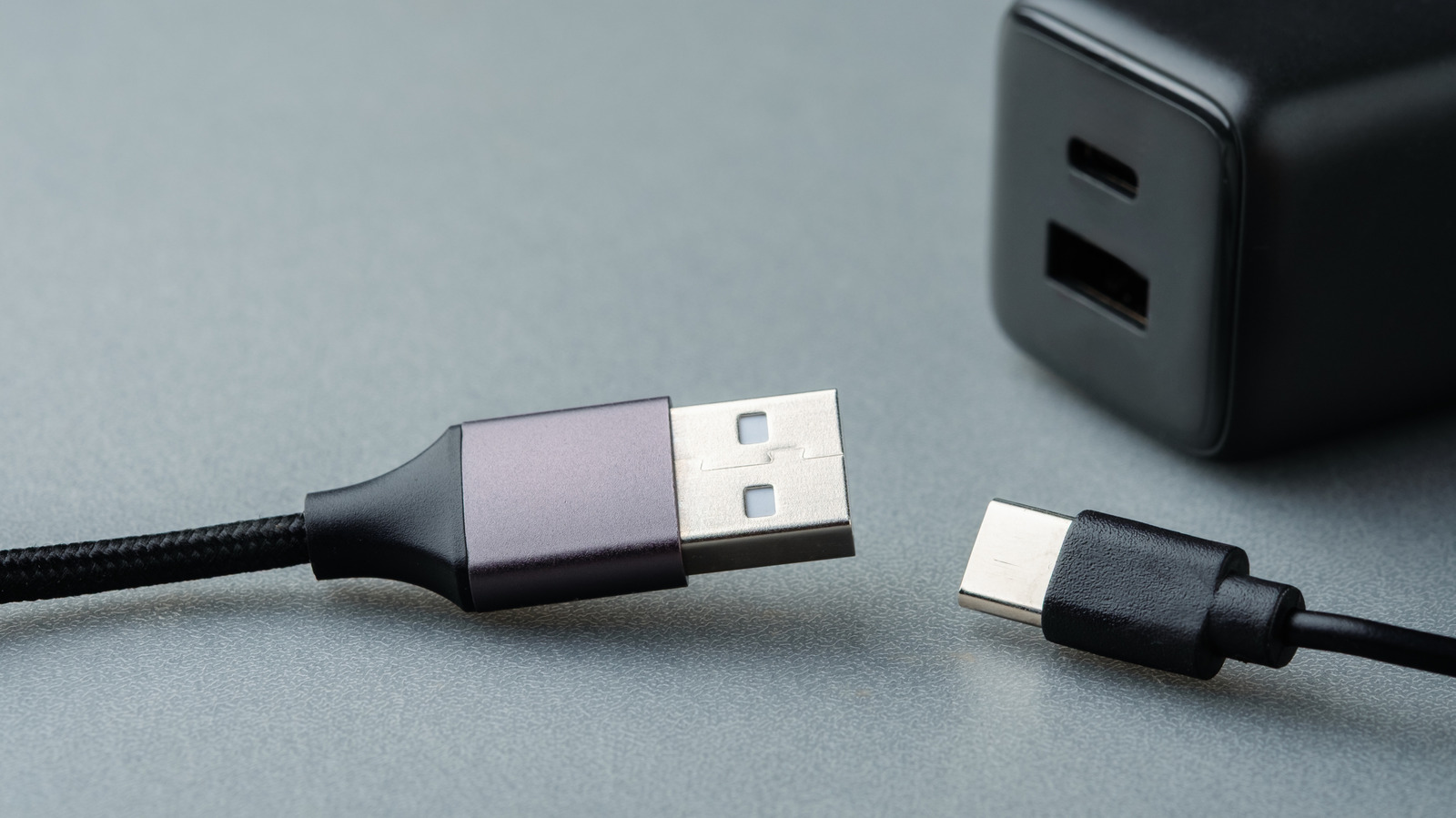
Those square holes on USB-A connectors serve an important purpose.
patpitchaya/Shutterstock
USB-C ports might be the de facto port today when it comes to charging and data transfer, but that wasn't always the case. Before consumers got the current reversible design, the original Universal Serial Bus, or USB, was designed in the late '90s by Intel, Microsoft, NEC (Nippon Electric Company), IBM, Compaq, DEC (Digital Equipment Corporation) and Nortel.
The USB Type-A connector was designed to simplify the task of interfacing with plug-and-play peripherals like keyboards and printers. Broad compatibility meant that users could minimize their cable collection and rely on a standard port for convenience. Over the years, new standards like USB 4 brought dramatic improvements in power delivery and data transfer speeds.
Most male USB-A connectors have two square-shaped holes. People rarely think about this design feature when they plug in everything from cables to storage devices, but there's more to them than mere aesthetic value. Put simply, they ensure the connector stays plugged in. Here's how this engineering decision plays into consumer technology's once-ubiquitous standard.
What are those square holes for on a USB?
Shamils/Shutterstock
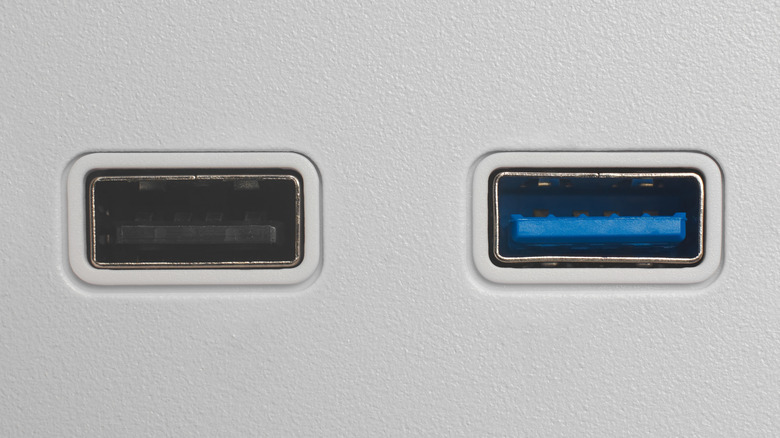
Peer into a female USB-A port and you'll spot spring-loaded retention clips meant to snap into the male connector. The square holes are a part of this locking mechanism, ensuring a secure connection. This minimizes disconnections while powering peripherals, transferring files or charging devices. This also means the USB-A connector must be plugged in correctly; it's not reversible.
You can usually hear an audible click while slotting a USB device into a port slowly, which means it won't slide out unless firmly pulled. These ports are rated for thousands of plug-and-unplug insertion cycles, so you don't have to worry about the clips wearing out.
If you're wondering how modern USB-C cables stay in place without square holes, they use a different mechanism. Spring-loaded tabs inside the female port latch onto notches inside the connector. This removes the need for square holes. Its reversible nature also makes it easy to connect and disconnect.
What other mechanisms have connectors used in the past?
DVI cables (an old cable that's likely not worth keeping) relied on large screws to keep their three-row pin grid in place for steady video output. In a curious reversal from how USB-A operates, some Micro-USB connectors had spring-loaded clips instead of the female port. At the time, it was an upgrade over the delicate Mini-B connector's thin plastic tongue mechanism. Switching the spring contacts to the male port meant you only had to upgrade your Micro-USB cables when they wore out.
Micro-USB may have been the European Commission's connector of choice for mobile devices back in 2009, but things changed. In 2022, the European Union required smartphone manufacturers to switch to the USB-C standard by 2024. Apple, whose 30-pin connector and Lightning port strayed from the norm, relented and switched its iPhone lineup to USB-C with the iPhone 15 in 2023. Despite USB-C's prevalence, USB-A is still a familiar sight in the accessories space, especially in offices and workplaces.
KioskNews shows a cleaned-up reading view extracted from the publisher’s page — the original always lives on their site, not ours.