Greater KL gets new industrial gas plant as China’s Yingde Gases expands in Malaysia
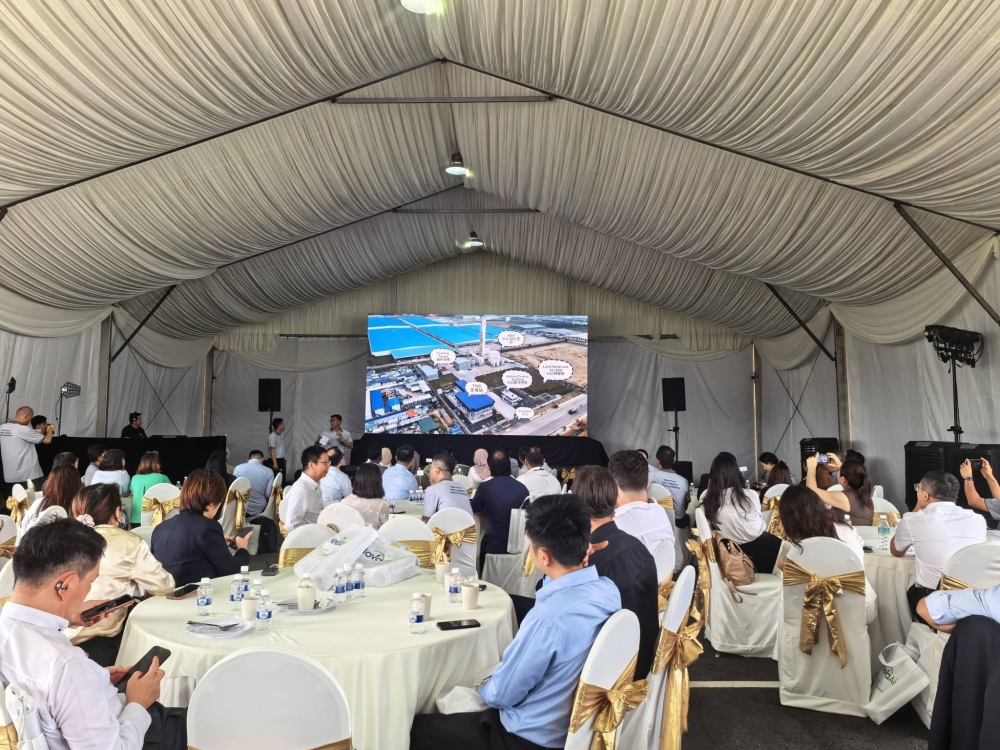

NovaAir’s new industrial gas plant at UMW High-Value Manufacturing Park in Serendah, Selangor is inaugurated on October 13, 2026. — Picture from Facebook/Quality Trailer Parts Sdn Bhd
First Published: Tuesday, 13 Oct 2026 4:54 PM MYT
KUALA LUMPUR, Oct 13 — China-based industrial gas producer Yingde Gases Group Co Ltd’s unit NovaAir Industrial Gases Sdn Bhd aims to raise the Kuala Lumpur plant’s capacity utilisation to above 90 per cent within two years.
NovaAir said in a joint statement that Yingde Gases plans to expand its investment in Malaysia over the next three to five years, with the ambition of positioning NovaAir among the country’s top three industrial gas suppliers.
“From its Malaysian regional headquarters, NovaAir also plans to pursue opportunities in Thailand, Vietnam and Indonesia, while continuing to focus on operational efficiency, sustainability and local talent development,” it said.
NovaAir said today it had inaugurated its 300-tonne-per-day liquid air separation unit (ASU) at UMW High-Value Manufacturing Park in Greater Kuala Lumpur, strengthening Malaysia’s domestic supply of essential industrial gases for high-value manufacturing and reinforcing the group’s long-term investment commitment to Malaysia.
Commissioned in August 2026, the facility supports growing demand for industrial gases across Malaysia’s manufacturing ecosystem and strengthens Yingde Gases’ presence in Southeast Asia.
Commenting on the launch, Malaysian Investment Development Authority (MIDA) chief executive officer Datuk Sikh Shamsul Ibrahim Sikh Abdul Majid said industrial gases may be unseen, but they are essential to the industries powering Malaysia’s next phase of growth.
“NovaAir’s investment strengthens this critical foundation, advancing the ambitions of NIMP 2030 and the Chemical Industry Roadmap 2030, while enabling stronger domestic supply chains, higher-value industrial activities and skilled employment opportunities for Malaysians,” he said.
Meanwhile, NovaAir general manager Charlene Quek said the company aims to forge deep, long-term partnerships with Malaysian businesses and contribute to Malaysia’s national industrial ambition.
“The Kuala Lumpur liquid ASU and Alliance Steel project together demonstrate our confidence and sustained investment in this market,” she said.
The Kuala Lumpur liquid ASU produces oxygen, nitrogen, argon and high-purity oxygen for downstream industries, including chemicals, electrical and electronics, oil and gas, food processing, steelmaking and new-energy lithium battery production.
Its proprietary air separation technology was developed and manufactured in-house by Yingde Engineering, the group’s engineering subsidiary, while artificial intelligence-driven control systems help improve energy efficiency and reduce the plant’s carbon footprint. — Bernama
KioskNews shows a cleaned-up reading view extracted from the publisher’s page — the original always lives on their site, not ours.