Age can’t erase value: Delhi High Court hikes accident relief for 81-year-old to Rs 20 lakh
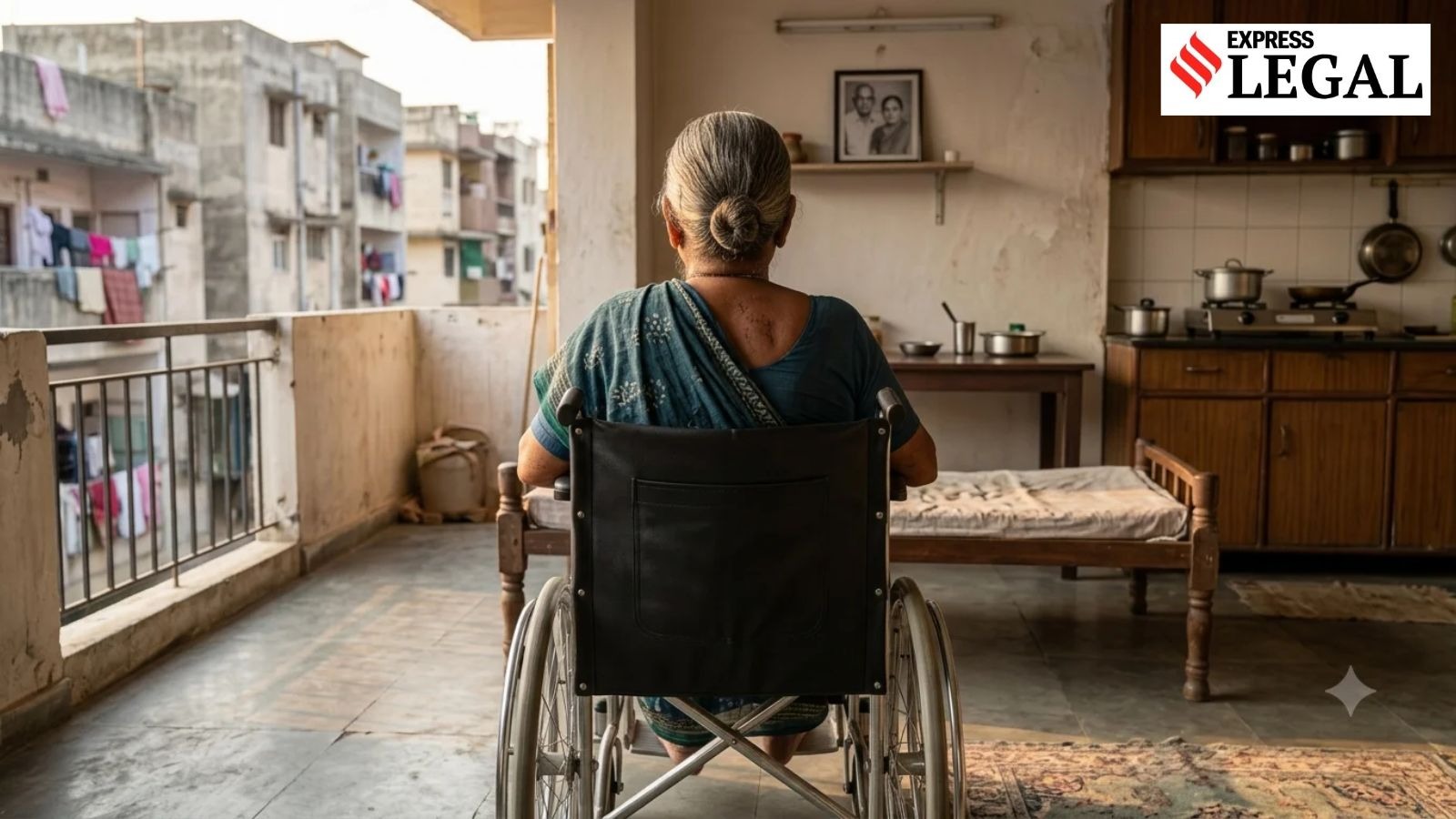
An elderly homemaker’s contribution does not disappear with age, the Delhi High Court has said while raising compensation for an 81-year-old woman who lost part of her left leg and all the toes of her right foot in a bus accident. Calling age-based assumptions about older women a risk shaped by “stereotypes and prejudice”, the court said unpaid domestic work and caregiving cannot be undervalued simply because they carry no salary. It enhanced her compensation from Rs 14.42 lakh to Rs 20.79 lakh.
Justice Anish Dayal examined whether an elderly woman who had never been formally employed could be denied compensation for loss of income and future earning capacity when her household contribution had not been established before the Motor Accident Claims Tribunal (MACT). The high court held that age alone cannot justify treating a homemaker as someone who no longer contributes economically to her family.
“The economic significance of such work is evident even where the work itself is unpaid. Where a grandmother cares for a grandchild while the child’s parents are engaged in paid employment, the family would otherwise have to incur expenditure on childcare,” the court said on October 12.
“Similarly, where an older parent cooks, supervises children, undertakes household management, accompanies family members for medical care, manages domestic arrangements, or performs agricultural and allied activities, the family receives services having an identifiable replacement value, notwithstanding that no monetary consideration is paid and no invoice is generated,” it added.
Caution against age-based assumptions
The court questioned whether a homemaker above 70, including a grandmother who has helped raise successive generations of children and grandchildren, should be denied compensation for the unpaid services she continues to provide to her family simply because she is perceived as a dependent rather than a contributor.
 Justice Anish Dayal held that no age-based restriction should be read into the principle recognising the economic value of unpaid care.
It observed that such a view, if based merely on age, risks being shaped by “stereotypes and prejudice”, adding that contemporary discourse on ageism seeks to identify and address such assumptions.
“The assessment of compensation should not be founded upon stereotypes or assumptions that a person ceases to contribute merely by reason of having attained an advanced age. The Court must remain cognizant of the prejudice that may operate against older persons and guard against such considerations influencing the assessment of compensation,” it said.
Story continues below this ad
The court noted that domestic work includes cooking, cleaning, caring for children and older family members, and managing household responsibilities. Such work can also enable other family members to pursue paid employment. “This Court is conscious that such contributions, particularly those rendered within the household and without monetary remuneration, are often overlooked or undervalued,” the judge noted.
It held that no age-based restriction should be read into the principle recognising the economic value of unpaid care and domestic work when determining motor accident compensation. The court stressed that compensation must be just and reasonable and should not rest on assumptions that a person ceases to contribute upon reaching an advanced age.
Woman suffers 74% permanent disability
The accident took place on February 19, 2019, near Samaspur bus stand in Delhi’s Pandav Nagar area. The elderly woman, then 74, was trying to board a bus when she fell onto the road and both her legs were crushed under the vehicle’s rear wheels.
Her disability certificate recorded 74 per cent permanent disability in relation to both lower limbs. Her left leg was amputated below the knee, and all the toes of her right foot were amputated.
Story continues below this ad
In December 2023, the tribunal awarded her Rs 14.42 lakh with interest at 7.5 per cent. It did not grant compensation for loss of income or future income, noting that she had never been formally employed and that evidence of her contribution to household work had not been established before it.
The high court assessed her notional monthly income at Rs 16,962, equivalent to the minimum wage for a skilled worker in Delhi at the time of the accident. It allowed Rs 50,886 for three months of lost income, considering her prolonged treatment and repeated hospitalisations.
For future loss of income, the court assessed her functional disability at 50 per cent and applied a multiplier of five, awarding Rs 5,08,860. It did not add future prospects because of her age.
Attendant charges, prosthetic limb costs
The court increased attendant charges from Rs 50,000 to Rs 5 lakh and raised compensation for pain and suffering from Rs 75,000 to Rs 1 lakh. It also awarded Rs 1.30 lakh towards a further prosthetic limb and Rs 75,000 for its maintenance.
Story continues below this ad
The insurance company must deposit these two amounts separately with the tribunal within six weeks. The prosthetic-limb amount will be released only after the claimant produces the original, verified invoice and proof of payment to a reputed vendor. The amounts will not carry interest for the period already elapsed since the accident, but will be kept in an interest-bearing fixed deposit. Any unutilised prosthetic-limb amount, along with accrued interest, may be refunded to the insurer on an appropriate application.
The total compensation was enhanced by Rs 6,37,307 to Rs 20,79,307. The enhanced amount, with interest at 7.5 per cent a year from the date the claim petition was filed, must be deposited with the tribunal within four weeks. Of the enhanced amount, Rs 1,37,307 is to be released to the claimant within two weeks after the deposit.
The remaining enhanced amount and accrued interest must be placed in successive fixed deposits of Rs 30,000 each, for periods of three months, six months, nine months and so on. Interest from those deposits is to be credited to her designated savings account, with the deposits released on maturity after verification.
KioskNews shows a cleaned-up reading view extracted from the publisher’s page — the original always lives on their site, not ours.