Iran defiant on strait as Trump tells Americans to accept high gas prices
Already have Rappler+?
to listen to groundbreaking journalism.
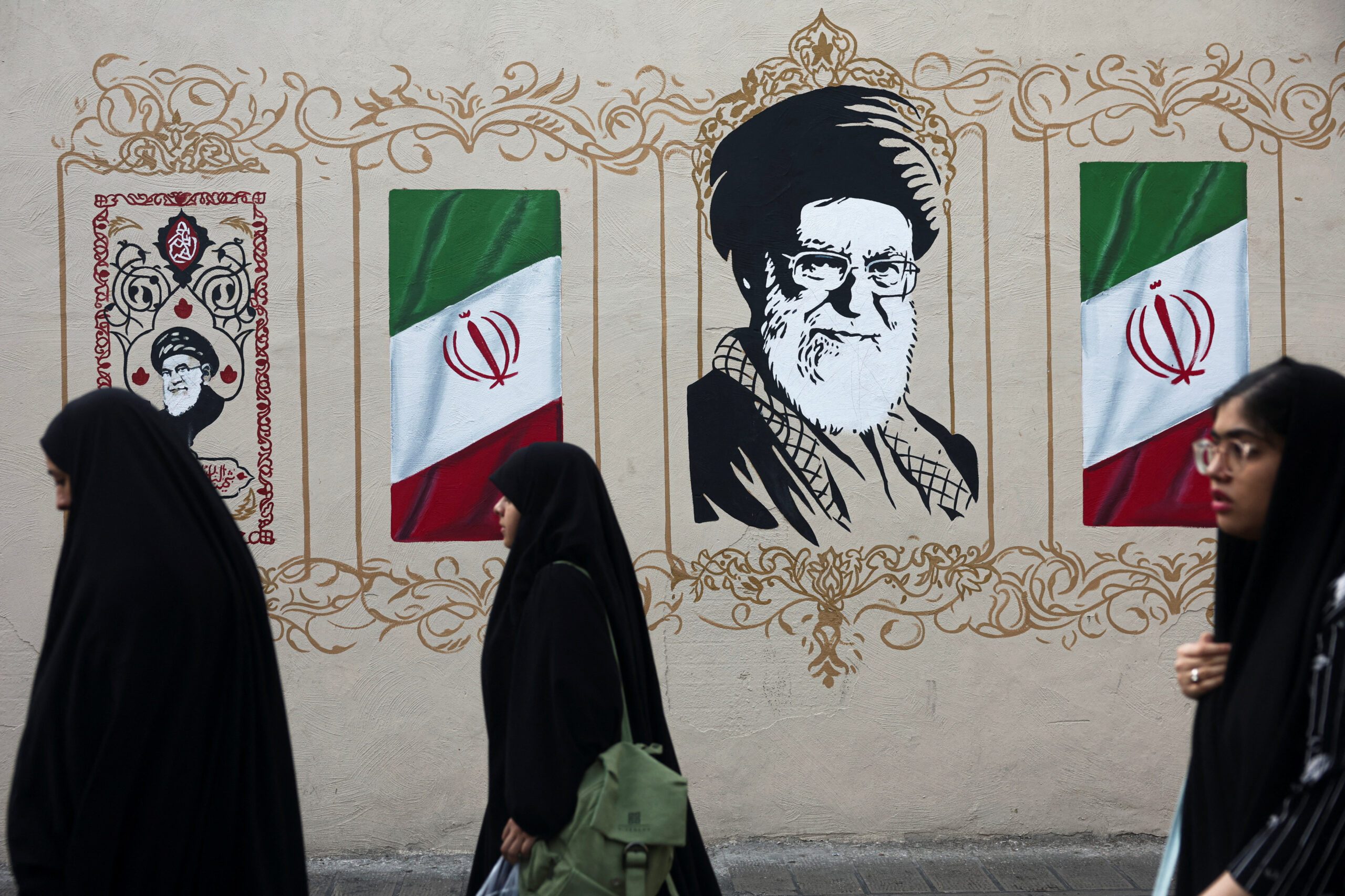
IRAN. People walk by a mural depicting Iran's late Supreme Leader Ayatollah Ali Khamenei, on a street in Tehran, Iran, August 13, 2026
Majid Asgaripour/WANA (West Asia News Agency) via Reuters
Iran urges the US to accept defeat as Trump warns of high fuel prices amid ongoing conflict, with peace talks stalled and Strait of Hormuz traffic severely impacted
AT A GLANCE
- Iran urged the US to accept defeat in the ongoing conflict, while President Trump criticized Iran and indicated that Americans should prepare for higher fuel prices.
- The Strait of Hormuz, a crucial waterway for oil exports, remains largely closed, with minimal shipping activity and increased risks for vessels navigating without Iranian permission.
- The economic impact of the war is evident, with rising fuel prices affecting the US economy and Iran facing inflation due to US sanctions, while both sides show no signs of resuming peace talks.
This is AI-generated. Read the article for full context. Report any errors.
NEW YORK, US – Iran called on the US to accept defeat while President Donald Trump blasted Iran as “evil” and urged Americans to brace for continued high fuel prices.
The comments suggested the warring parties remained far apart, with progress toward peace talks and oil tanker traffic through the strategic Strait of Hormuz waterway both halted.
“This strait will be opened and closed only under Iran’s command, and so long as you do not accept the reality of defeat and stop indulging in fantasies, Iran will continue to enforce the blockade,” Iran’s Deputy Foreign Minister Kazem Gharibabadi said in a post on X early Saturday, showing little urgency toward restoring prewar trade.
“The Strait of Hormuz cannot be seized by a tweet or an aircraft carrier, by issuing an order or by delivering an election speech,” he said.
One out of every five barrels of the world’s oil exports passed through the strait before the US and Israel launched the war on February 28.
Trump on Friday urged Americans to accept slightly higher gasoline prices while the conflict with Iran continues.
At a political rally in Garden City, New York, Trump said paying “a tiny little bit more for your gasoline” is worth the cost of ensuring “a very evil country” could not have a nuclear weapon, one of the president’s stated rationales for the war.
In a trend that has fueled inflation and disappointed voters, the average U.S. price of a gallon of gasoline was about $4.08 on Friday, according to the American Automobile Association. That’s up 29% from $3.16 a year earlier.
Only two vessels passed through the Strait of Hormuz on Friday, according to analysis from ship-tracking firm Kpler: a grain ship entering Iranian waters and an empty dry bulk ship going the other direction. A separate empty liquefied petroleum products tanker was sailing into the Gulf via the strait, the data showed. There were no crude oil shipments visible.
Some ships may cross the strait undetected with their transponders off, but the figures are nowhere near the more than 130 ships that traversed it daily before the war.
Those that dare navigate the strait without Iranian permission risk missile or drone strikes. The United Arab Emirates’ Abu Dhabi National Oil Company said two of its vessels were attacked transiting the strait on Thursday evening, then the Emirati state news agency WAM reported another vessel came under attack on Friday.
Iran labels its enforcement of strait traffic a blockade, while the U.S. uses the same term for its threat against Iranian vessels leaving their ports.
“What we’re doing is a great service for the world, not only for ourselves … and we’re really doing a great job,” Trump said, adding that a 260-day deployment by a U.S. aircraft carrier supporting the war effort was “not nearly long enough.”
With a tentative June deal to end the war in tatters, there was no sign that the U.S. or Iran planned to resume peace talks.
Iranian Foreign Minister Abbas Araqchi said no decision has yet been made to restart negotiations with the United States, the Iranian Student News Agency reported on Saturday. Mediators Qatar and Pakistan were in contact with Iran and exchanging messages, but this did not amount to negotiations, the agency said.
Economic toll
Higher fuel prices have collided with a Trump campaign promise to lower energy costs, and Democrats are seeking to make economic fallout of the Iran war an issue in the November midterm elections.
The virtual closure of the strait helped raise crude oil futures another $1 a barrel on Friday. Benchmark Brent LCOc1 and West Texas Intermediate CLc1 futures were on track for weekly gains of 6.0% and 5.4%, respectively.
Gharibabadi said Tehran would not be intimidated by threats or a show of force. But there were signs of an economic toll on Iran.
In remarks broadcast on state television, Iranian President Masoud Pezeshkian blamed high inflation on a U.S. blockade of Iranian ports and sanctions on Iran’s oil exports.
Trump and Treasury Secretary Scott Bessent each pledged to inflict more financial damage on Iran. Bessent told Newsmax’s “Rob Schmitt Tonight” program on Thursday that announcements of more measures against Iran were coming next week.
The latest attacks by Yemen’s Iran-backed Houthis renewed concerns about a widening regional war. Yemen’s internationally recognized government said the Houthis fired six ballistic missiles at the Red Sea port of Mocha on Friday, killing four civilians.
Separately, the Houthi-run SABA news agency cited a military source as saying the group had targeted an Aramco facility in the Saudi city of Najran with a drone. – Rappler.com
KioskNews shows a cleaned-up reading view extracted from the publisher’s page — the original always lives on their site, not ours.