Sense And Sensibility Review: Another Great Jane Austen Movie Brings Laughs, Sighs & Good Tears
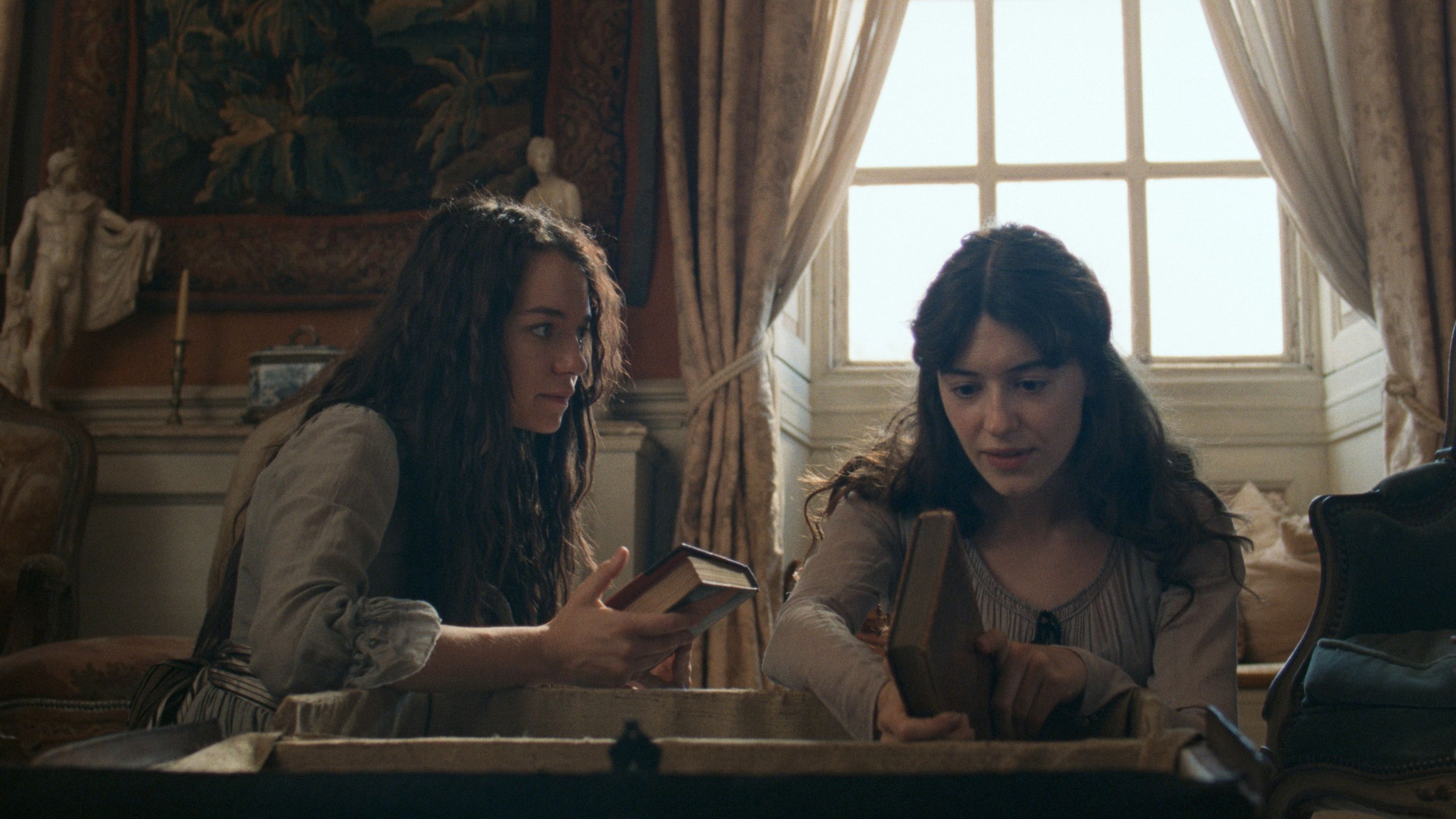
Georgia Oakley's new adaptation of Jane Austen's novel taps into a rich well of emotion and has all the sweet, sweet longing you're looking for.

Alex is the Senior Editor of Reviews & Prestige Content, overseeing ScreenRant's film reviews as one of its Rotten Tomatoes-approved critics. After graduating from Brown University with a B.A. in English, he spent a locked-down year in Scotland completing a Master's in Film Studies from the University of Edinburgh, which he hears is a nice, lively city. He now lives in and works from Milan, Italy, conveniently a short train ride from the Venice Film Festival, which he first covered for SR in 2024.
Jane Austen's books are great source material for film adaptations. Not only because the stories and characters are engaging in themselves, but because the style of her prose is a challenge issued to any would-be adapter. They must decide what this story looks like when the words that shape its telling are stripped away, and what stylistic tools at their disposal, if any, they will use to replace them. As much as this is true of any book-to-screen adaptation, the nuances of Austen's texts provide many opportunities for filmmakers to make strong, interesting choices.
The new version of Sense and Sensibility, Austen's first published novel, is another worthy, thoughtful example. Director Georgia Oakley showed a talent for capturing the relationship between a person and their surroundings in her striking debut feature, Blue Jean, and she's made the delicate osmosis between our inner and outer lives a guiding principle in her portrayal of the Dashwoods. This film is as concerned with how these characters interact with their environment as with their beloveds. Perhaps even more so.
Through this approach, she taps into a deep, involving well of feeling. Though it does better with restraint than with unbridled passion, this telling of the romantic trials of two sisters with opposing ways of experiencing the world has all the charged longing that its target audience is hoping for. But it's just as notable as a funny, beautiful portrait of a family of women who lose their home, and, through the bonds between them, find little ways to weave themselves a new one.
Daisy Edgar-Jones & George MacKay Are A Knockout Pairing
Sense and Sensibility begins in the wake of the death of one Henry Dashwood, whose estate was passed down to John (Tom Brooke), his eldest son from his first marriage. On his deathbed, he asked John to ensure that his surviving widow (Caitríona Balfe) and their three daughters were taken care of; John's wife Fanny (a wonderfully odious Stacy Martin) has other ideas. So, when we meet the Dashwood girls, they are about to leave the only home they've ever known with little to their name. Through a combination of blocking, ensemble performance, and Arnaud Potier's painterly cinematography, Oakley ensures we understand the heartbreak of that.
Still, the future is full of possibilities for the Dashwood sisters. The youngest, Margaret (Bodhi Rae Breathnach), is still a child, but Elinor (Daisy Edgar-Jones) and Marianne (Esmé Creed-Miles) are old enough to entertain the possibility of marriage. Their image of the ideal man, however, is as different as it could be. Elinor believes in going through life with one's head on one's shoulders, and would expect the same from a potential match; in Edward Ferrars (George MacKay), Fanny's dutiful brother, she may have found one. They seem, from the moment they meet, kindred spirits. But Edward's propriety also leaves words stuck in his throat, and they part without much resolution.
Edward's first appearance is when it's clear this Sense and Sensibility has the goods.
Marianne, meanwhile, has no interest in any man whose passions aren't pouring out of him at all times – as the restrained Colonel Brandon (Herbert Nordrum), a new neighbor and Marianne's fast admirer, unfortunately learns. When she is most romantically saved by the dashing Willoughby (Frank Dillane) after injuring herself on a walk one day, it seems both Dashwood sisters have found what they were looking for. But though they are scarcely parted for an entire summer before Willoughby returns to London, things are similarly left inconclusive. As new information comes to light about both of their suitors, Elinor and Marianne's budding love stories take painful turns, in ways that challenge their worldviews.
As beautiful and funny as the film is from the jump, Edward's first appearance is when it's clear this Sense and Sensibility has the goods. On her own, Daisy Edgar-Jones is very good in this role, if perhaps pushing a bit too hard from time to time – but her chemistry with George MacKay is instantaneous. Marianne may complain she cannot see any proof of love in her sister's behavior, but Oakley leaves no room for us to doubt it. The space between Elinor and Edward becomes so full of feeling that the frame could burst.
The Dashwood Family Moments Are Sense And Sensibility's True Strength

I found Marianne's whirlwind romance with Willoughby less convincing. This could be Oakley putting her thumb on the scale; there's healthy debate in readings of Austen's novel about whether she sought to advocate for Elinor's "sense" over Marianne's "sensibility," or provide a more balanced look at both. But, as I suspect, it could be that the style of this Sense and Sensibility is just better suited to finding the charge in MacKay's micro-gestures than in Dillane's roguish smiles.
This is a freer, more grounded Sense and Sensibility...
Case in point: the mileage Oakley gets out of Colonel Brandon. Norwegian actor Herbert Nordrum may be best known to international audiences for 2021's The Worst Person in the World, which catapulted Renate Reinsve to stardom. He's tasked here with playing a man so withdrawn that he reasonably registers to Marianne as boring, only for that impression to shift to a rigorously contained interiority as we get to know him, and Nordrum manages this transition wonderfully. The part he plays in the final act, and how it shifts the film's emotional palette, is what keeps the story from feeling too lopsided.
Truthfully, though, what stand out in Oakley's adaptation are not the romances themselves, but the way they ripple through the Dashwood family. This is a freer, more grounded Sense and Sensibility, not necessarily to relate to a modern audience, but to capture the ways women loosen the bonds of polite society when they are just among family. The best laughs come from a character making an offhand comment after a more tightly mannered exchange, and when mother, sisters, and even Mrs. Jennings (Fiona Shaw) rush in to share in joy or heartbreak, it's like the previous scene's emotion is being decanted.
Austen's works have been and will be adapted in many different ways, and undoubtedly, some will chafe at how this one undermines the stately costume drama. But Oakley has made a lovely film, with many merits. Anyone who seeks out these stories for the feelings at their core should leave very happy.
Sense and Sensibility releases in US theaters on Friday, October 16.

- Release Date
- October 16, 2026
- Runtime
- 132 minutes
- Director
- Georgia Oakley
- Writers
- Diana Reid
- Producers
- Eric Fellner, Tim Bevan, Jo Wallett, India Flint
KioskNews shows a cleaned-up reading view extracted from the publisher’s page — the original always lives on their site, not ours.