Australian health experts fear US vaccine scepticism is catching on as ‘anything Trump says filters through’
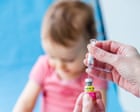
Australian medical experts have warned a shift in child vaccination advice in the US is not grounded in science and could undo decades of public health advances.
The US president, Donald Trump, signed an unprecedented executive order calling for American children to be vaccinated against fewer diseases, suggesting a link to autism despite no evidence. The official number of recommended immunisations for children would drop to 11, compared with 18 at the end of 2024.
Six of those shots would be recommended for all children in the US, while the five others would only be recommended for high-risk children, including hepatitis B.
Australia currently recommends 15 childhood vaccinations, all of which health experts say are key to protecting children’s health.
Prof Julie Leask, a social scientist at the University of Sydney and an expert on social behaviours surrounding vaccination, said Trump’s decision, and his broader embrace of the US health secretary and vaccine opponent, Robert F Kennedy Jr, is a threat to vaccine uptake in Australia.
“Anything Trump says filters through to Australia,” Leask said. “Australian parents and caregivers hear it, and it does affect a minority of people and makes them wonder about vaccines and their safety.”
Leask, a trained midwife, has studied vaccination rates for decades. She said health professionals are already seeing the impacts of Trump’s rhetoric in Australia, with nurses saying they hear from more and more parents who have concerns about vaccination.
“Some of my colleagues are worried that we’re kind of going back to the future,” she said.
A national survey of Australian parents released in February showed parents were less accepting of routine childhood vaccinations than they were in the previous year.
Figures from the Australian immunisation register show full childhood vaccination rates peaking between 2020 and 2021. The coverage rate for all children at five years old is now 92.6%, short of the 95% target.
Lucy Clynes, the chief executive of Hepatitis Australia, is extremely concerned about the effect Trump’s policies have had on Australian vaccine confidence. The group analysed search term trends over the past 12 months and found whenever the US government makes comments undercutting the effectiveness or safety of vaccines, Australians head online in greater numbers looking to bolster those claims.
“There has been a 3% drop in the number of one-year-olds who are fully immunised for hepatitis B in Australia, a downward trend since about 2020,” Clynes said. “People here see something that the US government has said and they start searching on Google or Instagram, and the results that they get are often wrong. They’re very scary.
“When people start doing their own research on vaccines, it means they haven’t immediately trusted what their healthcare provider has told them … And that worries us.”
after newsletter promotion
Hepatitis B is a viral infection of the liver and the most common blood-borne virus in Australia. Most people who get infected will develop chronic, lifelong infection that can, after many years, damage the liver and cause diseases including liver cancer and cirrhosis.
There is no cure, and more than 230,000 Australians live with chronic hepatitis B infection.
Vaccination offers a high degree of protection. Infants in Australia are recommended to get a course of four vaccines to prevent hepatitis b, including one at birth, which can prevent infection even if a mother is positive herself.
Prof Ben Cowie, director of the WHO Collaborating Centre for Viral Hepatitis, says vaccination efforts for hepatitis B have been an incredible boon for public health in Australia, saving thousands of lives.
“We know that [vaccination programs are] having a profound impact, particularly in high prevalence countries, many of which are in our region,” Cowie said.
But vaccine hesitancy is rising and there is a downward trend in childhood vaccination rates, despite an inoculation like the hepatitis B jab being given to billions of people and shown to be incredible safe and effective.
“We can’t ignore that,” Cowie said.
The Australasian Society for Infectious Diseases issued a statement for parents stressing the vaccine for measles, mumps and rubella (MMR) is safe and there is no scientific rationale to change the way that kids in Australia and New Zealand should receive it. Trump’s executive order means the single-injection shot will be split into three appointments.
The body attached 10 published studies to the release, showing the MMR vaccine is scientifically safe and effective as given.
“ASID encourages parents who have questions about vaccination to speak with their GP, paediatrician, immunisation nurse or other trusted healthcare professional,” the group said.
“The science has not changed: MMR vaccination is a safe and effective way to protect children from measles, mumps and rubella.”
KioskNews shows a cleaned-up reading view extracted from the publisher’s page — the original always lives on their site, not ours.