Trump’s trade wars sting US manufacturers ahead of midterms
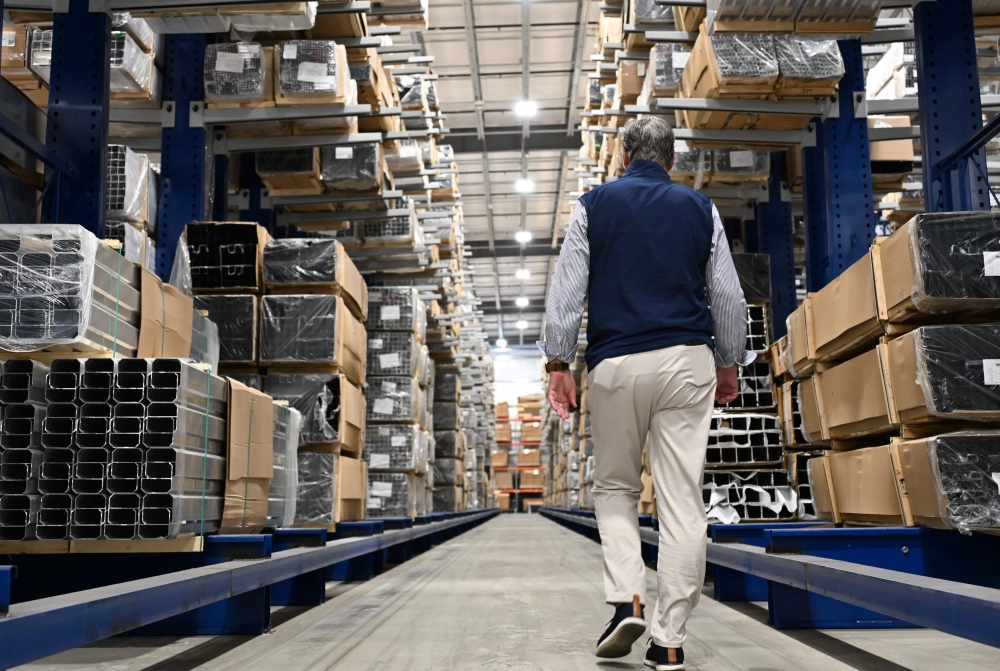

Shapes Unlimited CEO Doug Rende walks through a warehouse storing aluminum profiles used in building products such as fences, in North Jackson, Ohio, on September 30 2026. Since returning to the presidency in January 2025, Trump has wielded executive powers to swiftly slap tariffs on various products and countries. Besides aluminum, his tariffs hit steel and autos too, while US trading partners face country-specific duties. While some American manufacturers have benefited as their foreign competitors encounter higher barriers, others struggle with ballooning costs and persistent uncertainty. — AFP pic
First Published: Sunday, 11 Oct 2026 11:03 AM MYT
NORTH JACKSON (United States), Oct 11 — For Doug Rende, who runs an aluminium product manufacturer in the US state of Ohio, President Donald Trump’s tariffs have meant millions of dollars more in annual costs — and recently, the Iran war has made shipments even more expensive.
Rende is chief executive at Shapes Unlimited, one of many American producers smarting from Trump’s economic policies as midterm elections approach.
“Frustrating would be one word,” Rende told AFP.
“And I think that we’re sensing a lack of trust in not only the administration but the governmental process, the role of Congress to rein in executive power,” he added.
Since returning to the presidency in January 2025, Trump has wielded executive authority to slap tariffs on various products and countries.
Besides aluminum, the duties hit steel and autos too, while US trading partners face additional tariffs that vary by country.
Even as some American manufacturers have benefited as their foreign competitors encounter higher barriers, others struggle with ballooning costs and persistent uncertainty.
Trump’s spiraling trade fight with Canada and war with Iran have only deepened worries.
Grievances over Trump’s trade policies are among fault lines that Democrats hope will work in their favor as they push to flip control of the Senate and House of Representatives in November’s vote.
Tough to cope
Rende’s company in North Jackson, Ohio, makes and distributes aluminum building products used in fixtures like fences.
Trump’s tariffs on aluminium have steadily climbed, from 10 per cent during his first presidency to 25 per cent and then 50 per cent last year, and Rende has felt the impact.
“This year alone, it’s upwards of US$4.5 million (RM18.4 million) to US$5 million in additional costs,” Rende said.
“There’s only so much that the end consumer is willing to eat,” he added. “So, we absorb a healthy portion.”
These added costs include steeper transportation fees, as fuel prices surged with the US-Israel war on Iran. Surcharges are “upwards of US$6,500 per container” of goods from suppliers, Rende said.
As a result, he has paused recruitment for new jobs while investing in more robotic assembly.
Sam Miller, another Ohio manufacturer who makes kitchen and bathroom products, has been hit on both fronts in Trump’s trade wars, paying tariffs on imported materials from Asia while finding it harder to expand into Canada because of trade tensions.
“It’s been difficult for businesses to manage,” Miller told AFP from his factory floor in Warren as a machine hummed nearby, cutting countertop material. “I do think that there will be a shift away from Republican views.”
Although Miller received refunds after the Supreme Court struck down many of Trump’s duties, the US leader has since reinstated many of them.
‘Straining’
Deteriorating US-Canada ties add to his challenges, with Washington and Ottawa slapping tariffs on each other’s products after trade negotiations collapsed in August.
“We’re selling into Canada and it is particularly straining on both us and our customers,” Miller said.
He originally planned on opening a distribution facility in Canada this year, but progress has slowed.
Guy Coviello, president of the Youngstown Warren Regional Chamber, told AFP he is monitoring tariffs, the Iran war and immigration very closely.
These are a “mixed bag” for firms but negative overall, said Coviello, whose business group has some 3,000 members.
Some firms have lost customers or had to downsize, he said.
Canada is also Ohio’s biggest export market, with a third of Ohio’s exports going to the country.
“Where it gets even more complicated is that there are some goods that go back and forth across the border multiple times,” he said.
The Iran war adds to stresses, raising freight costs and hitting aluminum supplies due to drone attacks in the Middle East.
With a lack of new US aluminum smelters, Coviello said: “We are all for tariffs for critical items such as defense and medical industry.”
But he added: “We have to be careful when you’re talking about products that are not crucial and are not available in the US.” — AFP
KioskNews shows a cleaned-up reading view extracted from the publisher’s page — the original always lives on their site, not ours.