5 Perfect Fantasy Books That Became Even Better Movies

Diego Pineda has been a devout storyteller his whole life. He has self-published a fantasy novel and a book of short stories, and is actively working on publishing his second novel.
A lifelong fan of watching movies and talking about them endlessly, he writes reviews and analyses on his Instagram page dedicated to cinema, and occasionally on his blog. His favorite filmmakers are Andrei Tarkovsky and Charlie Chaplin. He loves modern Mexican cinema and thinks it's tragically underappreciated.
Other interests of Diego's include reading, gaming, roller coasters, writing reviews on his Letterboxd account (username: DPP_reviews), and going down rabbit holes of whatever topic he's interested in at any given point.
Sign in to your Collider account
To find a fantasy book that is genuinely fantastic from start to finish is rare enough, but to find one so phenomenal in virtually every sense that matters that it can reasonably be said to be absolutely perfect? That is a precious rarity that ensures one has found one of the greatest fantasy books of all time. And, of course, since the infancy of cinema as a storytelling medium, filmmakers around the world have been taking these legendary books and turning them into equally legendary movies. But while "the book was better than the movie" is something that is remarkably often heard when any fantasy novel is turned into a film, there have been a few noteworthy occasions when perfect fantasy books have been turned into even better movies.
Whether we're talking about a criminally underappreciated modern gem like A Monster Calls or a foundational Hollywood classic like A Princess Bride, there are multiple ways in which a movie adaptation of an already-perfect fantasy book can deliver even more successful results. Regardless of how faithful to the source material the film actually is, it can greatly elevate a story that's already exceptional on paper through powerfully visual storytelling, a much tighter structure, and the kind of uniquely sensorial experience that only a medium like cinema can provide. As a result, it's no surprise that some of the greatest fantasy films of all time are based on books that are also pretty much perfect.
5 'A Monster Calls' (2011)
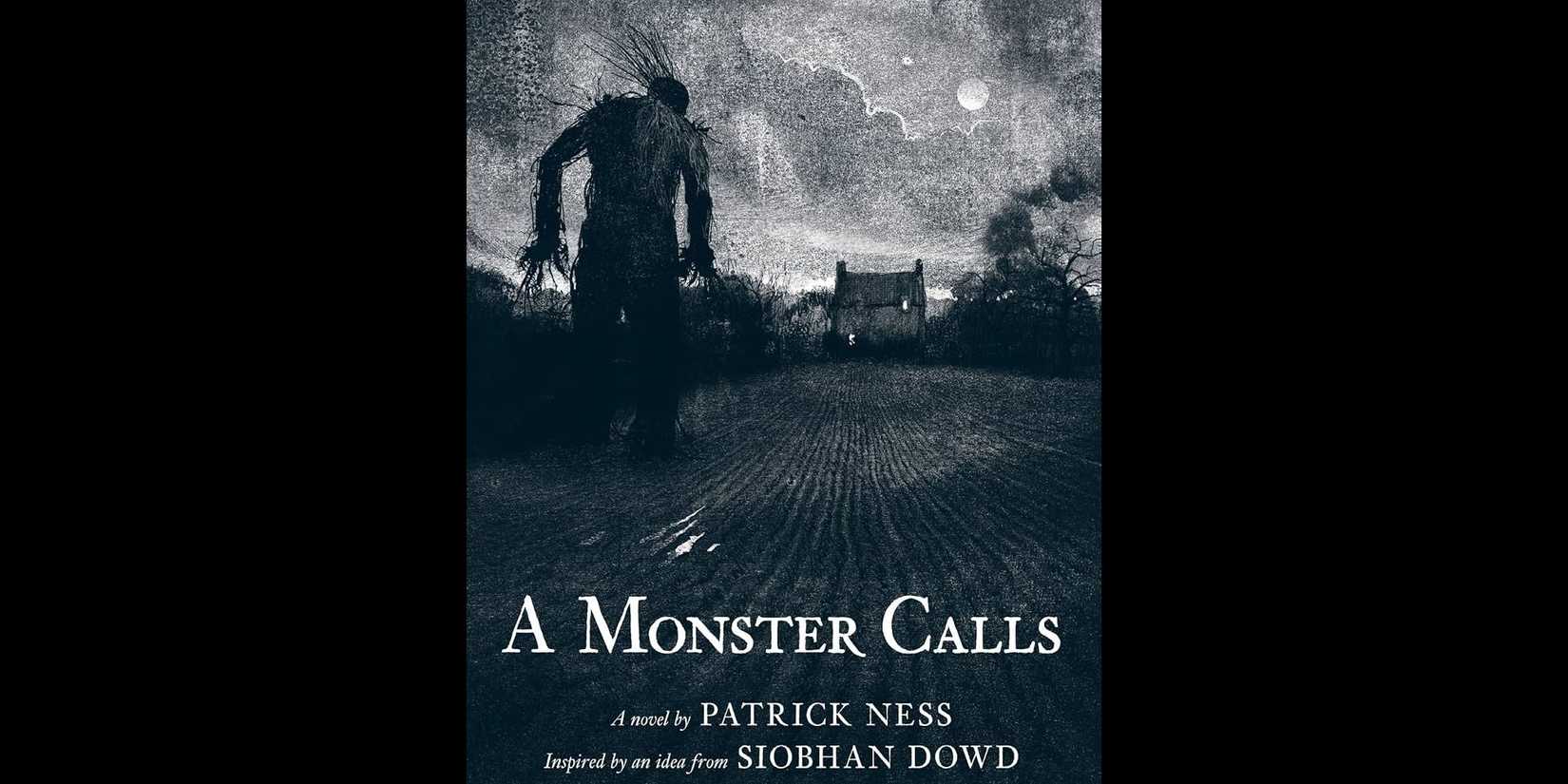
While she had cancer, British writer and activist Siobhan Dowd conceived the idea of a story about a boy who, while coping with the terminal illness of his mother, is visited each night by a storytelling monster. She began working on A Monster Calls with editor Denise Johnstone-Burt, but after she passed away in 2007, Johnstone-Burt arranged for Patrick Ness to be the one in charge of writing the story. While paying respect to Dowd's original idea, Ness made the story entirely his own, delivering one of the greatest YA fantasy novels of the 2010s. Focus Features bought the rights to the book in 2014, and A Monster Calls, directed by J. A. Bayona and written by Ness himself, came out in 2016.
Arguably perhaps even one of the best book-to-film fantasy adaptations of the last decade.
It's one of the best hidden-gem fantasy masterpieces of the 21st century, arguably perhaps even one of the best book-to-film fantasy adaptations of the last decade. Ness' book is a work of tremendous emotional honesty, a love letter to the complexity of fables and fairy tales. Thanks to the author/screenwriter's own work, the film retains the emotional and thematic soul of the novel, but also finds in its wonderful CGI and animated segments, heartbreaking story additions, and exceptional cast opportunities to elevate the material's impact. It often feels like even Ness himself saw Bayona's film as an opportunity to improve on whatever few elements of the Monster Calls novel could have worked even better.
4 'Howl's Moving Castle' (1986)
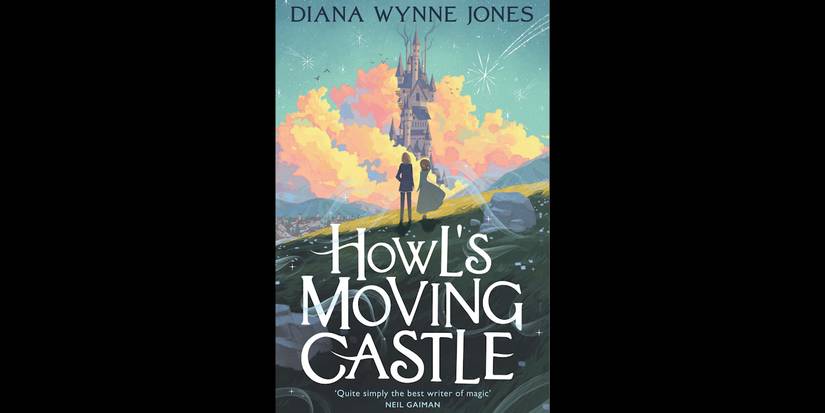
British novelist, poet, academic, and literary critic Diana Wynne Jones was one of the most foundational voices in fantasy of her generation, having profoundly influenced the work of many an author over the years. There's really not much of a question as to what her magnum opus is: It has to be Howl's Moving Castle, which Jones conceived of after she met a boy who asked her to write a book about a "moving castle." The resulting novel was a huge critical success immediately upon publication, but there was one event that also turned it into a commercial and pop-cultural juggernaut: The release of Hayao Miyazaki's film adaptation of the same title, one of the best fantasy epic movies of the last 25 years.
When he read Jones' novel, Miyazaki was particularly impacted by the image of a castle moving along the countryside, and that image was what led to what many still recognize as one of the greatest films ever made by the master of anime filmmaking. The novel is an intricate, sharply witty masterpiece that specifically seeks to subvert traditional fairy tale storytelling conventions, and though the same things can be said about Miyazaki's film, it's also so much more than that. Full of the kind of breathtaking visuals that you'd expect from any Miyazaki masterpiece, it's a powerfully anti-war gem infused with tragedy, tender romance, wonderful elements of magic, and a powerhouse score by Joe Hisaishi.
3 'The Last Unicorn' (1968)
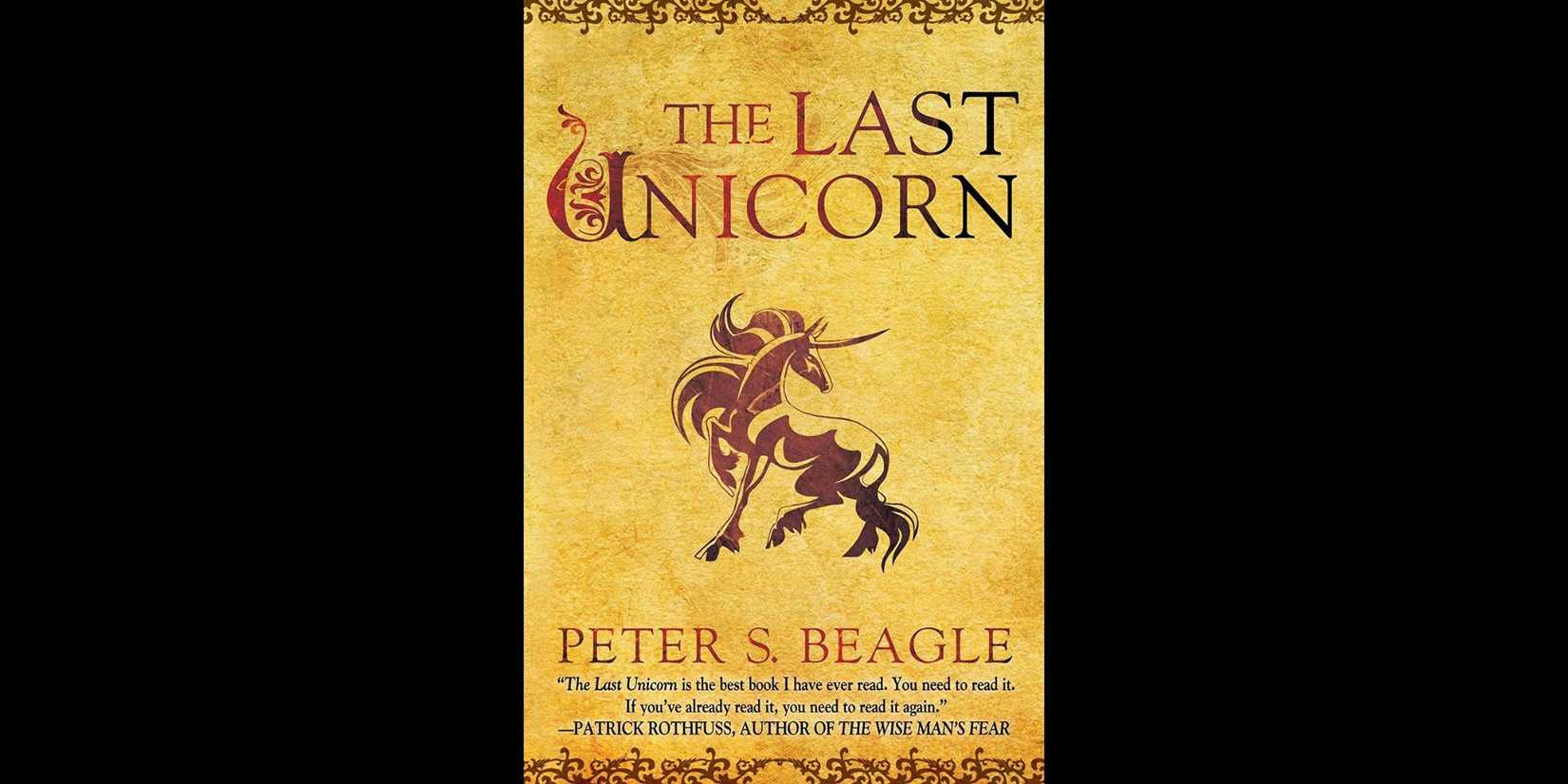
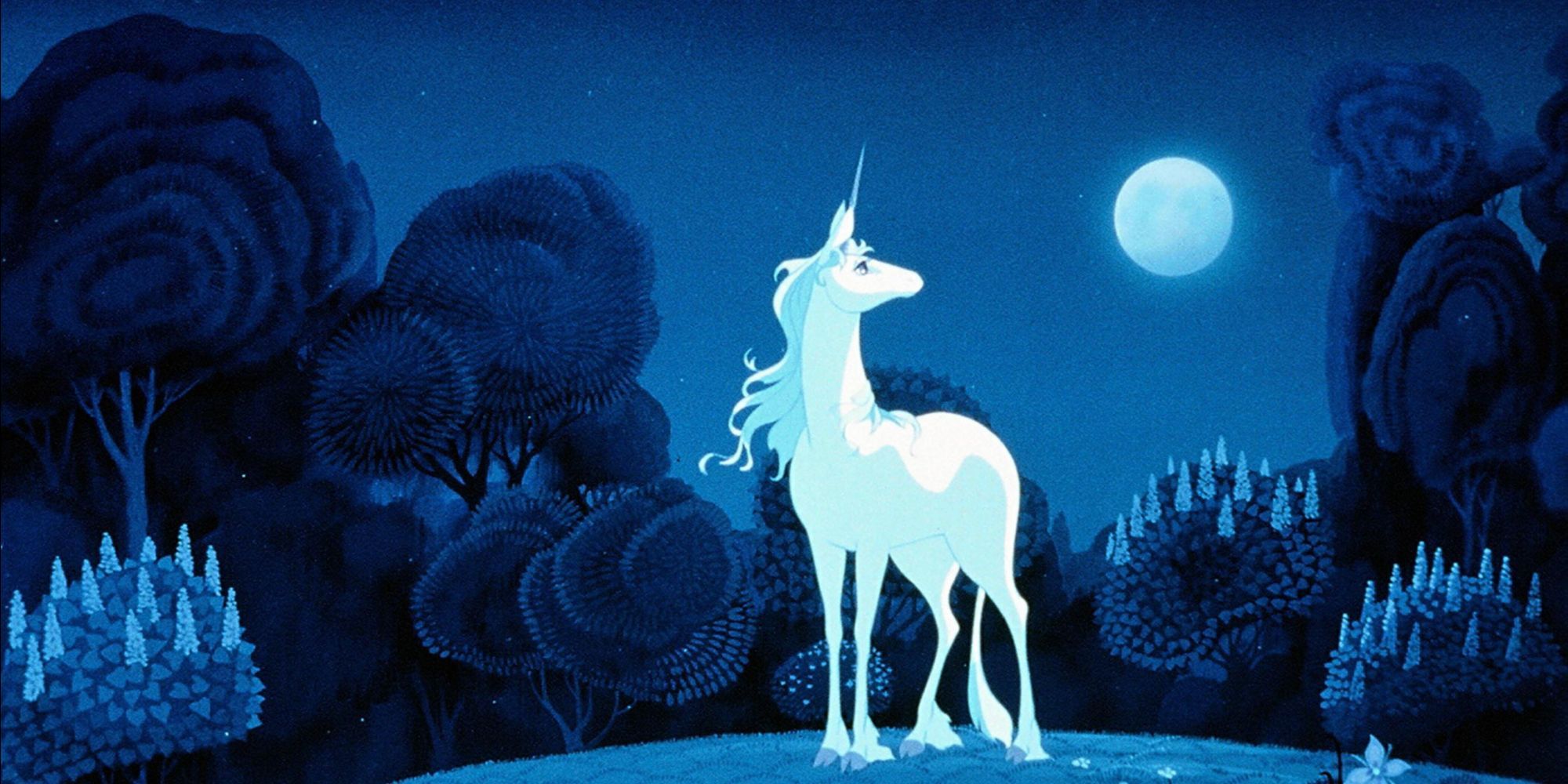
Regarded by many as one of the greatest fantasy novels of all time, Peter S. Beagle's The Last Unicorn is a profoundly influential classic that helped re-shape modern fairy tale storytelling. The idea came to Beagle while on an artistic retreat after Viking Press rejected another novel of his, a product of his deep love of and familiarity with old-school fantasy and mythology. Beagle started hearing interest from studios in making a film adaptation pretty early on, and knew that animation would end up being the only possible way to go if they wanted to capture the full extent of the book's creativity. It was Arthur Rankin Jr. and Jules Bass who made the movie, with a screenplay penned by Beagle himself and animation done in Tokyo by a team that would go on to form Studio Ghibli.
Though Rankin Jr. and Bass' The Last Unicorn was a commercial failure, it has since kept growing more and more of a cult following that remembers it as one of those classic fantasy movies that have aged like fine wine. Where the book is one of the finest works of modern fantasy literature, one written with pretty much unmatched poetic prose and a level of philosophical depth not often seen in contemporary fantasy, the movie is on a tier all of its own. It's even better at conveying the surreal, melancholic atmosphere that's so crucial to the story, with some of the most stunning visuals and most enrapturing music of any fantasy film from the '80s.
Collider Exclusive · 8 Questions · 2 Minutes What Fantasy World Do You Belong To? Middle-earth · Grand Line · The Continent · Camp Half-Blood
Pick your magic, your crew, where you want to wake up and who you would rather be fighting, and we will tell you which world you actually belong in. Four are open to you: an ancient kingdom living through its last good age, an endless sea full of pirates, a continent that pays people to kill monsters, and a summer camp where the Greek gods are extremely real and mostly a nuisance.
💍Middle-earth(Rings of Power)
👒Grand Line(One Piece)
🐺The Continent(The Witcher)
🔱Camp Half-Blood(Percy Jackson)
01
What kind of power do you want? Every one of these worlds runs on a completely different sort of magic.
02
Who is travelling with you? Nobody gets through any of these stories entirely on their own.
03
Where do you want to wake up tomorrow? The best fantasy is usually just somewhere you would genuinely like to live.
04
How are you making a living out there? Even in fantasy somebody has to pay for the horse.
05
There is something in the woods. What do you do about it? All four of these worlds keep something unpleasant out there in the dark.
06
Who is the villain of your story? The enemy tells you far more about a world than the hero ever does.
07
What do you actually believe in out there? Every world hands its heroes one rule and asks them to hold onto it.
08
A thousand years from now, how are you remembered? Eight questions in, this is the one that decides your world.
The Map Is Drawn Your World Is…
Four worlds and four completely different ideas of what a good life looks like. This is where you belong, what it would ask of you, and what you would get back in return.
Middle-earth
You belong somewhere old enough that the mountains have names and somebody can still tell you who gave them. Middle-earth is for people who think the right thing is worth doing even when it will not be finished in their lifetime.
- This is the only world on the list where doing good is understood as a very long defeat, fought anyway, by people who will never see how it ends.
- You are drawn to grandeur, to white cities and deep forges and the sense that almost everything you touch is older than your entire family line.
- The Rings of Power is set in the last good age before it all goes wrong, which gives every quiet scene in it a slightly unbearable weight.
- You would take the hard road, and you would take it on foot.
The Grand Line
You want the sea, a crew, and absolutely nobody telling you where you are allowed to go. The Grand Line is the world for people whose main ambition in life is finding out what is over there.
- One Piece has run for decades on one very simple engine, which is a group of people who each want something impossible and have decided to go and get it together.
- You collect people. Your ideal crew is a set of misfits who were each written off somewhere else before you turned up and offered them a better idea.
- The world is enormous and deliberately ridiculous, and the emotional gut punches land harder because of that rather than in spite of it.
- You would set sail knowing the map runs out, which is more or less the entire point of it.
The Continent
You would rather be feared and useful than liked and useless. The Continent is a world where the monsters are the straightforward part of the job and the people are where it all gets complicated.
- Witchers get paid to do what nobody else will and resented for existing at all, which is a trade most people would refuse and you would probably accept.
- You have no real illusions about which side is the good one, largely because on the Continent that question tends to have a disappointing answer.
- The best of these stories are not about the fighting. They are about somebody with a rigid code being repeatedly cornered into caring about people.
- You would take the coin, finish the job properly, and be out of town before the story got told wrong.
Camp Half-Blood
You want the myths to be real and loose in the actual world, and you want to find out at about thirteen that you were never anywhere near as ordinary as everybody kept telling you.
- Percy Jackson takes the oldest stories we have and drops them into car parks and diners, which makes the gods considerably funnier and a great deal worse.
- You would be the kid every school gave up on, who turns out to have been built for something nobody thought to test for.
- The series is genuinely about friendship rather than destiny, and it says so out loud every time a prophecy tries to get in the way.
- Camp Half-Blood is the real fantasy here: a place where the thing that made you difficult everywhere else is the thing that makes you belong.
2 'Coraline' (2002)

Perhaps the single greatest horror fantasy novella that has ever been written for children, Neil Gaiman's Coraline is one of the most essential masterpieces of its kind. Gaiman started writing the book as a scary story for his young daughter all the way back in 1990, and paused after moving to the United States in 1992. He resumed in the late '90s by writing around 50 words each night on a notebook for his daughters. By the time the manuscript was done, early editors told Gaiman that the book was so frightening for children that it would prove unpublishable. However, 24 years after its publication, Coraline remains one of the most universally beloved horror books of all time.
Selick wrote the screenplay and greatly expanded many elements of Gaiman's relatively brief novella.
Since Gaiman was such a fan of Henry Selick's The Nightmare Before Christmas, he invited the filmmaker to make a movie adaptation of Coraline, and the rest is history. Selick wrote the screenplay and greatly expanded many elements of Gaiman's relatively brief novella, resulting in one of the most wonderful stop-motion-animated masterpieces in the history of cinema. As unforgettably haunting as the original book is, Selick's film is a visually staggering and remarkably atmospheric gem that could very well be the best possibly way of introducing young cinephiles to horror.
1 'The Princess Bride' (1973)

William Goldman is still widely recognized as one of the greatest screenwriters who have ever lived, but he was a novelist before he made his transition to Hollywood—and an absolutely exceptional one, at that. After he asked his two young daughters what their next bedtime story should be about and one said "princesses" while the other said "brides," Goldman came up with the title to what would arguably end up becoming his most celebrated novel. Absolutely brilliant in terms of creativity, structure, prose, and genre-bending, The Princess Bride is one of the best fiction books ever written by a screenwriter.
Goldman's book as a brilliant, structurally masterful, deliciously funny meta-satire with a level of depth that fantasy for younger audiences doesn't usually see to this degree. Rob Reiner's movie, however, is a swashbuckling classic that's among the greatest fantasy movies in film history, a crowd-pleaser that has something in it for pretty much anyone and everyone. Born out of Reiner's love for Goldman's book and penned by Goldman himself, The Princess Bride is one of those rare movies that greatly elevate pretty much every aspect of their source material's greatness.
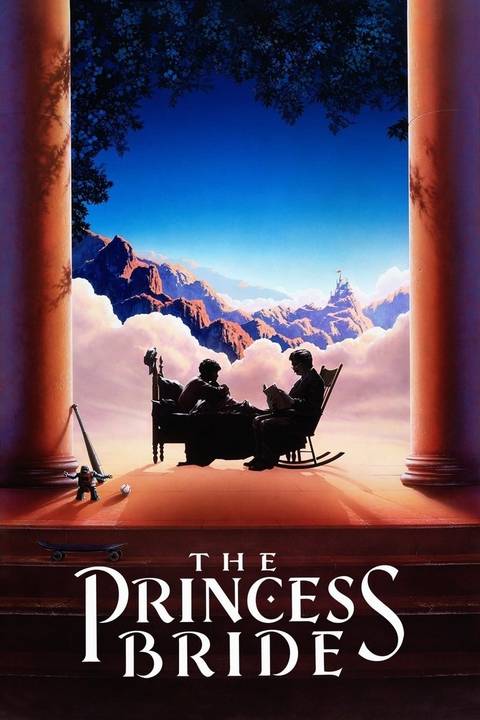
The Princess Bride
- Release Date
- September 25, 1987
- Runtime
- 99 minutes
- Director
- Rob Reiner
- Writers
- William Goldman
KioskNews shows a cleaned-up reading view extracted from the publisher’s page — the original always lives on their site, not ours.