POETRY CORNER: Arrive at your own door: on feathered things and finally meeting the self
Derek Walcott’s famous poem Love After Love invokes hope, though not in the conventional sense of yearning for circumstances to miraculously get better. Instead, I think it proffers the confidence that a fractured self can become whole again.
His poem begins with the following premise: “The time will come...” That simple promise is in itself an act of hope. It is militant and it assures the listener that some future, to an improved degree that is different from today, brighter, is possible – whether the present is marked by loneliness, grief, estrangement or some other curse.
It says that there’s hope for self-recovery. The speaker in the poem shows that people often lose touch with themselves in relationships, in ambition and in how the obligations of life are faced. Hope abides in believing that “the stranger” who was your own self can be revived.
Each of us has undoubtedly been brought to self-inspection, aware of our own existence. “The time will come / when, with elation / you will greet yourself arriving / at your own door, in your own mirror / and each will smile at the other’s welcome, / and say, sit here. Eat.”
Families, friends, villages, must gather around a table to eat and celebrate. Things can get better, they should get better, they will get better – else what type of room for optimism can there be in this world?
Such a get-together doesn’t have to be the last supper, God forbid! That particular meal took place shortly before Jesus’ arrest, trial, crucifixion and death. But could Walcott have been referring to hope following suffering, instead of the end of hope?Could the person being spoken to in his poem have undergone heartbreak?
The voice is probably speaking to someone emerging from some kind of distress. But rather than urging them to find another relationship, to abandon themselves, the voice suggests something more enduring: a ceasefire with the self. Hope through acceptance, rather than escape, for the only escape out of this life is death. Abandonment is tantamount to suicide.
How are we doing with our own inward journey in southern Africa, especially with respect to the aftereffects of apartheid? Have we invited ourselves and each other to “sit” and “feast” at the table of our national self? Have we understood that peace comes not from external validation by others, nor from blaming someone else, but from learning to value one’s own existence, individually or, better, as a community? “Sit. Feast on your life,” O beloved country!
Unlike many poems about hope that focus on changing the world or overcoming adversity, Walcott’s hope is psychological and spiritual. It offers the knowledge of a true shrink: healing is possible, through identity reclaimed and expressed, because self-love can replace self-neglect. It teaches that one day we must welcome our self at our own door as our own honoured guest.
We in southern Africa are so multilayered that recognising this and acting on it is bound to restore the distinction we have almost lost by seeking succour elsewhere, by hating a neighbour because they speak a different language, or are from across the border, or produce – in the deepest layer of their epidermis – more melanin, or less of it, than we do.
In that sense, Love After Love argues that the greatest hope is not that life becomes easier, but that we become reconciled with our proper selves. Such reconciliation allows us to meet the future with peace rather than longing and unease.
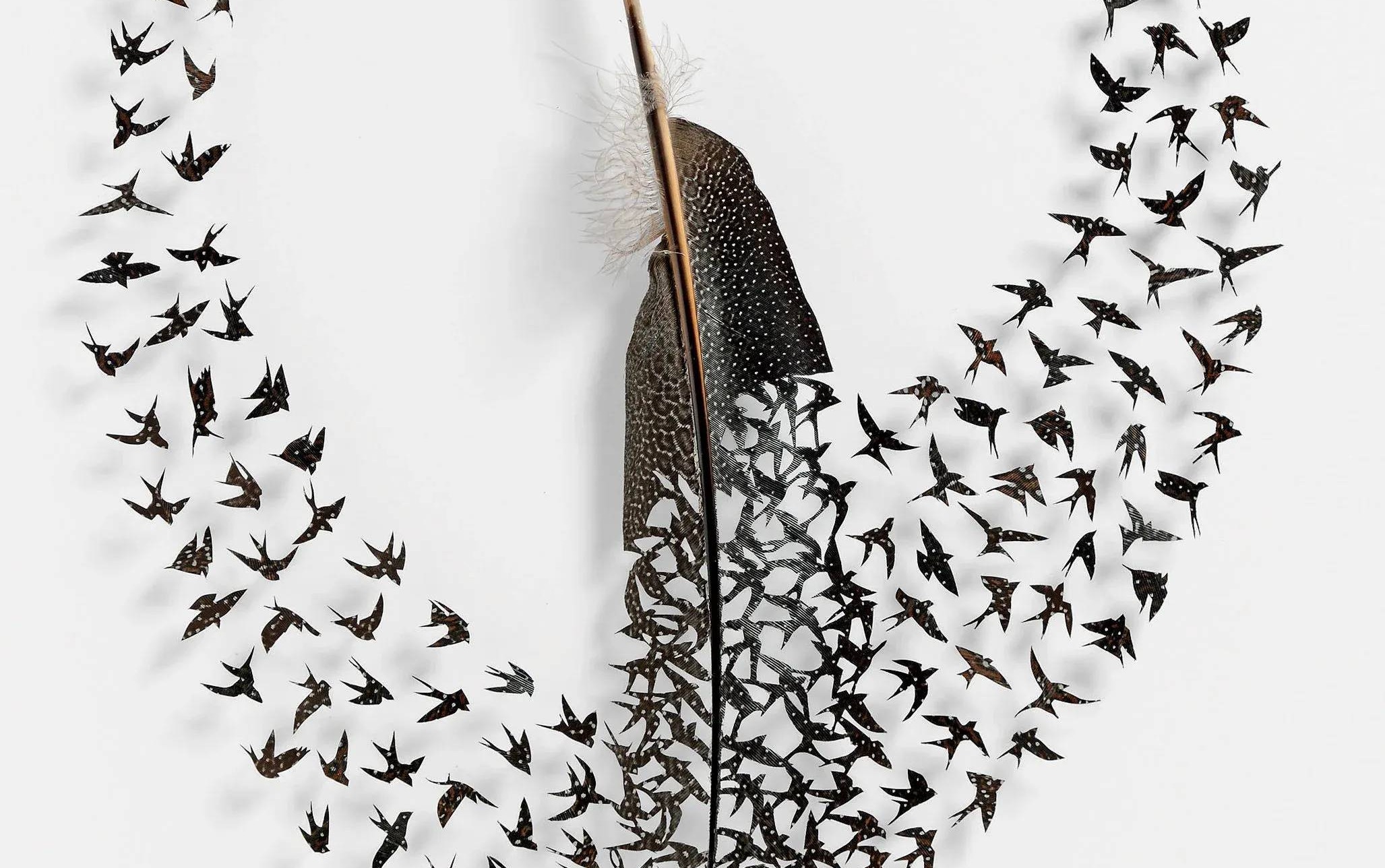
Another poetic voice, Emily Dickinson (1830-1886), an American writer known for the unique and terse voice of her verse, cried out loud about how “‘hope’ is the thing with feathers”, a metaphor that brings to mind visions of flying, and the very real prospect of freedom.
Dickinson was born in Amherst, Massachusetts, and spent most of her adult life at her family home, writing close to 1,800 poems that were chiefly published posthumously. What an opposite to mortality. She’s also known for having proclaimed, in her 479th poem, that “Because I could not stop for Death– / He kindly stopped for me– / The Carriage held but just Ourselves– / And Immortality.”
No quitting, not even in the face of death. And after succumbing, if one must, then freedom is a kind of immortality.
A quote widely attributed to Nelson Mandela reads, “May your choices reflect your hopes, not your fears.” In other words, the option you choose –the path you eventually embark on –should be guided by hope rather than by fear if you are to reach your desired destination. Most genuine liberation movements are likewise driven by the hope of achieving better outcomes for the benefit of all.
Here’s one attributed to Desmond Tutu: “Hope is being able to see that there is light despite all of the darkness.” Such an outlook is titanic, but it doesn’t have to sink. The iceberg could be avoided. Or there could be no iceberg at all except the fear of it being there. People have crossed seas and climbed mountains and won elections and fed the poor. There is no limit to what hope can accomplish.
In the end, yes, hope is the thing with feathers. And hope can see beyond any barrier, real or artificial, natural or human-made. Prison, a river, border gates, poverty, sexual orientation, skin colour, physical handicap – all these are often overcome by the sheer determination of the one inside them. DM
Rethabile Masilo is a Mosotho poet from Lesotho who lives in Paris, France.
‘Hope’ is the thing with feathers
“Hope” is the thing with feathers –
That perches in the soul –
And sings the tune without the words –
And never stops – at all –
And sweetest– in the Gale – is heard –
And sore must be the storm –
That could abash the little Bird
That kept so many warm –
I’ve heard it in the chillest land –
And on the strangest Sea –
Yet-never-in Extremity,
It asked a crumb – of me.
(“Hope” is the thing with feathers, Emily Dickinson, 1891)
Passing
There isn’t any beating of the drums
After the long subsiding ray when,
Like a cruel master, darkness comes.
Let the town-criers hasten to convey
Outright this message to kingdoms.
Invite well-wishing folks to go away.
Let the menace rise as the heart succumbs
Deeper, and let silence slay you
With meaning beyond the sound of psalms.
But if no-one will listen or obey,
Wind the clocks, swing the pendulums,
And let that message seal the stillborn day.
Rethabile Masilo (Things That Are Silent, Pindrop Press, 2012)
This story first appeared in our weekly DM168 newspaper, available countrywide for R35.
KioskNews shows a cleaned-up reading view extracted from the publisher’s page — the original always lives on their site, not ours.