The longest commute: Sembawang residents on their arduous journey to get to work
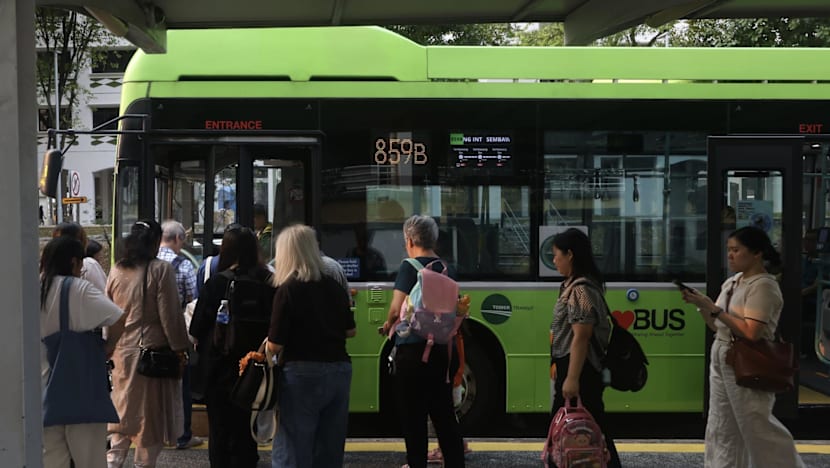
Since moving to Sembawang 24 years ago, Ms Bernice Ang has been sure to give herself ample time to get to appointments to factor in the long commute out of her neighbourhood.
The Housing and Development Board (HDB) cluster where she lives is only served by two feeder buses – service numbers 859 and 859B – which head to Sembawang MRT station.
During the morning peak period, bus stops along the route are packed with residents thronging buses that arrive, with many struggling to squeeze on board.
Ms Ang's worst commute was on a rainy day a couple years ago when she was huddled under the shelter of the bus stop with other commuters.
She knew the chances were slim to none that she would be able to board either of the first two buses which pulled into the bay, already packed to the brim.
"I had to wait for the third bus before I could finally squeeze on. What was supposed to be a 10-minute bus ride became 40 minutes," the 57-year-old administrative executive told CNA TODAY in Mandarin.
After getting to Sembawang MRT station, she still had to transfer from the North-South Line (NSL) to the North-East Line (NEL) to reach her Chinatown office.
That day, she took two hours to get to work instead of the usual 90 minutes.
"Now it's a bit better because I work in Bukit Batok so I don't have to change trains. But my problem still lies in the bus to the MRT," lamented Ms Ang, who started a new job this year.
"It's tiring, but there's no way around it."
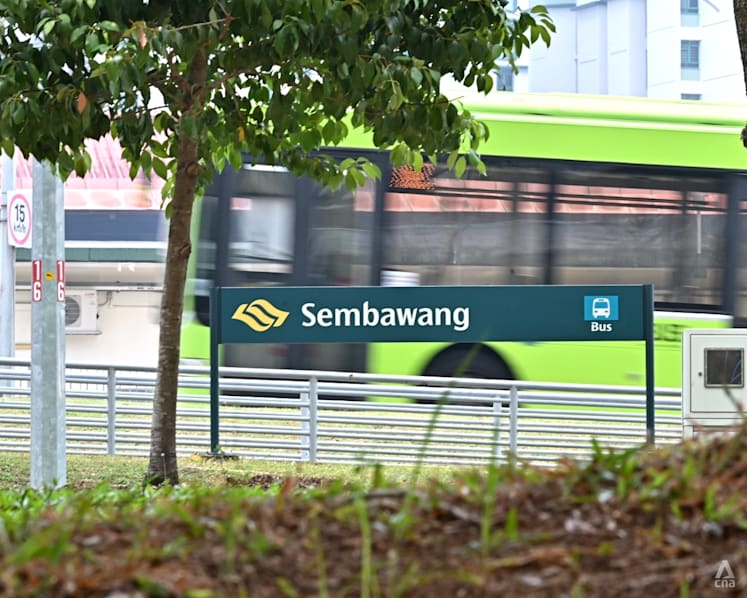
With Sembawang tucked away along Singapore's northern edge, its 102,640 residents are no strangers to long commutes.
In fact, Sembawang residents take the longest time to get to work in Singapore, based on data from the General Household Survey 2025 published by the Department of Statistics (SingStat) in June.
Residents from the neighbourhood clocked a median travelling time of 50 minutes, receiving the dubious honour of beating Bukit Batok, Bukit Panjang, Choa Chu Kang, Jurong West, Punggol, Sengkang, Tengah, Woodlands and Yishun.
Residents in these other neighbourhoods reported a median work commute of 45 minutes.
The inaccessibility of Sembawang has been an issue for at least a decade: The same household survey in 2015 listed Sembawang among the towns with the longest work commutes, with a median travelling time of 45 minutes.
Many of the residents CNA TODAY spoke to said their commutes to work were between 60 and 90 minutes.
Beyond the statistics, what is the experience like on the ground for Sembawang residents and what will it take to improve journeys for thousands of commuters there?
FEEDER BUS WOES
Most of the 13 Sembawang residents CNA TODAY spoke to relied on taking a train from Sembawang MRT station for the bulk of their journey to work.
While there were few complaints about the train journey to central areas, many said getting to the train station was the most draining part of their commute.
Mr Cheok, 38, said the bus connectivity in Sembawang leaves much to be desired. The freelance trainer, who has approached the authorities with feedback on Sembawang's bus issues, did not want to be identified by his full name.
While his office is close by in Admiralty, he frequently has to meet clients all around the island. A trip to the central business district (CBD), consisting of a feeder bus and a transfer to Sembawang MRT station, can take him around 90 minutes.
Like Ms Ang, he relies on the same two feeder bus services to get him to the train station. The alternative is a 20-minute walk, parts of which are unsheltered.
Limited options aside, Mr Cheok pointed out that the frequency of feeder buses is also inconsistent.
"Bus rides to Sembawang station are about 10 to 15 minutes, but the clumping effect means that one can wait between seven and 25 minutes and then three buses appear at once," said the Sembawang resident of six years.
In Mr Cheok's opinion, there is also a lack of intra-town connectivity, which could help give Sembawang residents more options when travelling rather than everyone trying to make their way to Sembawang MRT station.
He pointed out that the "classic" Sembawang town, referring to the area around Sembawang MRT station, and the newer Canberra town are not well connected.
"Geographically, the towns aren't far apart, but it's frustrating trying to get from town to town via public transport," he said.
He recalled how he tried to make his way from his home near Admiralty Link to a Sheng Siong supermarket at Block 105 along Canberra Street.
As there was no direct bus route, he ended up having to take a bus, then the MRT, then another bus. The supermarket was a mere eight-minute drive away, but he took 40 minutes to reach it via public transport.
"Now, the problem is 'solved' because there is a new Sheng Siong Supermarket nearer to me," he said wryly.
Mr Cheok said the inconvenience of getting around has turned him into more of a homebody since he moved to the neighbourhood from Yishun and he hopes to move to a more centrally-located neighbourhood eventually.
Ms Ang agreed that the most difficult part of her commute is getting a bus to the MRT station.
"If I were to move, I would move to somewhere within walking distance of an MRT station," she said.
FEW ALTERNATIVES TO USING SEMBAWANG MRT STATION
While most of the residents CNA TODAY spoke to complained about the lack of feeder buses, some also pointed to the lack of viable alternatives to taking a train from Sembawang MRT station to central locations.
Sembawang residents currently have a few bus options to get to the city centre.
There is 980, which passes by Little India and Bugis, and terminates at Geylang, as well as 167, which passes by Orchard, The Esplanade and Tanjong Pagar before terminating at Bukit Merah.
Even with these two buses, residents said the MRT system is still the most efficient option for them.
For one thing, bus service 167, which was nearly canned in 2023 due to falling ridership, operates only at 30-minute intervals. Bus 980 also is not the most accessible for many Sembawang residents, said Mr Cheok.
"(The bus) cuts through the middle of Sembawang. And because of that, most people have to walk there, which is another 10 to 15 minutes," he said.
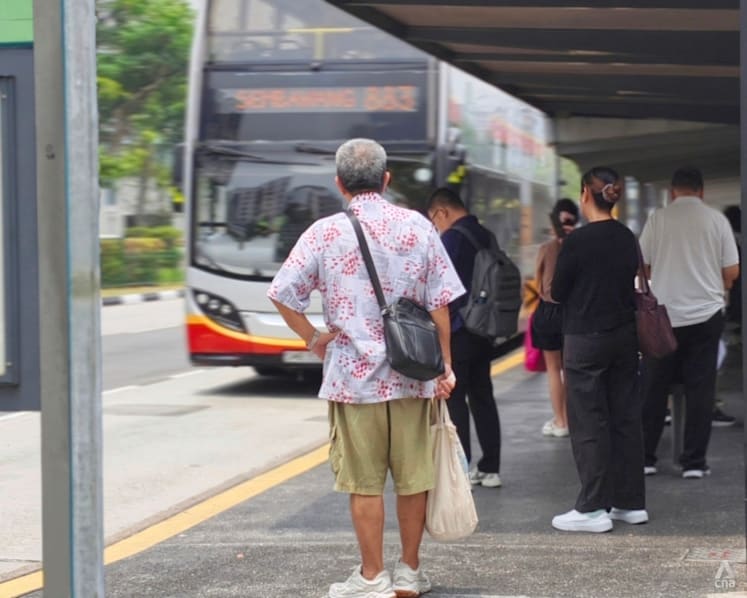
While the Thomson-East Coast Line (TEL) offers Sembawang residents another option to get to the city centre, residents complained of a lack of feeder bus options to take them directly to Woodlands MRT station, which is on the line.
Mr Tang Yong Hong, a 32-year-old bank executive, said: "TEL would take me a similar time to get to the city as the NSL because I have to walk to Canberra MRT then take a train to Woodlands."
Despite feeling like the NSL takes "too many stops" to get to town, it's ultimately his best option, he said.
Mr Jonathan Quek, 38, a marketing manager, said he would rather head up north to Malaysia than brave the journey to the CBD.
Mr Quek, who lives near Canberra MRT station, is only three stops away from Woodlands station. From there, it's a 45-minute journey to the Johor Bahru city centre.
"I could either spend 45 minutes heading into town or 45 minutes heading to Johor Bahru via the Rapid Transit System where things suddenly become three times cheaper," he quipped.
SEMBAWANG'S GEOGRAPHY DIFFICULT TO OVERCOME
Transport analysts and other experts said that Sembawang's geographical location near the central catchment area makes it more inaccessible than other neighbourhoods, which may be equally far from the city.
"Sembawang is further prevented from having a crow's flight path to the city centre due to the inlet of Seletar Reservoir," said Associate Professor Lin Wei Qiang of the National University of Singapore's Department of Geography.
Sembawang is further prevented from having a crow's flight path to the city centre due to the inlet of Seletar Reservoir.
Towns to the north, including Mandai and Yishun, are also hampered by the fact that the central catchment area sometimes requires roads and train lines to take detours, he added.
"There simply isn't any other way to speed things up further," said Assoc Prof Lin.
Architect Calvin Chua, who is an Associate Professor of Practice at the Singapore University of Technology and Design (SUTD), also pointed out that the NSL takes a longer route into the downtown core, unlike the North-East Line, which takes Punggol residents to the city centre more quickly.
The longer route is partly due to the central catchment area, and also the need for the NSL to pass through different housing estates on the way to the city centre, he explained.
As for how Sembawang compares to other neighbourhoods, Assoc Prof Chua said that while Jurong West residents, for example, also face similarly long commutes to the city centre via the East-West Line, they enjoy quick access to industrial areas in the west of Singapore, which is home to many jobs.
"The future Jurong Region Line will add further connectivity (for these residents), compared to Sembawang's reliance on a single MRT line," he said.
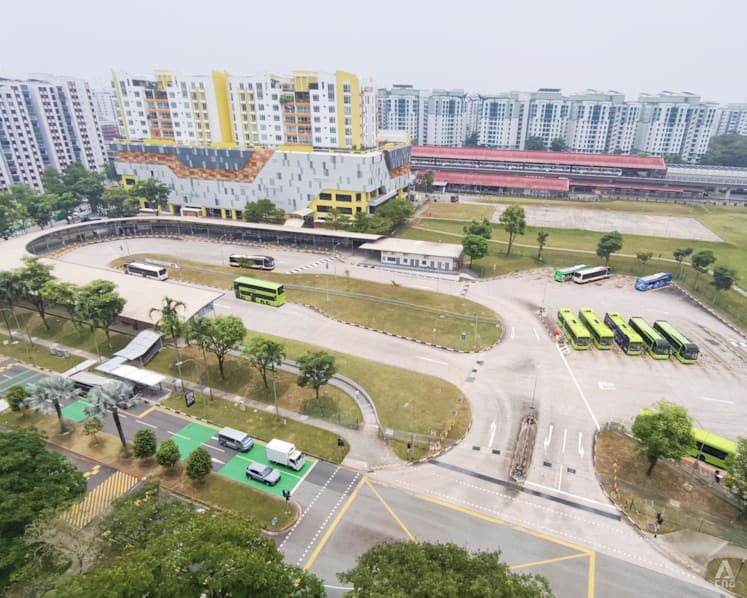
Mr AP Gopinath Menon, formerly the chief transportation engineer at the Land Transport Authority (LTA), said that Sembawang residents face long commutes even if they are travelling by private transport and are again at a disadvantage compared to other neighbourhoods far from the city.
"Jurong and the western area are also far from the city. But there are more roads – Ayer Rajah Expressway, Pan Island Expressway, West Coast Highway and Boon Lay Way – as compared with the northern regions," he said.
The new North-South Corridor, a multi-modal transport link expected to open from 2029, however, will help the northern regions like Sembawang, he said.
When CNA TODAY asked the LTA if it considered Sembawang to be adequately served by transport infrastructure and if it is planning any measures to reduce commute time, it referred us to Minister of Transport Jeffrey Siow's written response to a parliamentary question posed by Member of Parliament for Sembawang Group Representation Constituency (GRC) Vikram Nair.
The response in August said that LTA had introduced two new bus services and enhanced 10 existing services in Sembawang GRC, "providing residents with more direct and frequent bus options".
It added that it will continue to monitor travel patterns and feedback from residents, and enhance bus services where needed.
In the longer term, the LTA is studying the alignment for the future Seletar Line to better connect residents in the north with key employment centres in the city centre.
"In addition, to reduce the need for longer cross-island commutes to work for residents in the north, the government will continue with our strategy of providing more employment options closer to home, such as in Woodlands Regional Centre and Yishun," wrote Mr Siow.
Dr Terence Fan, a transport analyst and Assistant Professor of Strategy & Entrepreneurship (Education) at the Singapore Management University, said that Sembawang might benefit from more express buses.
Express bus services typically move commuters quicker than typical bus services by skipping intermediate stops and using expressways.
"If they can't fill the buses, then (adding) trains would be even worse, so I would not go there first. Start with buses and see what the ridership is like," he suggested.
Dr Fan posited that the fact that some Sembawang residents work around Seletar Airport where public transport connections are sparse could have also contributed to the high median commute time for the neighbourhood.
"Extending some express buses that originate from Yishun to start from Sembawang can be part of the solution. Given sufficient riders, dedicated express buses to Sembawang perhaps passing through Seletar may work too."
With sufficient ridership, extending the TEL to a new station in Sembawang could also help shorten commutes, Dr Fan suggested.
However, that's a solution that will require years to materialise and, for now, there's no silver bullet to solve Sembawang residents' transport woes.
Indeed, multiple Sembawang residents told CNA TODAY that, being so far north, they were resigned to facing long commutes for the foreseeable future.
Said Mr Quek, the marketing manager: "I got my house fairly cheap so at least I am being financially compensated for my long commute."
KioskNews shows a cleaned-up reading view extracted from the publisher’s page — the original always lives on their site, not ours.