Start spreading the news… New York’s opera giveaway shows UK politicians how to be brave
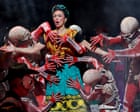
Opera for All. It’s the credo of every opera house in the world, and each has its own ways and means of attracting new – and, crucially, younger – audiences. But it’s rare that one gives away thousands of tickets to anyone who applies. In New York last week, mayor Mamdani took to the stage of the Metropolitan Opera to tell his city that previously opera-shy citizens should apply for one of the 70,000 free tickets that he and the opera house are giving away this and every season. That means a staggering 10,000 free tickets a month. Not just for the under-25s, not just for the productions that they can’t shift tickets for on Mondays and matinees. New Yorkers simply enter the lottery the day before and if successful, will get a pair of tickets to the next day’s show.
Mamdani’s announcement coincides with the Met’s general manager, Peter Gelb, going on a fundraising drive hoping for $1.5bn to secure the opera house’s future. Generous as the offer seems, the Met can surely spare the tickets, given how few of their shows actually sell out the 4,000-seat hall – the Met averaged only 72% capacity the last season.
But what’s different about the Met scheme to that of, say, English National Opera’s free tickets for under-21s, or the heavily discounted ticket schemes on offer elsewhere is that it’s the mayor who’s doing the talking, putting his political capital and small-p populist appeal behind the art form. And that’s where there’s no comparison between Mamdani and British politicians in terms of cultural bravery. Whatever party they belong to, no UK politician for several decades past has wanted to get too close to opera for fear of being contaminated by its associations of elitism, out-of-touchedness, unaffordable posho luxury, and cultural irrelevance. Angela Rayner was branded a champagne socialist for daring to enjoy opera at Glyndebourne (her ticket cost her £62); politicians who are known opera-lovers, including George Osborne and Michael Gove, saw no benefit in being associated with Opera North or Covent Garden during their time in office, and didn’t really want their shameful opera-loving secret getting out.
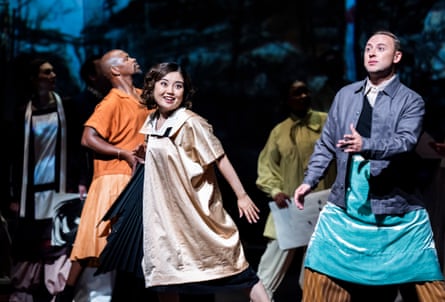
Which is where Mamdani’s essential message is so refreshing: that the best of what humanity has done in music and theatre, in opera as in all forms, belongs to everyone. That sounds like the most straightforward proposition there could possibly be when it comes to arts policy, but it has never been as powerfully articulated by any British politician in recent memory as Mamdani has just done. “Opera is one of the greatest art forms we have … and every New Yorker should have the opportunity to see it, no matter how much money is in their pocket,” he said.
Mamdani referenced a previous incumbent in his announcement: Fiorello La Guardia, who was mayor from 1934-45, and his creation of “the people’s opera”, the New York City Opera Company, in 1943. La Guardia said: “I want justice on the broadest scale … justice that gives to everyone some chance for the beauty and the better things of life”. Mamdani is taking on that mantle. Will any British politician have the courage to do the same, and bet their political fortune on a belief in the socially transformative power of culture in general, and opera in particular?
Mind you, if you do get lucky in the Met’s lottery, your first opera could be Macbeth, it could be La Bohème – or it could be Parsifal. Wagner’s last opera – all four to five hours of it – is as divisive now as it was in 1882. Seeing the piece for the first time at ENO in the 1990s changed my life – I just couldn’t believe an orchestra was capable of that time-warping, pain-racked sensuality in the transformation scene in the first act, the place where “time becomes space” as the old knight Gurnemanz sings to Parsifal – that’s the alchemy that Wagner’s orchestration literally makes happen.
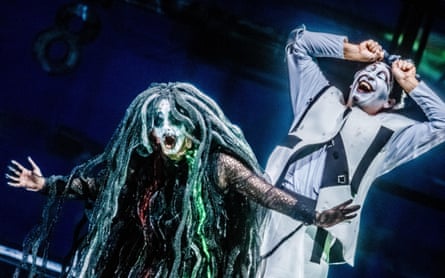
I think Parsifal would be an incredible gateway drug to the whole art-form, but if you’re allergic to Wagner’s language, you’ll quite probably disagree. A new production opens tomorrow at Covent Garden conducted by Jakub Hrůša. Tickets aren’t free – you need at least £27 – but get there if you can, and be converted, or repelled, but either way you will be moved.
This week Tom has been listening to: Bruckner’s String Quintet. Listen to the third movement, the Adagio, and prepare to have your preconceptions about Bruckner overturned. The intimacy of the soundworld, the volatility of how the melodies melt into different keys, the lines of lyricism that spread over this movement, and the whole piece – it’s magical. Listen on Spotify | Apple Music
KioskNews shows a cleaned-up reading view extracted from the publisher’s page — the original always lives on their site, not ours.