US data centre backlash could be blessing in disguise for AI buildout
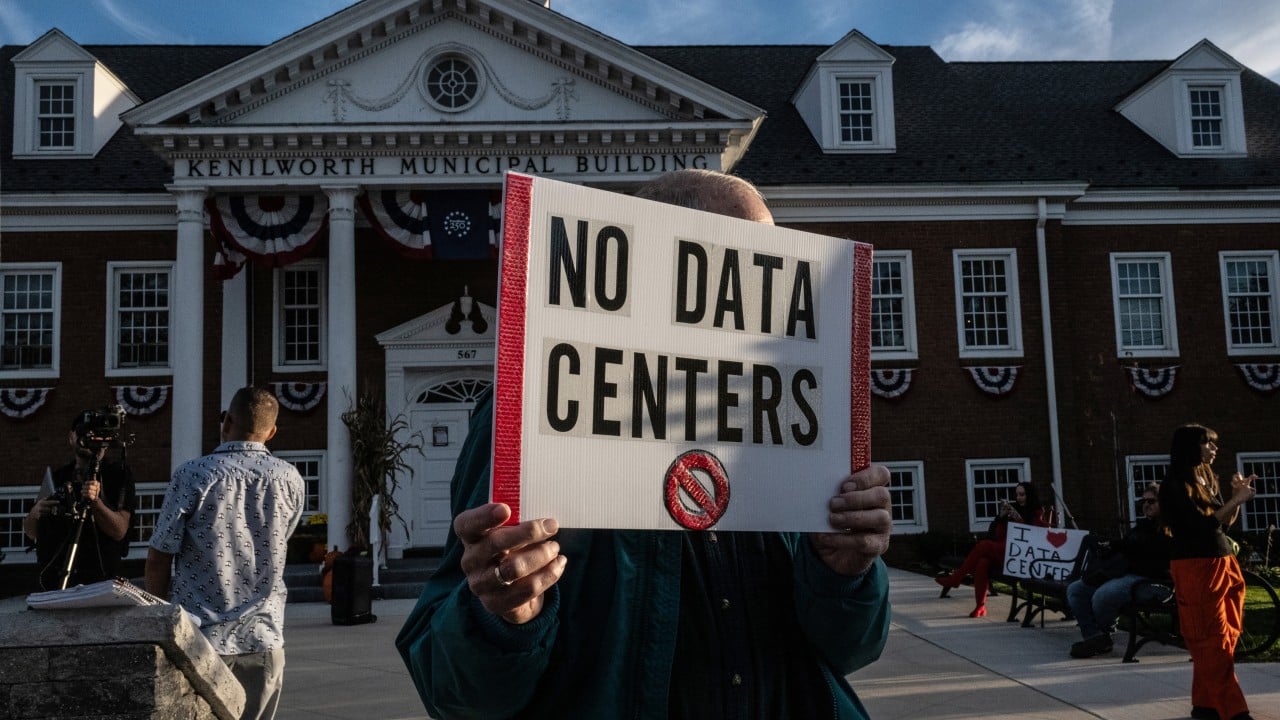
Financial markets are prone to knee-jerk reactions. Last week’s dramatic sell-off in US technology stocks in response to the sweeping victory of the Democratic Party in America’s midterm elections was clearly overdone, yet even the most bullish tech analysts acknowledge the results mark an inflection point for the artificial intelligence (AI) infrastructure buildout.
Not only did the Democrats secure majorities in both chambers of the US Congress, they seized control of state legislatures and governors’ mansions across the country. While the “blue wave” was attributable to several factors, not least the unpopular war in Iran and its inflationary effects, the backlash against data centres was a defining issue of the elections.
Although anti-AI sentiment is not limited to Democrats, states at the epicentre of the data centre boom – Texas, Georgia and Ohio – elected Democratic candidates who could clamp down on construction of the massive, power-hungry facilities.
In a report on November 5, Dan Ives of Yorkville Ives, one of Wall Street’s most bullish tech analysts, estimated that “on the low end, 10 per cent of the planned 800-1,000 AI-focused data centres in the US will now be wiped off the road map, with potentially up to 20 per cent of these facing a much longer regulatory road that could further impact the capacity buildout in the US over the next few years”.
On November 5, US$2.3 trillion was wiped off the value of the tech-heavy Nasdaq 100 index. In Asia, the collateral damage was most apparent in South Korea and Taiwan, the two leading semiconductor hubs that have been among the biggest beneficiaries of the surge in AI capital expenditure.
01:11
Asian tech stocks plunge as US midterm results fuel fears of an AI slowdown
Chinese tech stocks, on the other hand, rose last week, with the MSCI China Tech 100 Index gaining around 5 per cent. In a report on November 6, Nomura said a slowdown in data centre construction in the US might alleviate the global shortage of memory chips, easing access to AI chips and lowering prices for AI development and data centre buildout in China.
In a report on November 8, Citigroup said it did not expect China “to pace its own AI buildout, even if the US does. Chinese AI providers could expand [AI data centres] at home or in third countries, offsetting a US slowdown”.
However, caution is in order for four reasons. First, Chinese stocks have rebounded mainly because the “national team” of state-led funds poured a record amount of money into the market last week. China remains one of the worst-performing major equity markets this year amid the persistent weakness of domestic demand.
Second, a US-induced slowdown in the AI investment cycle would crimp China’s exports, the engine of the economy. According to Citigroup, AI-related exports accounted for 28 per cent of China’s total exports in the first three quarters of this year, contributing almost 12 percentage points to headline export growth.
Tougher regulation of the AI buildout would amplify the vulnerabilities of China’s growth model at a time when consumer confidence is struggling. Retail sales have grown just 1.1 per cent in annualised terms this year.

Third, a clampdown on the development of data centres in the US would go hand in hand with tighter curbs on China’s access to advanced chips, particularly given the spying scandal that has engulfed Nvidia and its CEO Jensen Huang. The political pressure to restrain the pace of data centre construction has increased the risks of ceding ground to China in the AI race.
Fourth, fears the AI spending spree could be derailed by stringent regulations in the US are misplaced. Stronger guard rails for the rapidly developing technology are inevitable and necessary. In fact, stricter rules for approving new data centres would be no bad thing at a time when concerns about the financing of the buildout are rife.
In a report on November 5, Frank Flight of Citadel Securities said “some moderation in the pace of capital expenditure should also provide relief to free cash flow and financing requirements” and that “additional barriers to entry should reinforce the scarcity value of operational assets”. The blue wave could be a blessing in disguise for the AI buildout.
02:59
US residents fight AI data centres as Trump blames China for opposition to facilities
At the same time, the backlash against data centres in the US has drawn attention to China’s competitive edge, especially when it comes to policy support, cheaper and greener electricity and state-allocated land. While limited access to advanced chips is a major bottleneck, US export controls have contributed to the drive for self-reliance.
This allowed China to build “a parallel data centre system to the US” in which “almost every layer is being rebuilt at home, largely outside the US supply chain”, China Galaxy Securities said in a report.
A sharp slowdown in the global AI buildout is not in China’s interest. However, restrictions that make it harder to build US data centres could play into Beijing’s hands.
KioskNews shows a cleaned-up reading view extracted from the publisher’s page — the original always lives on their site, not ours.