41 rare Chinese artefacts to make Singapore debut on Dec 7 in four classic novels showcase
SINGAPORE - Forty-one rare historical artefacts that have never been exhibited outside China will make their way to Singapore for an upcoming showcase later this year.
Among the items on loan from the National Library of China (NLC) are two cultural relics that China has classified as its highest grade for national heritage objects, based on factors such as rarity and significance.
They will be part of an exhibition on the four great Chinese classic novels – Romance of the Three Kingdoms, Dream of the Red Chamber, Water Margin and Journey to the West – that will open at the National Library Singapore in December 2026.
An NLB team, led by chief executive officer Melissa Tam, caught a glimpse of the items during a visit to the NLC in Beijing on Sept 20. Tam was accompanied on the visit by five members of NLB’s curatorial and partnerships teams.
One of the two top-graded artefacts is a rare edition of Water Margin containing commentary from renowned Ming Dynasty philosopher, literary critic and historian Li Zhuowu.
This is the most complete 100-chapter version that still exists, with high-quality illustrations of key story scenes that have been influential in the history of Chinese printing. This work preserves many of the original poems found in author Shi Nai'an’s text and is critical for studies on the novel’s development.
The other is a rare manuscript of Dream of the Red Chamber, one of the earliest surviving handwritten versions that dates back to 1759. Such manuscripts are often used to trace the novel’s evolution and uncover the author’s original intent.
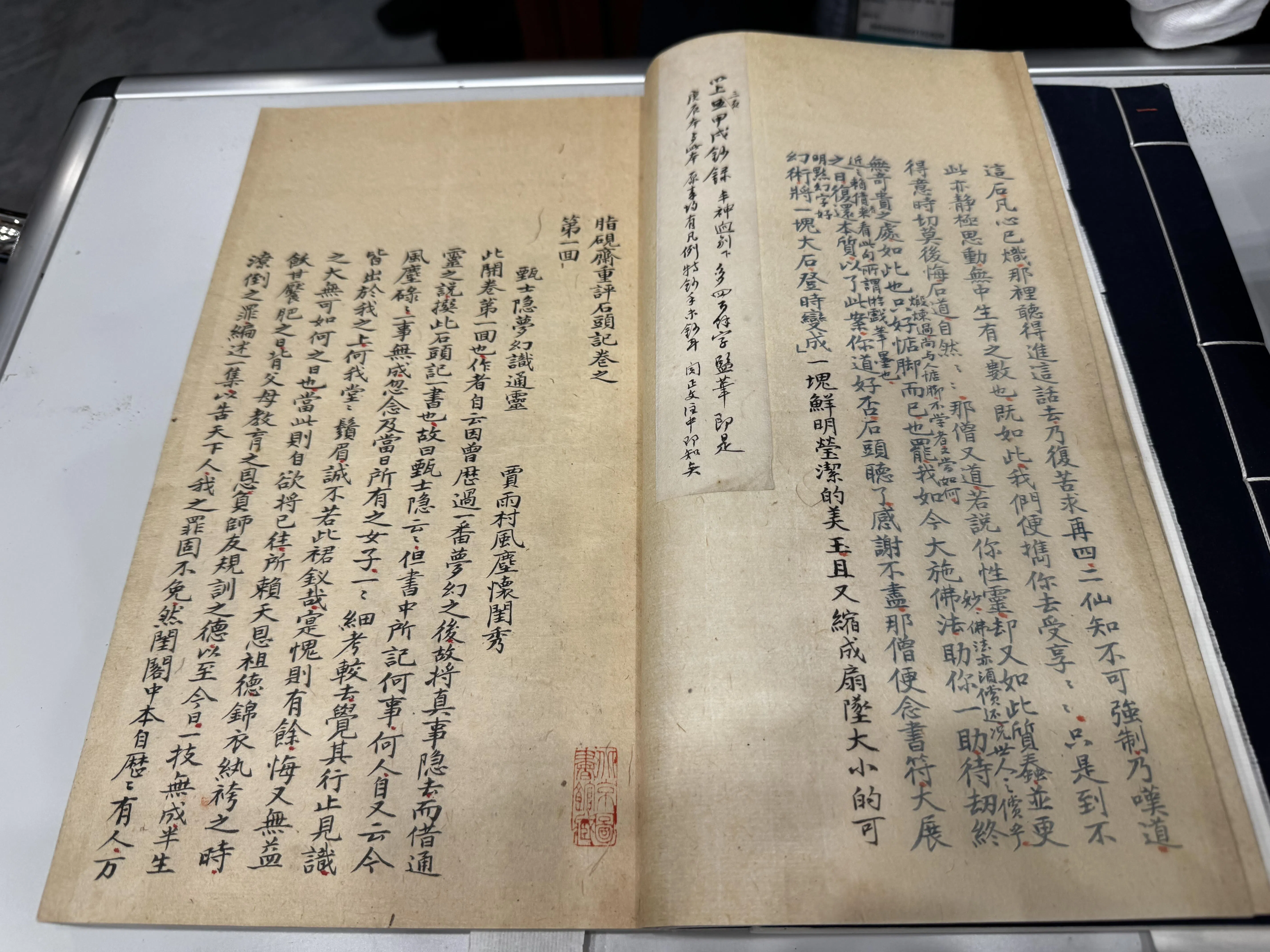
A rare manuscript of Dream of the Red Chamber, which is also a top-graded artefact.
PHOTO: LIANHE ZAOBAO
Other notable artefacts include an early version of Romance of the Three Kingdoms with revisions and commentary by scholar Mao Zonggang, whose edition was later widely adopted, and a set of drinking game cards with 40 characters from Water Margin.
There are also other early editions, woodblock prints and opera scripts dating from the 17th to 19th centuries.
An NLC representative said on Sept 20 that the ancient books were selected based on three principles: tracing the history of the editions, showing the breadth of their circulation, and highlighting their continued relevance through later adaptations and reinterpretations.
The items will be displayed alongside artefacts from the National Library of Singapore’s own collection.
This includes Chrita Dahulu-kala, Namanya Sam Kok, a 30-volume Baba Malay translation of Romance of the Three Kingdoms by Chan Kim Boon. Published in Singapore between 1892 and 1896, it shows how a Chinese literary classic became part of Singapore’s multicultural literary history, NLB said.
The exhibition, to be presented in both English and Chinese, will also offer an immersive journey through the world of each novel via interactive digital installations.
Among these is an interactive wall inspired by a Qing dynasty imperial opera, where visitors can discover how the Sun Wukong character in Journey to the West obtained his iconic weapon - a magical staff that can change its size at his command.
The exhibition builds on a long-standing partnership between the two national libraries that was established in 1997, covering areas such as the exchange of library materials, staff attachments and information resource sharing.
A recent memorandum of understanding signed between the two libraries in March 2025 made the loan of these artefacts possible.
The exhibition was announced by Prime Minister Lawrence Wong in his Mandarin speech at the National Day Rally on Aug 23. He said then that many Singaporeans know these stories from young and have learnt many values from them.
Tam said on Sept 20: “These Chinese classics transcend time and language...and they speak to timeless themes of love, friendship, loyalty and discipline.”
She added that NLB is working closely with its counterparts at NLC to ensure that the artefacts are appropriately cared for from their journey to Singapore through to their display and eventual return.
What are these novels about?
The four great Chinese classic novels have influenced literature, film, and popular culture across Asia for centuries.
Journey to the West is a 16th century late-Ming dynasty Chinese novel, whose authorship is attributed to Wu Cheng En.
In the story, the Tang emperor and Buddha task a monk Tang Sanzang to retrieve Buddhist scriptures from Tian Zhu, a mythical location in the Indian subcontinent. Tang is accompanied by three disciples: Monkey King Sun Wukong, Pigsy the pig demon Zhu Bajie, and Sandy the river ogre Sha Wujing.
Water Margin’s current version is believed to have been completed in the 16th century, around 1524 during the reign of the Jiajing emperor.
It is generally attributed to Shi Nai’an and Luo Guanzhong, with Shi credited as author of the first 100 chapters and Luo, a student of Shi, credited for the remaining 30.
Set in the late Northern Song dynasty, it tells the story of a band of 108 heroes who gathered at the marshes of Mount Liang to oppose the Song government helmed by corrupt officials.
Romance of the Three Kingdoms is a historical novel written in the 14th century (late Yuan dynasty to early Ming dynasty), attributed to Luo Guanzhong.
It follows a semi-fictional historical narrative set in the late years of the Eastern Han dynasty and the subsequent Three Kingdoms period. It details various power struggles among the many warlords as they vied for dominion over China, and combines historical material from the Three Kingdoms Annals with folklore and legends.
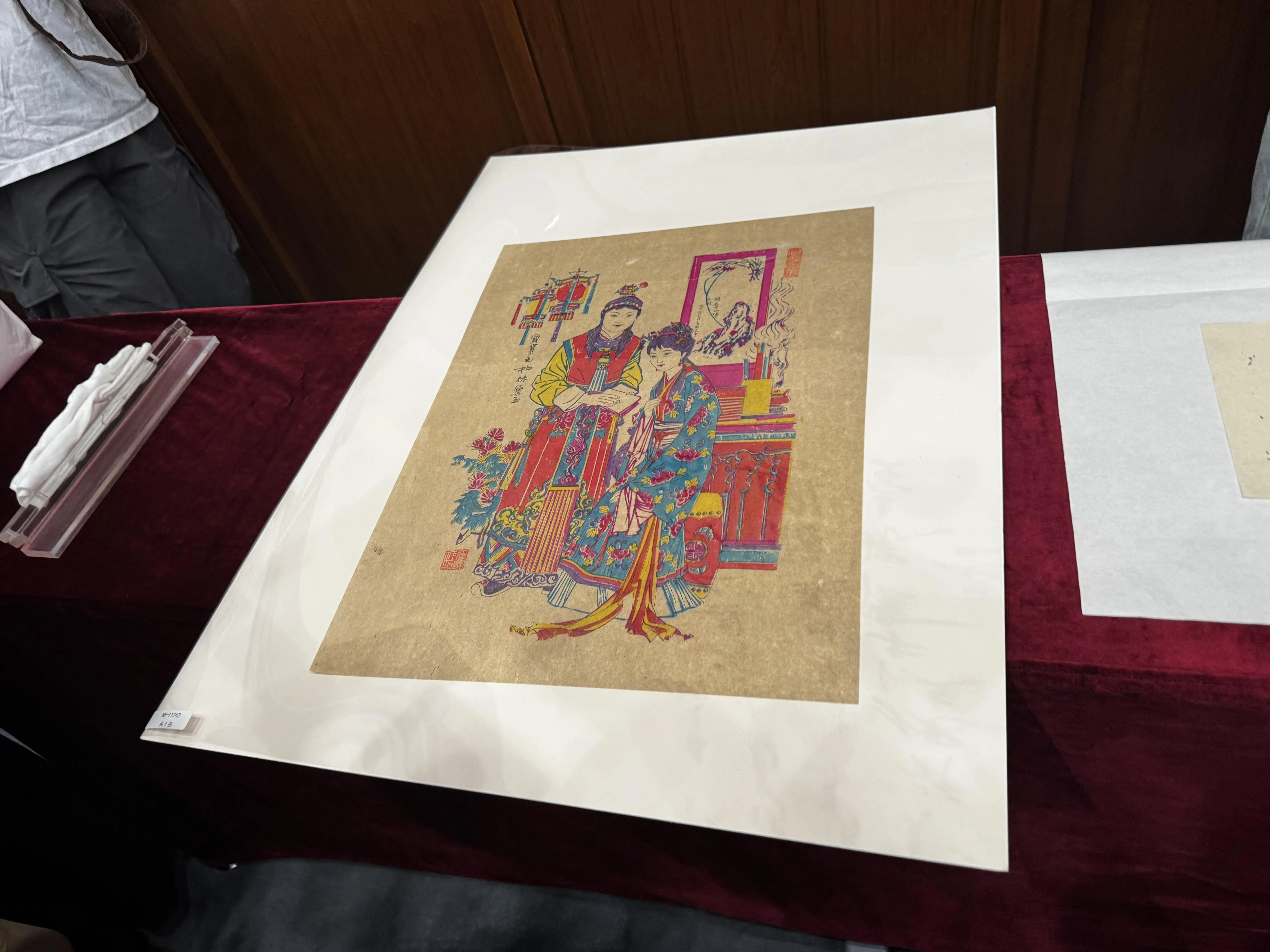
This Chinese New Year painting is believed to date from 1978. The figures are Dream of the Red Chamber's Jia Baoyu and Lin Daiyu, who seem to be reading poetry.
PHOTO: LIANHE ZAOBAO
Dream of the Red Chamber was written in the 18th century during the Qing dynasty. It is attributed to Cao Xueqin, although some scholars argue that the final 40 chapters were not authored by him.
The story follows the rise and fall of the Jia family, and is often viewed as a social critique on Qing materialist culture and values. The novel has even sparked its own academic field called “Redology”.
KioskNews shows a cleaned-up reading view extracted from the publisher’s page — the original always lives on their site, not ours.