Hong Kong’s bridge of gold completes China’s yuan ambition
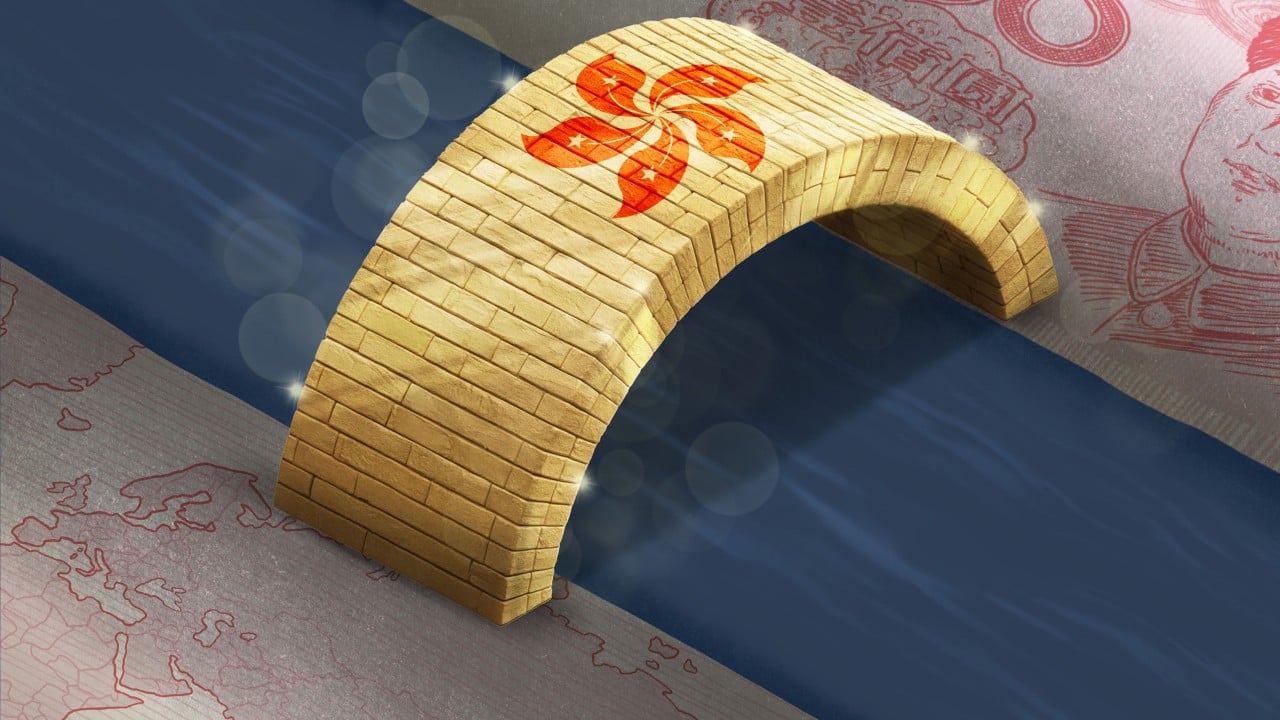
Beijing’s push to accumulate gold serves a larger goal: yuan internationalisation. In this series, Part I traces China’s path to becoming a gold superpower, while this article explores Hong Kong’s key role in safeguarding the nation’s financial security.
In 2013, one-third of the world’s traded gold passed through Hong Kong. That year, the city imported 1,158 tonnes of bullion, overtaking India, the traditional top buyer. For all our love of the glittering metal, little of it stayed in our vaults. It mostly went straight to mainland China, where strict controls meant the bulk of its gold imports had to transit through here.
Little did we know that things would soon be turned upside down. In 2014, China relaxed restrictions, allowing more mainland banks to buy foreign gold without routing it through Hong Kong. Net gold flows to the mainland via the city fell to 863 in 2015, then to 245 tonnes in 2019, before reaching a nadir of 67 tonnes in 2020, according to a Hong Kong Legislative Council report.
Just as Hong Kong’s gilded days as the region’s premier gold hub seemed over, things flickered back to life. Bullion flowing into the city has surged since 2020, rebounding to 942 tonnes last year. Now, Hong Kong has set itself the goal of becoming an international gold trading centre, with plans to increase storage capacity tenfold, from 200 tonnes to 2,000 tonnes by 2028.
KioskNews shows a cleaned-up reading view extracted from the publisher’s page — the original always lives on their site, not ours.