Food Inspections Surge 46%, But Safety Fears Persist Ahead Of Festivals
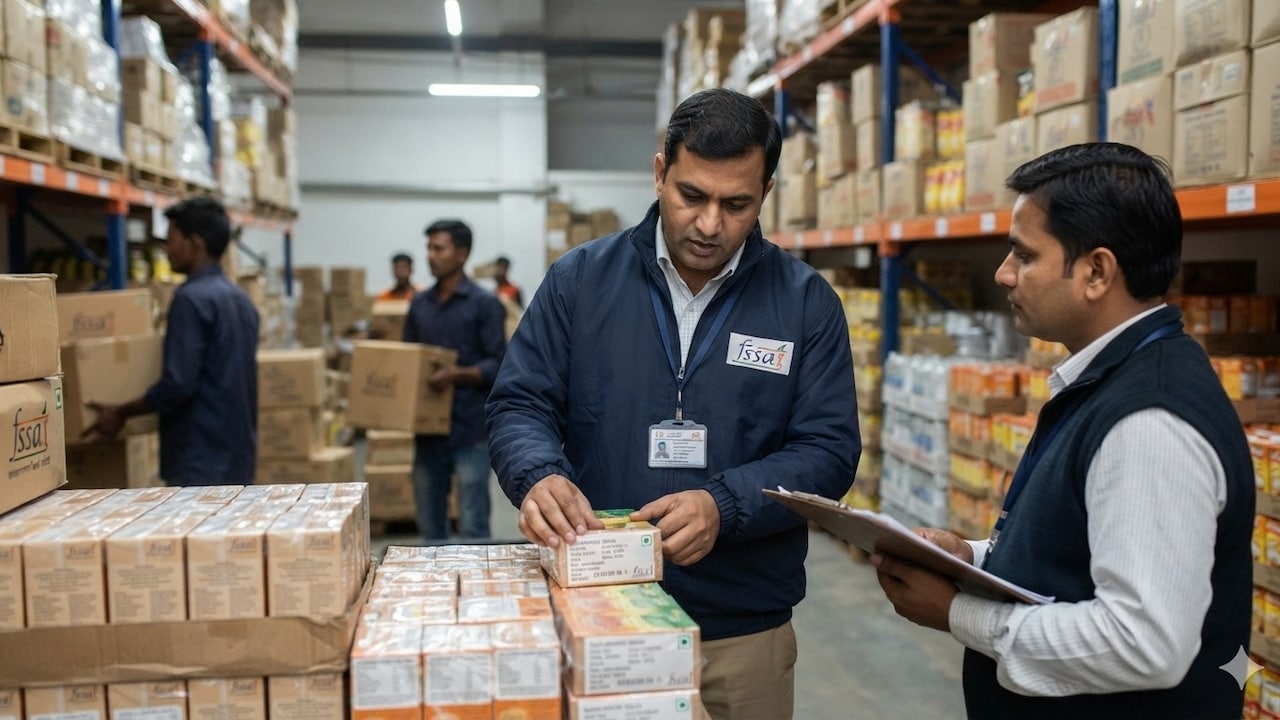
On 25 May, IAS officer Tukaram Mundhe took charge as Food Commissioner of Maharashtra. The same day, he launched a sweeping enforcement drive across the state, starting with the milk supply chain. Four months on, the officer's name has become shorthand for a kind of food regulation India's middle class had almost stopped expecting.
As the festive season begins, Mundhe's crackdown has landed at the centre of a bigger question. India is inspecting and testing more food than ever before. Is that enough to make the mithai box, the ghee in the puja thali and the paneer on the festive menu safe?
The Numbers Behind The Push
The official data shows rapid expansion. The Ministry of Health told the Lok Sabha that FSSAI and state authorities conducted 5,20,566 inspections in 2025-26, up from 4,01,391 in 2024-25 and 3,57,072 in 2023-24. That is a rise of about 46 per cent in two years. Of 2,23,808 samples analysed, 40,023 were found non-conforming, and the ministry described the 2025-26 figures as provisional. That works out to roughly 18%, or nearly one in five samples.
But the number needs careful reading. The government reports only the non-conforming count, a category that can include adulterated, sub-standard, contaminated or misbranded food, without a breakup. The last detailed split available, for 2023-24, shows why that matters. Of 33,808 non-conforming samples that year, 22,603 were sub-standard, 6,782 were unsafe and 4,423 had labelling defects. Most failures, in other words, were about quality and labelling, not immediate danger to health. But a large unsafe category remains, and consumers cannot see how it splits by food type.
Punishment lags detection. Parliament data records 31,878 civil cases decided with a penalty and 1,918 criminal convictions in 2025-26. These cases may relate to samples from earlier years, so the figures are not a like-for-like comparison. Even so, the gap between 40,000 failed samples and fewer than 2,000 convictions explains why public confidence remains thin.
Why The Festive Season Is Different
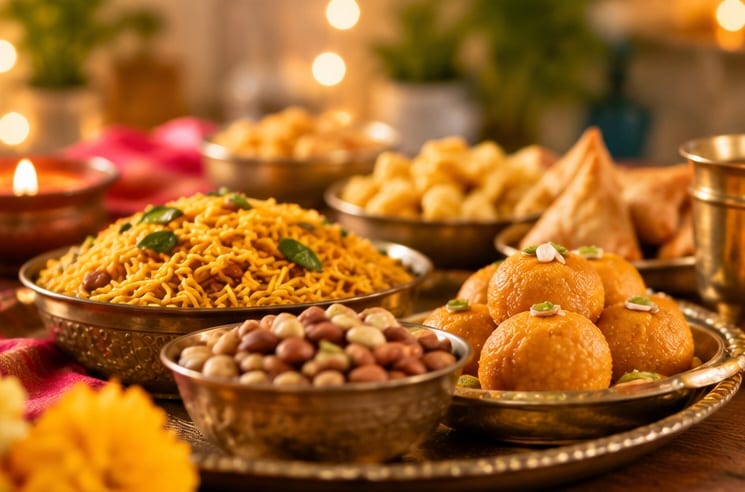
Regulators know this is the riskiest stretch of the year for food safety. FSSAI has pointed out that demand for sweets, savouries, milk, ghee, khoya and paneer rises during festivals, and that this increases the economic motive to adulterate.
Maharashtra's festive drive shows what visible enforcement looks like. Between 23 and 27 September, the FDA suspended the licences or registrations of 30 establishments and seized more than 50,000 kg of food valued at Rs 1.19 crore. Seized items included khoa, paneer, ghee, cream, sweets, shrikhand, lassi, coconut oil, farsan and potato wafers. A separate crackdown on banned products led to 22 FIRs, 30 arrests, three establishments sealed and stock worth Rs 30.63 lakh seized.
The action did not stop at small operators. The FDA suspended the licence of Kyani & Co, a 122-year-old Mumbai cafe, after finding hygiene violations. In Malad East, the department seized 2,464 kg of ghee, refined sunflower oil and vanaspati from a dairy that allegedly mixed them with branded ghee and sold the blend as "Pooja Ghee." However, some skeptics argue that even this activism is like plastering a band-aid on a septic wound, and that the informal food sector will need years of sustained enforcement.
The Cost Of Getting It Wrong
India has no reliable national estimate for what adulterated food alone costs the country in medical bills. The closest evidence covers foodborne disease as a whole, and the figures are large. The World Bank estimated that unsafe food costs low- and middle-income economies about $110 billion a year in lost productivity and medical expenses. India accounts for $15 billion of the burden. Of the total, productivity loss is put at $95.2 billion and the annual cost of treating illness at around $15 billion. The World Bank also points to costs that are harder to count. These include lost farm and company sales, reduced trade revenue and food waste.
The global picture has worsened. The WHO now estimates that US$ 310 billion is lost each year in productivity and medical expenses because of unsafe food. Indian health experts say medical bills, lost wages and reduced productivity often push families into a cycle of poverty and poor health, and that antimicrobial resistance is making foodborne infections harder and costlier to treat. For a household, the cost is rarely dramatic. It is the doctor's fee, the medicines and the days of work lost. Multiplied across millions of families, it becomes a drag on the economy.
What The Industry Says
Large players argue that regulation alone cannot close the gap. Umesh Kumar Agarwal, Director, Haldiram, told NDTV that festivals and food are inseparable in India, but the celebrations also stretch every link of the food chain, from sourcing and production to transport, storage and the final counter. In such a season, he says, food safety cannot be treated as a seasonal campaign. It has to be a daily discipline.
Agarwal credits FSSAI and the state authorities, pointing to the provisional 2025-26 data of 5.20 lakh inspections and 2.23 lakh samples analysed, with more than 40,000 found non-conforming. The scale of enforcement, he says, shows how seriously the regulator and the government are taking food safety, but it is also a reminder that the problem needs sustained attention.
"In a food market as large and diverse as India's, no regulator, whatever its intent or bandwidth, can be present at every factory, warehouse, vehicle, kitchen and shop counter," says Agarwal. "Inspections matter. They create accountability and act as an external check. But food safety cannot be judged by the number of visits or samples alone. What really counts is what happens on an ordinary day, when there is no auditor at the outlet."
The responsibility, he argues, has to sit with the industry, and it cannot rest with the quality team alone. Procurement has to work only with approved suppliers. Manufacturing has to stick to specifications. The supply chain has to guard time and temperature. Outlet teams have to keep hygiene, stock rotation and traceability in order. Every gap needs a clear owner, a deadline and verified closure. During the festive rush especially, he says, it is systems, not heroics, that keep food safe.
"For me, the simplest standard is also the most powerful: every person handling food should serve a customer with the same care they would expect for food served in their own home, to their own family," says Agarwal. That means clean hands and surfaces, correct sanitisation, honest shelf-life practices, proper temperature control and no shortcut because demand is high. "A festival may explain pressure; it can never justify compromise."
Technology, he adds, can strengthen this discipline. Digital traceability, rapid testing, supplier audits, laboratory checks and real-time temperature records help catch problems much earlier in the chain. Training matters just as much. Even the most junior team member should feel free to stop or escalate an unsafe practice without fear.
So, Is India Doing Enough?
The direction is clearly right. Inspections are rising, states are acting visibly, and companies are being pushed to treat safety as an operating cost, not an afterthought. But four gaps remain: the lack of a public breakup between adulteration and sub-standard food, the thin conversion of failed samples into convictions, uneven capacity across states, and low consumer trust in local regulators.
Agarwal's closing point captures the challenge. Government action alone cannot put safe food on every plate. The regulator must keep raising the bar, and every food business must meet it, every batch, every shift and every day. Consumer trust, he says, is built or lost in the details. India's festive plates will be safest when enforcement and prevention work together, and when food safety is practised as a daily habit rather than performed on inspection day.
KioskNews shows a cleaned-up reading view extracted from the publisher’s page — the original always lives on their site, not ours.