Scrum mechanics and a Gatland cameo: behind the scenes with the Nations Championship’s 13th team
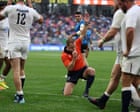
The 13th team participating at the Nations Championship this month are an intriguing bunch. If you didn’t know much about rugby and had wandered into a first-floor conference room at a hotel near Windsor on Monday you might almost have mistaken them for a gathering of airline pilots from nearby Heathrow. Slim, intelligent, studious ... you’d trust them to stay calm on the flight deck.
Stick them in matchday kit, however, and the world’s top rugby union referees do not always enjoy universal respect, certainly online. They can be unflappably brilliant for 79 and a half minutes and yet still be defined by one hairline call barely visible to the naked eye. Every Test in which they are involved is an away game and, popularity wise, they often receive the same unconditional love as traffic wardens and the chancellor of the exchequer.
A few hours in the company of, among others, Karl Dickson, Luke Pearce, Angus Gardner, Ben O’Keefe and Hollie Davidson is to get a rare glimpse of the flip side. And to wonder why World Rugby has previously not made a bigger deal of the pre-match lengths to which today’s referees now go. Try doing the equivalent of a geometry exam while simultaneously having to run at least nine kilometres, explain your pivotal decisions to millions on TV and ignore the collective screech of 80,000 agitated spectators. Tough doesn’t remotely cover it.
Particularly when rugby’s lawbook is so notoriously labyrinthine. One of the keynote sessions we attend, for example, concerns the internal mechanics of the scrum. The former Wales captain Jonathan Humphreys, now World Rugby’s scrum consultant, explains the vital importance of ensuring loosehead props do not have their inside shoulders tucked before engagement, thus crucially skewing the whole angle of their front row and, all too often, the opposition’s as well. Video clips are duly shown to illustrate the potential ramifications.
Cue a cameo appearance from the former British & Irish Lions head coach Warren Gatland, a World Rugby coaching consultant these days, who comes up from the back of the room to bind on to Humphreys and demonstrate the precise shoulders-back, pre-engage position that officials should be mandating. Talk about poachers turned gamekeepers.
Then there is the hooker’s “brake foot”, so called because of its importance in stabilising the scrum. If the heel of the hooker’s front foot is not flat to the ground, a free-kick should be awarded. Got that? No heads on shoulders before engagement – front-rowers should instead be aligned temple to temple – make sure everyone pushes straight rather than walking around, no guesswork, etc etc. Forty minutes have passed and no one has even mentioned that backs play rugby, too.

All joking aside, it does seem the sport is inching slightly closer to the holy grail: a consistent balance between attack and defence, more clear-cut messaging and a product that satisfies players of both sexes and spectators of all ages. World Rugby even has a fresh four-pillar mantra when it comes to enhancing the game: protect the player, embrace the contest, promote continuity, win the fan. Tick all four boxes and, hopefully, greater interest and investment will follow.
And the penny also seems to be dropping globally that referees need to be backed to make their own strong decisions, for better or worse, rather than the game being fractured endlessly by unnecessary television match official interventions.
In the end perfection matters less than big calls around tries and dangerous play being managed correctly. “Get what matters. The rest doesn’t matter,” one leading official urges, stressing the “clear and obvious” ethos which forms the basis of modern whistleblowing.
Equally, though, teams may have to brace themselves for a few extra free-kicks and penalties early in games over the coming month as referees and players alike get up to speed with the latest sanctions for hip and knee drop tackles as well as the updated head-contact process around the breakdown, designed to reduce dangerous flying clear-outs among other things. The reality is that players’ habits will change only when they are effectively given no other option.
There was also a significant initiative on Sunday when virtually all the world’s leading head coaches met the top referees to exchange their hopes and fears for the game’s future. The smart money is on certain aspects looking appreciably different.
after newsletter promotion
Among the concepts being lobbed around, for example, are special refereeing goggles capable of showing the aerial view of a scrum, thus making awkward culpability calls slightly easier. Another suggestion is a separate specialist scrum referee – David Flatman, come on down – who would be invited to, er, sprint on and adjudicate on set-pieces.

More research, incidentally, is also being commissioned to identify the parts of the game that fans most enjoy, assisted by the use of heart rate monitors. Early southern hemisphere studies have shown that heart rates soar for interceptions, line breaks and the haka, with the biggest turn-offs being dull interruptions and scrum resets.
Recent stats also show the ratio of tries scored compared to penalty goals in major Tests has trebled in less than three years. Once the 2027 World Cup is over the debate surrounding the shape of the game seems certain to reignite.
In the meantime, here’s to the seriously dedicated men and women at the sharp end. Next time you’re tempted to shout ‘You don’t know what you’re doing’ from your vantage point 100 metres away, be assured they absolutely do. And also bear in mind the most timeless rugby mantra of the lot: no referee, no game.
KioskNews shows a cleaned-up reading view extracted from the publisher’s page — the original always lives on their site, not ours.