Superhumans Center Ukraine: When war takes your limbs, life goes on
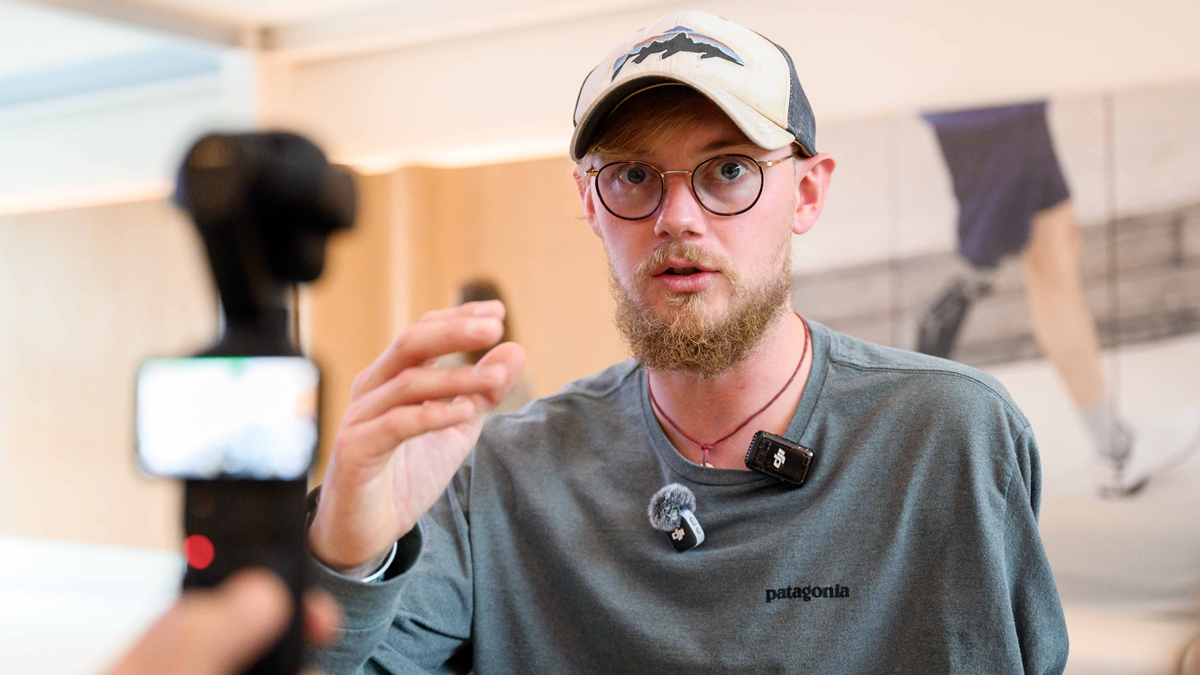
At Ukraine’s Superhumans Center, soldiers, civilians and children are learning to rebuild their lives after losing limbs in the war.
The sound of a drone came first.
Then came the explosion.
For British volunteer Eddy Scott, 30 January 2025 began like many other days of humanitarian work in Ukraine. He was helping evacuate civilians from the frontline city of Pokrovsk when an FPV drone struck the roof of his vehicle.
The blast took his left arm and severely damaged his left leg.
He survived, but the attack changed his life forever.
“I shouldn’t have survived,” Scott recalled.
Today, he works as an ambassador for Superhumans Center, a specialist treatment and rehabilitation facility for people injured in the war.
For him, the centre is not simply about treating physical injuries. It is about helping people understand what comes next.
“This is the start of a life, not the end of a life,” Scott said.
From treatment to a new beginning
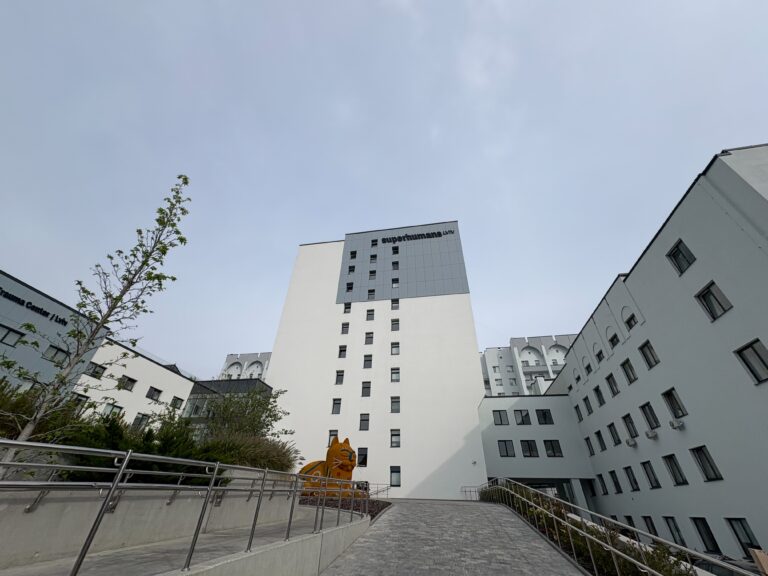
Superhumans Center was established in 2022 in Ukraine’s Lviv region, after Russia’s full-scale invasion created an urgent need for prosthetics, reconstructive surgery and long-term rehabilitation.
The project was initiated by Ukrainian businessman Andriy Stavnitser, with Filip Hrushko also among its founders. Olha Rudneva was appointed CEO.
The centre provides orthopaedic trauma care, reconstructive and plastic surgery, facial surgery, ENT treatment, rehabilitation and prosthetics. Its departments include surgical, traumatological, physical rehabilitation, PTSD and paediatric reconstruction services.
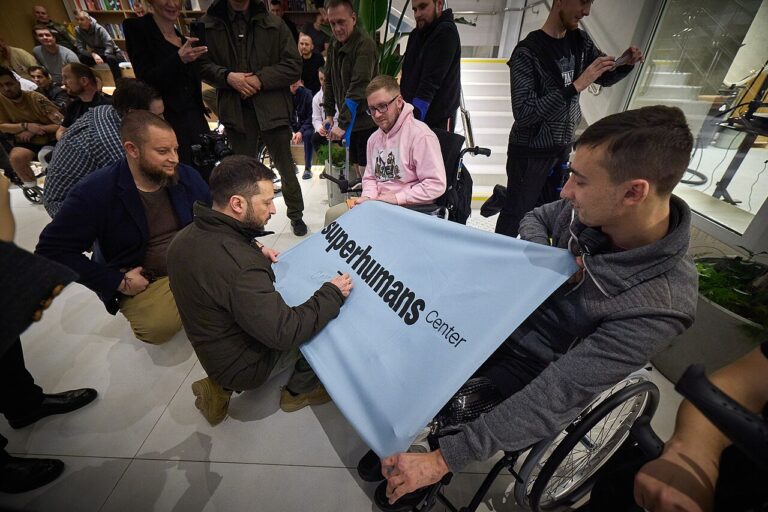
The approach is highly individualised. Patients with similar injuries may require very different treatment, depending on their bodies, injuries and lives.
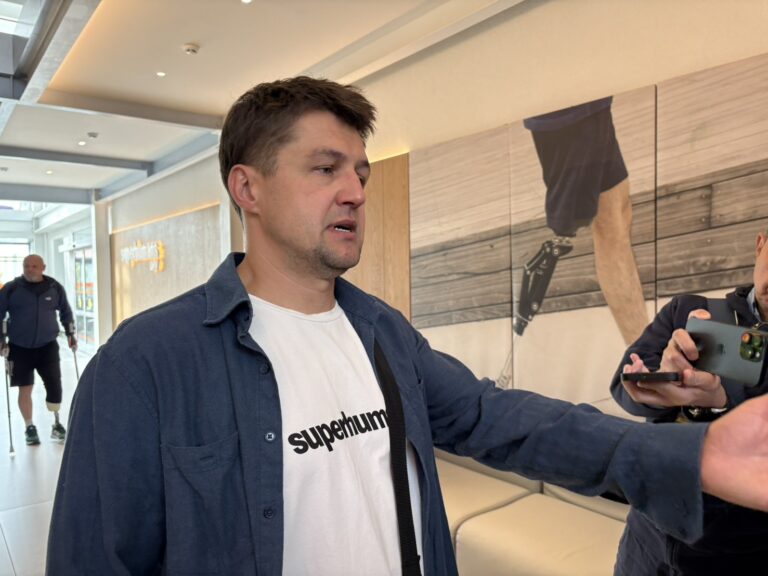
Andriy Ishchyk, the centre’s media manager, said Superhumans operates as a charitable foundation, with funding coming from charities and private donors.
He said the centre’s weekly budget is roughly US$1 million and that fundraising remains a constant challenge.
From the best in Ukraine to a bigger dream
Scott said the founders initially wanted to build the best rehabilitation centre in Ukraine.
Then the ambition grew.
They wanted to build the best rehabilitation centre in the world.
After about seven months of planning, construction began in early 2023. The first patients arrived within three months.
The centre now combines rehabilitation facilities and prosthetics laboratories with a residential and medical facility. It has 86 beds, including six intensive care beds, as well as a full surgical suite.
The idea is to provide as much treatment as possible in one place, rather than repeatedly sending patients elsewhere.
Scott said the centre has continued to expand its services as staff encounter new types of injuries and learn what patients need.
From a sailor to life on the frontline
Before Ukraine, Scott spent about a decade working on private sailing yachts.
He followed the war closely before Russia’s full-scale invasion and eventually decided to leave his job and travel to Ukraine in October 2022.
He began working on humanitarian projects in the Donbas, helping with infrastructure, roads used for evacuations, roofs and fresh water supplies. He also trained as a medic and provided humanitarian medical assistance.
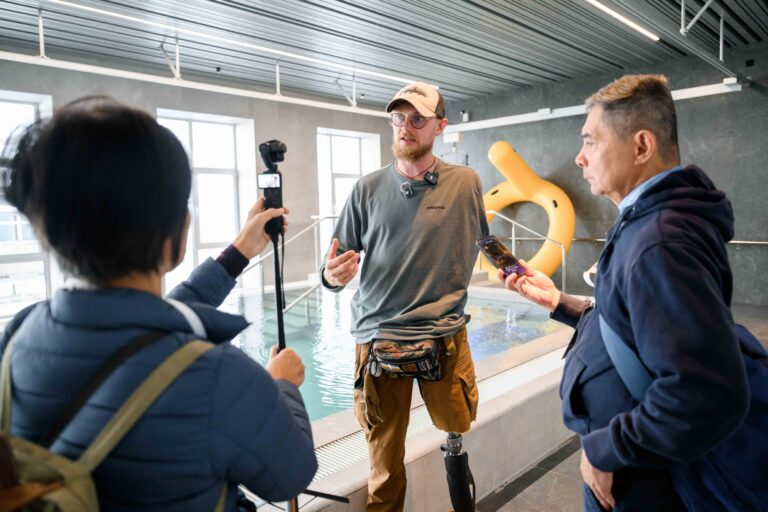
By late 2024 and early 2025, he was working with a team evacuating civilians from Pokrovsk.
On 30 January 2025, Scott and his team entered the city and evacuated three civilians and a dog. They returned for two more people.
On the way out, around 200 to 300 metres from the exit, an FPV drone came through the roof of their vehicle.
The explosion destroyed his left arm and severely injured his left leg.
His team leader, who suffered superficial injuries, applied tourniquets to his arm and leg. Scott was moved by pickup truck to a nearby town before being taken to hospital.
He remained conscious throughout the evacuation.
His last memory was being carried into the hospital.
Scott said that if the evacuation had taken longer, if the team had been deeper inside the city, or if the explosion had struck slightly further to the right, he might not have survived.
“I was stupidly lucky,” he said.
Not what I have lost, but what I can still do
The physical injuries were only part of the challenge.
Scott said adjusting to life after the attack was difficult, particularly after spending years working in high-risk environments.
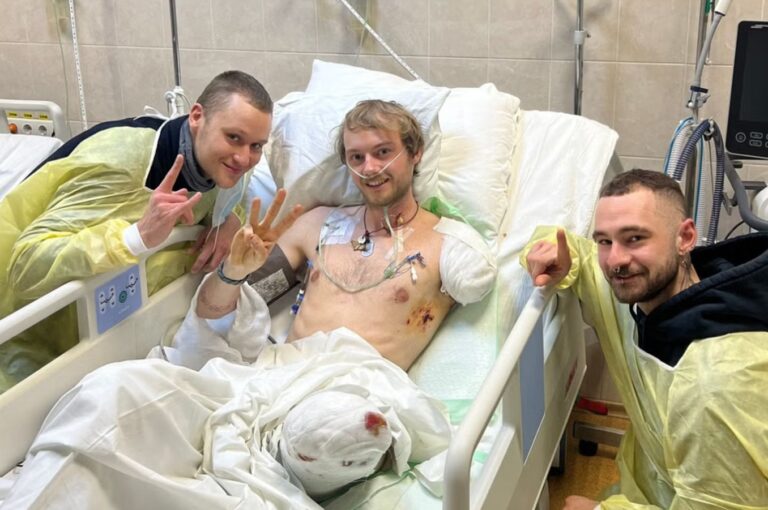
But he does not define his life by what he has lost.
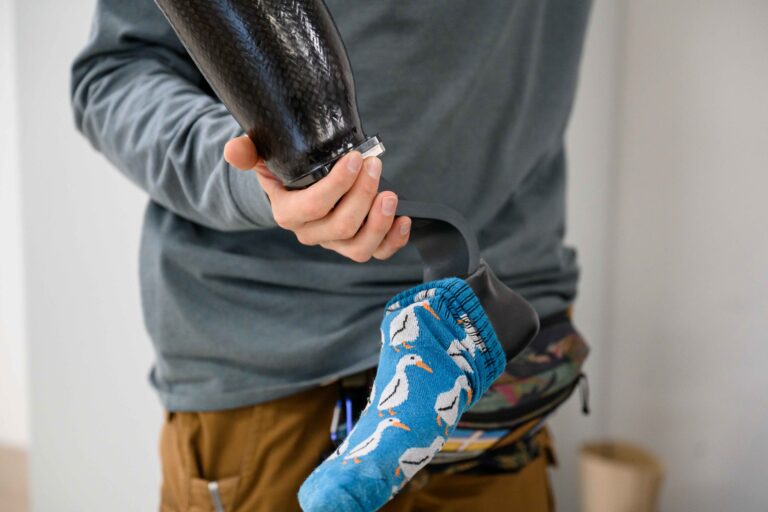
A prosthesis gives him mobility and allows him to travel and live independently.
“I don’t think about this compared to my real life. I think about this compared to nothing,” he said.
Rather than asking what he can no longer do, Scott focuses on what remains possible.
Six months after the attack, he was climbing mountains in Spain and taking part in international sailing competitions.
At Superhumans, rehabilitation is also about adapting activities to people with disabilities. Scott spoke about developing opportunities in sports, including precision and dynamic shooting, with categories for disabled participants.
The principle is simple: rehabilitation does not necessarily mean returning to the person you were before the injury. It can mean building a different way of living.
Artem, the nine-year-old who ‘runs the centre’
Among the patients Scott remembers most vividly is Artem, a nine-year-old boy from Kherson.
About a year before Scott’s interview, Artem’s family was hit by a tank. His mother pulled him from the vehicle, but his leg was severely injured and had to be amputated.
Scott described Artem as extremely positive, funny and full of personality.
“He runs the centre,” Scott said.
Artem is also a musician, and his presence among adult patients has become part of the atmosphere at Superhumans.
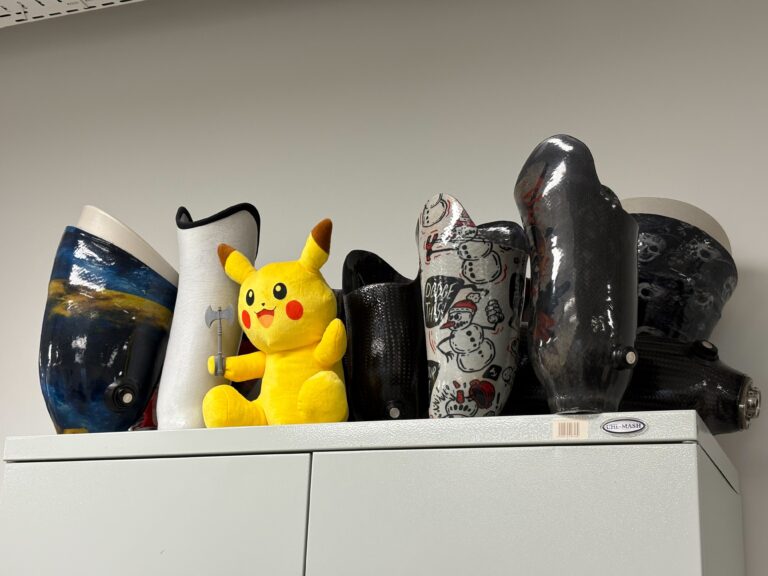
For Scott, seeing children settle into the centre is a sign that the work is making a difference.
They are surrounded by what he described as “big brothers and sisters” who have experienced similar injuries and can support them as they grow up.
The message is not to pretend that the loss does not matter.
It is to recognise the loss, then look at what comes next.
“This is the start of a life, not the end of a life,” Scott said.
What happens when the war ends?
Superhumans is also thinking about a future beyond the war.
For Scott, rehabilitation cannot end when a patient leaves the centre.
Someone who loses a limb during the war may need a new prosthesis years or even decades later.
“Ten years from now, where do I get a new leg?” he asked.
That is why Scott believes Superhumans needs to become known beyond Ukraine, building international partnerships, sharing knowledge and training medical professionals.
He also sees the possibility of developing the Superhumans model in other countries through collaboration or franchising.
The goal is to build a system that can continue supporting wounded soldiers, civilians and children long after the war is over.
A wife, a farm and a quiet life
The attack also changed the way Scott thinks about the future.
Before being wounded, he often planned his life in terms of days or weeks because of the dangers of frontline humanitarian work.
Now, he thinks further ahead.
He has just turned 30.
And when asked what he wants if the war eventually ends, his answer is surprisingly simple.
“A wife, a farm, relax.”
His long-term plan when he first came to Ukraine was already to stay, settle in a village and live a quieter life.
After years of what he calls “a decade-plus of craziness”, he says he is ready for something different.
The war may have taken his arm and leg.
But for Scott, and for the people he meets at Superhumans, losing part of the body does not mean losing the rest of one’s life.
KioskNews shows a cleaned-up reading view extracted from the publisher’s page — the original always lives on their site, not ours.