Keeping up with UP: Will Mathura be the next in Uttar Pradesh’s temple politics
The Ayodhya Ram Temple construction campaign propelled the Bharatiya Janata Party (BJP)’s rise from two Lok Sabha seats in 1984 to 85 in 1989. Today, the party is leading the government for a third consecutive term, with 240 seats on its own and 318 with allies in the 543-member House.
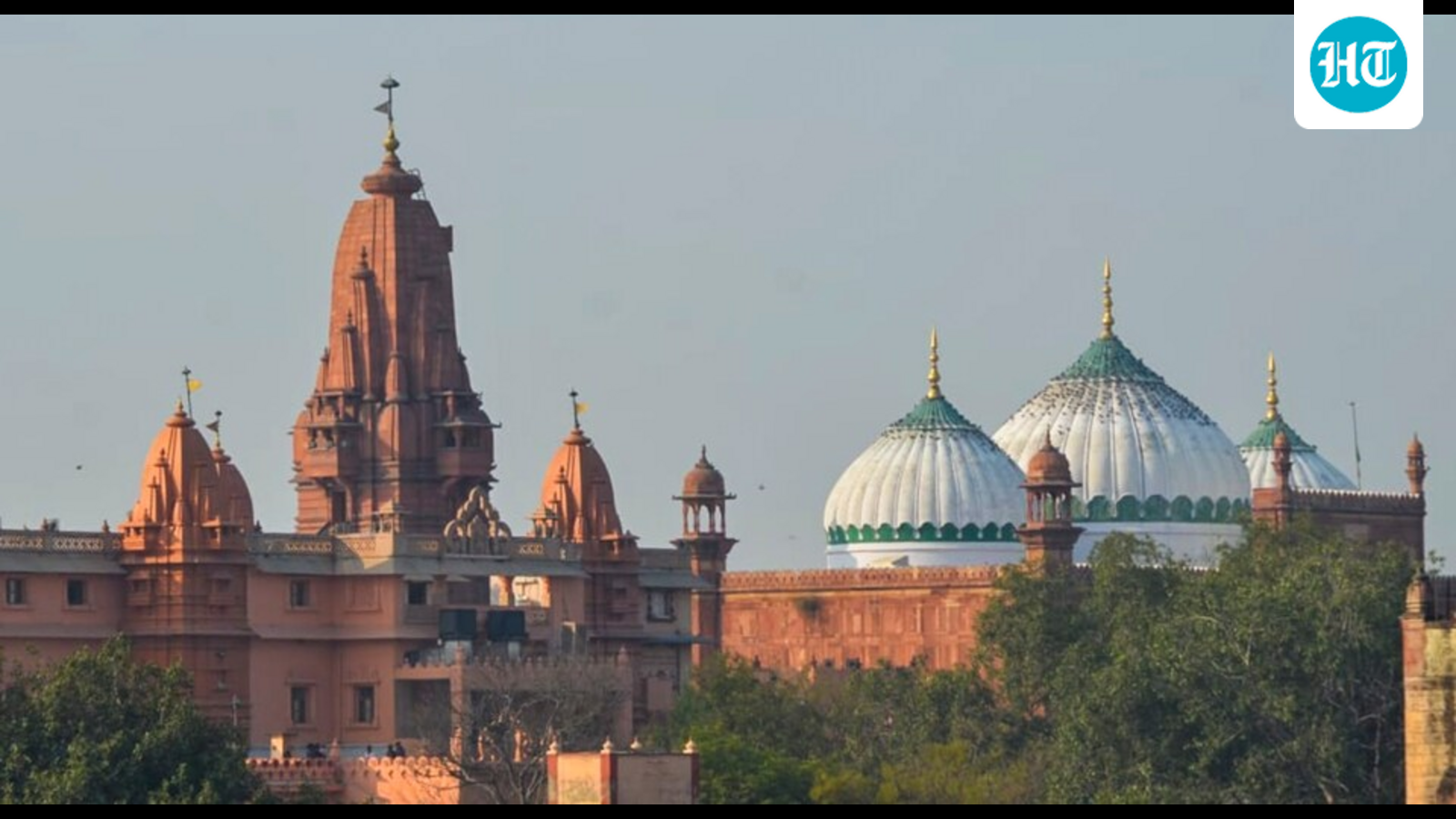
The BJP is likely to go slow on issues such as Mathura’s Shahi Eidgah land dispute, which relates to the 13.37-acre plot where a mosque stands adjacent to the Shri Krishna Janmabhoomi, after the Gen Z protests at Delhi Jantar Mantar against examination irregularities.
A compromise between the mosque committee and the Shri Krishna Janmasthan Seva Sansthan in 1968 maintained the status quo over the site where Lord Krishna is believed to have been born.
Some elements within the BJP’s sister organisations may keep the pot boiling in the run-up to the 2027 assembly polls in states, including Uttar Pradesh and Gujarat, where Dwarka is associated with Lord Krishna and is one of the most sacred Hindu sites. Temple politics will continue even as the Rashtriya Swayamsevak Sangh (RSS), the BJP’s ideological fount, and its affiliates remain confident of a favourable court verdict in Mathura.
Gopeshwar Nath Chaturvedi, of the Sansthan, which oversees the Mathura temple complex, argues that historical facts and evidence support their ownership of the site. He accused Muslims of illegal possession, which hurts and humiliates the Hindus. Chaturvedi believes sooner or later, the court verdict is bound to come in favour of Hindus.
The Sansthan insists there are no parallels between the disputes in Ayodhya and over Varanasi’s Gyanvapi Mosque abutting Kashi Vishwanath Temple. It wants Muslims to vacate the land. The Krishna Janmasthan Temple and Shahi Idgah share a common wall.
Chief minister Yogi Adityanath visited Mathura on Janmashtami, marking Lord Krishna’s birth celebrations, and reiterated his promise of a grand temple complex there and in Vrindavan on the lines of Ayodhya. During his previous visits to Mathura or in election meetings, he has repeatedly said: “After Ayodhya and Kashi [Varanasi], it is now the turn of Mathura.”
In 2024, Hindu prayers were offered at the 17th-century Gyanvapi Masjid complex for the first time in three decades, a day after a local court gave the go-ahead for it at the mosque’s southern cellar.
On August 10, a group of Hindu seers announced voluntary service in Mathura for December 6. They had earlier announced August 9 as the date, claiming the first consignment of pink sandstone from Bansi Paharpur in Bharatpur had also arrived. The administration said that nothing would be permitted without court directives.
Similar announcements were made in 2021, ahead of the 2022 assembly polls, when the administration barred large gatherings after Hindu Mahasabha called for a ritual at the Mathura Idgah on December 6, coinciding with the anniversary of the demolition of Babri Masjid in Ayodhya in 1992.
The Vishva Hindu Parishad (VHP) has celebrated December 6 as ‘Shaurya Diwas’ (Day of Valour). Muslims have observed it as Yaum-e-Gham (Day of Sorrow), often by wearing black bands. After the Ram temple construction following the 2019 Supreme Court’s verdict, both the celebrations and protests stopped.
Mahendra Mathur, a lawyer, has launched a digital campaign for Gen Z, saying they are oblivious to the historical facts of the Shri Krishna Janmabhoomi campaign. The fledgling campaign has drawn parallels with a small group of Hindu seers who first started the Ram Temple movement in the 1980s before VHP took it over in 1988. VHP leader Ashok Singhal travelled across the country to mobilise support.
The VHP held a Dharam Sansad (religious gathering) in Delhi in April 1984 and passed a resolution demanding the liberation of places associated with Lord Ram, Lord Shiva and Lord Krishna at Ayodhya, Varanasi and Mathura. The BJP adopted the Palampur resolution on Ayodhya in 1989, while remaining silent on Mathura and Varanasi.
The government has left the contentious issue of the Gyanvapi mosque to the courts while the Ram Temple was built in Ayodhya. The court model applies to Mathura as well.
The BJP backs the legal route, but groups and individual organisations will continue to mobilise the public on the streets, making the most of emotional issues ahead of the polls. The Krishna Janmabhoomi issue is expected to gather pace on the streets as well as in courts before the 2027 Uttar Pradesh and 2029 national polls as the BJP seeks to counter the damage caused by the Ram temple donation row.
Narendra Modi became the first Prime Minister to visit the Krishna Janmasthan Temple in November 2023. In 1991, he offered prayers there when he was the BJP organisational secretary at the peak of the Ram Temple movement. The late former Prime Minister Atal Bihari Vajpayee visited the shrine in the 1970s.
Adityanath has frequently visited the Krishna Janmasthan as chief minister. Kalyan Singh and Rajnath Singh, the other two BJP chief ministers, also prayed there. Vir Bahadur Singh of the Congress visited the shrine twice as the chief minister.
KioskNews shows a cleaned-up reading view extracted from the publisher’s page — the original always lives on their site, not ours.