External HDD vs. SSD: What are the pros and cons of each drive type?
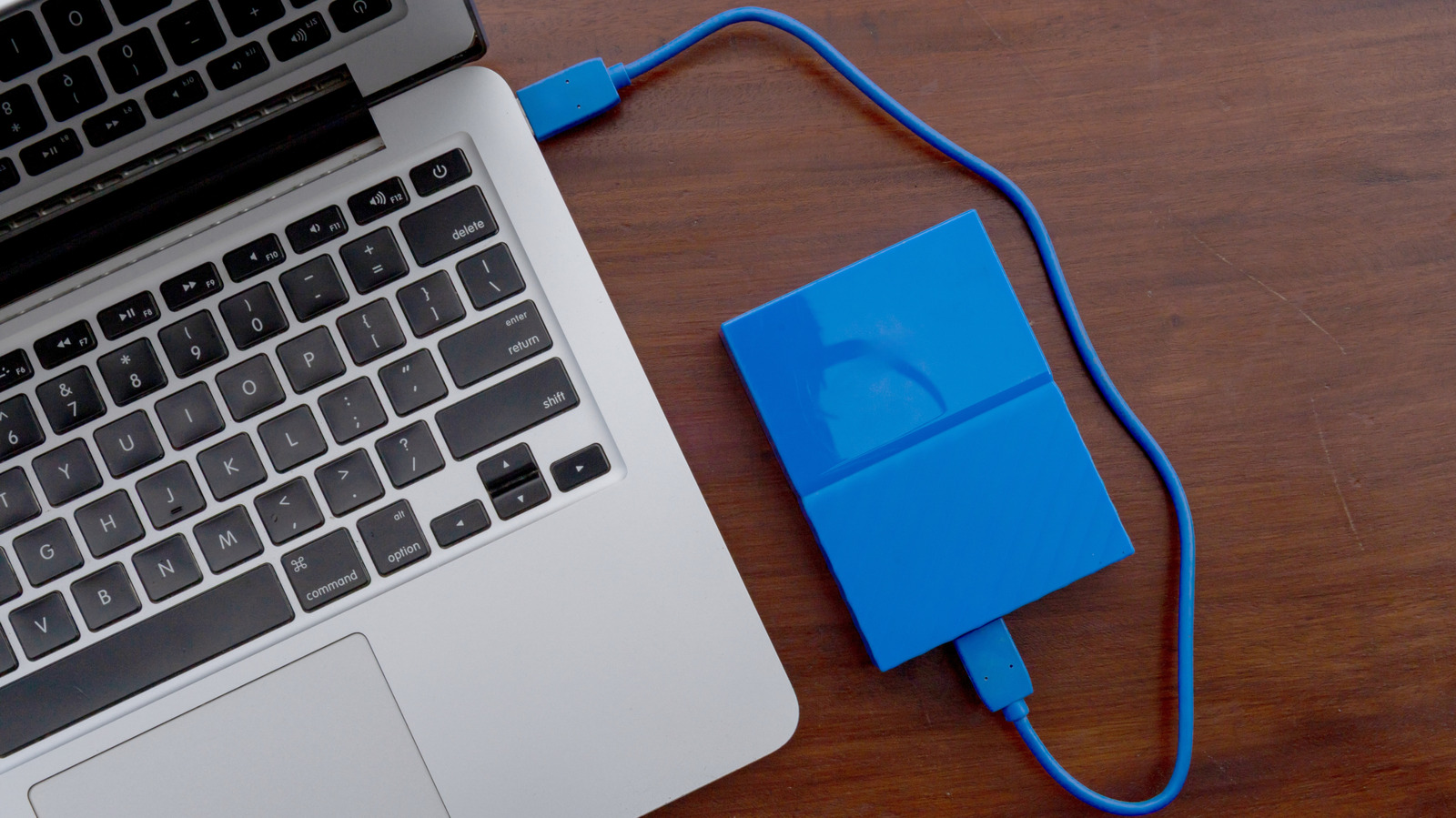
External SSDs are faster, but they aren’t always the better choice.
kamitana/Shutterstock
We may receive a commission on purchases made from links.
External drives are great for adding more storage to a laptop, since swapping or adding internal laptop drives isn't usually possible today. But they're also a good option for carrying data between locations, creating backup archives or any other data storage needs. And just like when buying an internal drive, you'll have to choose between solid-state drives (SSDs) and hard disk drives (HDDs) when picking up external storage.
Even though SSDs are more modern, they aren't automatically the right choice in every scenario. They both have their place, which means getting one of each is smart. But when storage and RAM prices are high, this isn't always feasible, so buying the right drive type matters even more.
The pros and cons of external SSDs
Hadrian/Shutterstock
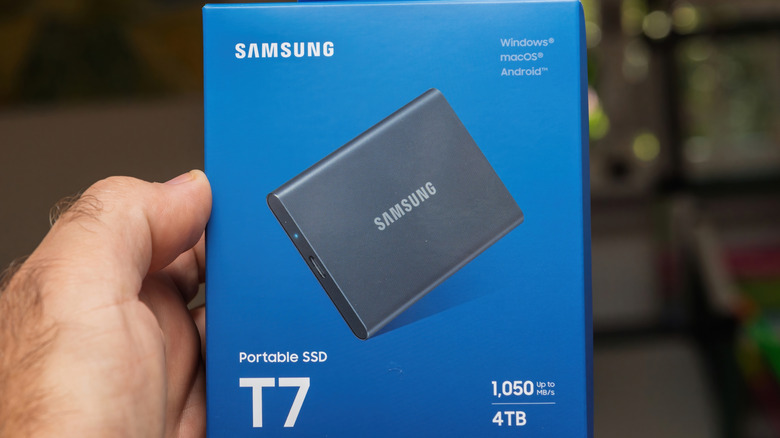
The primary advantage of external SSDs is their speed. All SSDs use flash storage, which allows random sections to be loaded instantly. For an internal drive, using one of the best SSDs means your system disk boots the operating system and opens apps quickly. On an external drive, the speed boost is mainly applicable when transferring and opening files.
How much this matters depends on how you use the device. If you move gigabytes of files between devices daily, or if you regularly load photos and videos from an external drive to edit, it makes a huge difference. If you want to create an archive of files and then rarely touch it, the speed boosts aren't as important.
SSDs are also more suitable for carrying around. Because they have no moving parts inside, they aren't terribly susceptible to bumps and drops. If you're clumsy or often carry a drive around outside, an SSD will likely last longer. Their simpler internal makeup also makes them lighter and smaller, which is a consideration if you're keeping them in your backpack or bag.
External SSDs don't make noise, which people around you will appreciate. The lack of internal motors also means SSDs require less power to run than a traditional hard drive, which is a factor if you often use your laptop away from a charger and don't want to purchase a laptop power bank.
For all these perks, the largest drawback of SSDs is their cost per gigabyte. Even when storage prices aren't inflated, the best external SSDs provide far less space for the money than an HDD. For example, at the time of writing, Amazon has the Samsung T9 Portable SSD 1TB for around $232, while the Seagate 2TB Portable Hard Drive is $130. Of course, there are various standards and configurations for each, but you're going to get less space for the money with an SSD no matter what.
Benefits and drawbacks of external HDDs
solosergio/Shutterstock
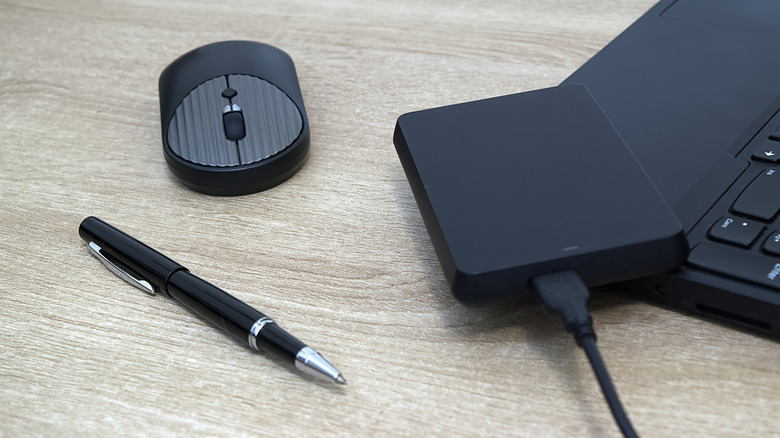
HDDs offer the inverse value of SSDs. The biggest reason to opt for an external HDD is the amount of storage you add for the money. Especially with current prices, any external SSD that's roughly 4TB or above becomes prohibitively expensive, while external HDDs are available at these massive sizes for more reasonable costs.
Otherwise, HDDs fall short everywhere SSDs excel. They are much slower than SSDs; an average external HDD will hover around 100MB/s when reading and writing, while an external SSD can easily hit 500MB/s or above. HDD speeds are serviceable for many tasks, but won't match what you're used to with the built-in storage on any modern laptop or desktop. As long as you aren't recording 4K video, loading games or regularly moving dozens of gigabytes back and forth, you might not have an issue with the performance.
Otherwise, the mechanical head that writes data to spinning platters will make noise, especially when working hard. Those internal components also use more power than an SSD, and are sensitive. If you drop an HDD or leave it in extreme temperatures, it could malfunction.
Making the external drive decision
Anastasiia Sapozhnikova/Shutterstock
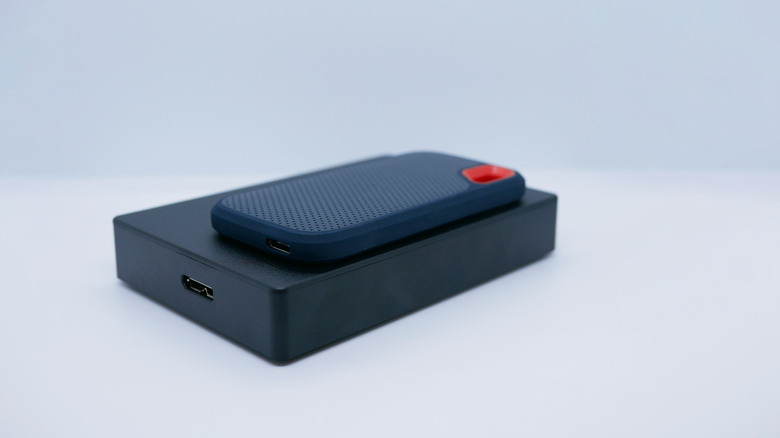
Think about your use case to decide which type of drive is right for you. If you want to keep a drive permanently attached to your desktop for backup purposes, an HDD makes more sense. As long as you don't need regular access to those files and don't care if the backup takes a while, going with an HDD means you can store more data at the same price.
Alternatively, if you need to quickly get files from one device to another all the time, or plan to use the drive as extra storage for playing games or editing videos, you'll appreciate the speed of an SSD. An SSD is worth it if you want to treat a drive like an extension of your existing internal storage, rather than a separate device for keeping files you don't use all the time.
External drives are usable with more devices than you may realize, which might affect your decision. While the PS5 and Xbox Series X/S can't play current-gen games from a USB drive, they can be used to store extra games so you don't have to constantly delete and redownload. You can attach an external drive to your router's USB port for simple network storage. If they're formatted with the right filesystem, you can even connect external drives to your phone to watch videos or move data.
Being external drives, both types connect via USB, which is typically slower than an internal SATA connection unless the port and drive support connections of 10Gbps or higher. It's important to check the USB standard of any drive before buying, as well as your computer's USB ports. You won't enjoy the speed benefits of an external SSD if you plug it into a USB 2.0 port, for example.
If you have a spare internal drive, you can also buy a USB enclosure like this Sabrent model to turn it into an "external" drive. Just be sure to check it's the right physical size (the most common are 2.5- and 3.5-inch) and has the same internal connector as your drive.
KioskNews shows a cleaned-up reading view extracted from the publisher’s page — the original always lives on their site, not ours.