PLI push needed to manufacture critical component for road equipment: Ammann India MD
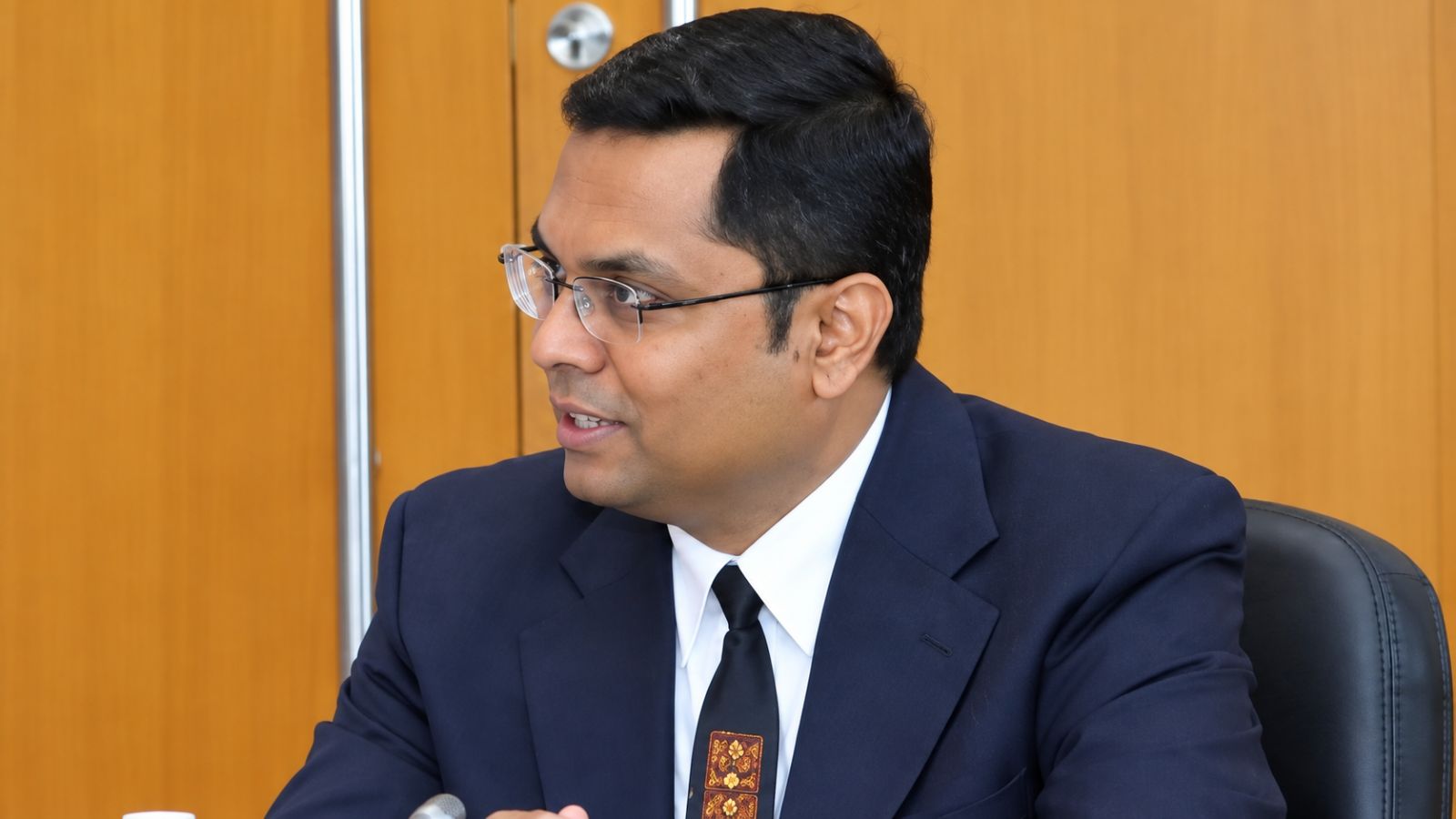
To give a fillip to India’s road construction equipment industry, the government’s Production Linked Incentive (PLI) scheme should be pushed in the sector to design and make entire products, including precision components, in the country, according to Dheeraj Panda, managing director of Ammann India.
He said that while PLI has helped sectors such as electronics, its impact on construction equipment manufacturing is yet to be seen fully.
Panda said that the West Asia crisis had also affected the sector through bitumen shortages and temporary site closures, and it is yet to go back to pre-March levels. Ammann India is a subsidiary of the Swiss-based Ammann Group and manufactures road equipment like asphalt plants, compactors, etc.
He said that localisation in some of Ammann’s products, such as mechanical pavers, is 100%, while for some other value tech series, it could be 90-93%. “India is yet to have a proper or sound vendor base in precision components like hydraulic pumps, engine injectors, etc. A hydraulic pump requires clearances of some thousandth of an inch. Its tolerances are extremely limited. India is yet to get into a good supply chain base like what you see elsewhere in the world, say Vietnam or Taiwan or China,” said Panda to The Indian Express on the sidelines of bauma CONEXPO INDIA 2026.
He also said that the situation is better than earlier and there is already an ecosystem of vendors to indigenise the road equipment.
“PLI has not worked very effectively in the construction equipment industry as of now. India also lacks in research & development capabilities and quality components. Indigenising a product from country A to India is easy, but real manufacturing grows when you design and produce the entire value chain here and make quality components that European or American does not question whether it has Made in India stamp. It should be accelerated, and that probably can be helped with the PLI,” said the MD.
Asked about the impact of the West Asia crisis on the road construction equipment sector, he said, “We did face a negative impact. The bitumen shortages led to site closures. Some of them were running at half the load. It is apparently back to normal, but the overall sentiment, the positivity or the kind of work that we had pre-March are yet to be seen.”
Story continues below this ad
Panda said that while highway construction slowed down in 2024 and 2025, India still needed more roads to utilise its potential. He said that the demand for road equipment will not disappear as the roads already built will require maintenance.
“The government has built an average of nearly 7,000 kilometers of highway per year for the last 10 years. So, there are about 70,000 kilometers that will need asphalt plants or pavers to maintain it. India still needs more roads. There are many highways and even the rural connectivity which is yet to be built. So, roads as a sector would remain in demand. We are waiting for the next upcycle now,” said Panda.
Asked about recent instances of road damage on newly built highways and expressways, he said India does not lack in terms of road design compared with global standards, but it is the execution of the design that is not being done properly.
“When you make a road in Switzerland, that is probably built as per design, traffic flow. If a road is for 20 years, they would make an analysis of traffic coming in the 20th year. It is not that they do something entirely different from what we do here in terms of road-making principles. It is the execution that we lack,” he said.

Dheeraj Mishra is a Principal Correspondent with the Business Bureau of The Indian Express. He plays a critical role in covering India's massive infrastructure sectors, providing in-depth reporting on the connectivity lifelines of the nation. Expertise & Focus Areas: Mishra’s journalism is focused on two of the country's most capital-intensive and public-facing ministries: Ministry of Railways: Tracking the operations, safety, and development of India's vast railway network. Ministry of Road Transport & Highways: Covering policy decisions, infrastructure projects, and highway development. What sets Mishra apart is his rigorous use of the Right to Information (RTI) Actas a primary tool for news gathering. By relying on official data and government records, he ensures a high degree of accuracy and trustworthiness in his reporting. This data-driven approach has resulted in numerous impactful reports that hold public institutions accountable and bring transparency to government operations. Find all stories by Dheeraj Mishra here ... Read More
KioskNews shows a cleaned-up reading view extracted from the publisher’s page — the original always lives on their site, not ours.