Two Nigerians sentenced to 189 months in US prison over $2.4m cyber fraud
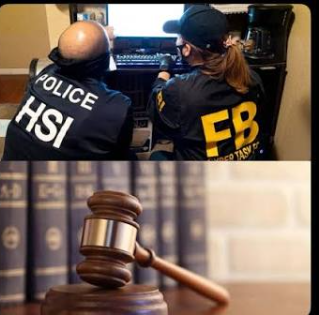
Two Nigerians based in the United States, Chijioke Timothy Odimegwu and Harafat Mogaji, have been sentenced to a combined 189 months in federal prison for their roles in an international cyber intrusion scheme that defrauded businesses of more than $2.4m.
PUNCH Metro learnt from a statement issued by the Public Information Officer, MacKenzie Tubbs, on Tuesday that US Attorney David Waterman of the Southern District of Iowa made the announcement.
Tubbs stated that the two Nigerians who were residents of Delaware in the US were sentenced on September 25, 2026, after being convicted over their roles in the scheme.
The PIO noted that both convicts were members of the US Air Force when they and their co-conspirators attacked business victims across the country for nearly two years using email “spamming” and phishing campaigns.
Tubbs added that the suspects used the campaigns to steal usernames and passwords from victims’ employee email accounts before using the credentials to facilitate the fraud.
The PIO stated that the defendants and their co-conspirators also used “spoofed” email addresses mimicking those associated with victims or their business partners to communicate with the businesses and redirect payments to accounts controlled by the conspiracy.
Tubbs stated, “They and their co-conspirators then used these stolen credentials, along with ‘spoofed’ email addresses mimicking emails associated with the victim or its business partners, to communicate with their victims and redirect payments to and from the victims’ trusted business partners to accounts controlled by the defendants’ co-conspirators.”
She noted that Odimegwu and Mogaji, working with co-conspirators in the US and abroad, fraudulently diverted more than $1.68m in a wire transfer sent by a victim in Iowa City, Iowa, to a bank account in Chicago controlled by the conspiracy.
She added that the pair also diverted more than $720,000 sent by a victim in Ohio to a bank account controlled by the conspiracy.
“These are in addition to many other attempts Odimegwu and Mogaji made to divert wire transfers made by businesses in Iowa and across the country,” Tubbs stated.
DISCLAIMER: The Views, Comments, Opinions, Contributions and Statements made by Readers and Contributors on this platform do not necessarily represent the views or policy of Multimedia Group Limited.
Tags:
DISCLAIMER: The Views, Comments, Opinions, Contributions and Statements made by Readers and Contributors on this platform do not necessarily represent the views or policy of Multimedia Group Limited.
KioskNews shows a cleaned-up reading view extracted from the publisher’s page — the original always lives on their site, not ours.