We asked our climate reporters to highlight one idea for positive change. We got a chronicle of global transformation
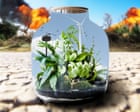
The news is very often about the bad things (especially if you’re on the Guardian’s environment desk). Wildfires, floods, tipping points, billionaires making huge profits and buying themselves island refuges for the apocalypse … And yet, ticking along beside that is the steady pulse of what the rest of humanity is doing in response to the climate crisis. From housing developments with no cars to buildings made out of hemp, all over the planet, people are ploughing ahead and changing their neighbourhoods and cities and world.
But as news stories typically need to be about new developments or things people didn’t previously know about, it can be hard to cover all those brilliant initiatives being undertaken in the background – no matter how cheering they are. Which is why, back in 2023, we decided to ignore the usual rules about what constitutes “news” and start writing about them anyway. Readers, we knew, would like to hear about them.
And so was born the Alternatives, a weekly news column where we cover these different projects. We’re constantly amazed by some of the things we learn this way. Norway has heat pumps in two-thirds of its homes. China’s sponge cities are targeting 70% rainwater reuse. Paris is building a gigantic cooling machine using river water. It feels as if the series is a vast chronicle of this transformation that is taking place everywhere, far faster than we sometimes realise.
This year, as part of the Guardian’s annual climate support campaign, we are highlighting all of the work that our environment team does to bring readers positive ideas like those above, providing hope that a better world is possible if we start acting on it.
So, below, we asked our environment reporters around the world to share one big idea from their journalism – funded by you – that has helped drive or inspire some kind of positive change for the planet.

Petra Stock
Climate and environment reporter, Guardian Australia
Many objections to wind turbines cite the impact on wildlife, such as birds and bats. But there are simple fixes and innovations that demonstrate there doesn’t need to be a trade-off between clean energy and safeguarding biodiversity. One such approach I reported – which involves raising the “cut in” speed at which turbines start spinning – has the potential to save tens of thousands of native bats every year, with minimal impact on energy output.

Ajit Niranjan
European environment correspondent
Sausage-hungry and schnitzel-loving Germany is not a likely place for plant-based food to boom, but it’s a case study in how individual green choices have a surprisingly powerful ripple effect. I reported on the hospitals winning patients over as they change menus to enable healthier diets with more plants and less meat.

Fiona Harvey
Environment editor
When everything seems wrapped in gloom, we need fresh thinking and some can-do attitude. That’s why I loved interviewing Mariana Mazzucato, one of the world’s leading economic and social thinkers, about her stimulating ideas of re-basing politics on the global common good. She shows that we can change the world for the better, including fixing the climate crisis, and though she advises global leaders , she also believes the joy we can bring to our daily lives – like carnivals and communal eating – can be just as powerful.

Damian Carrington
Environment editor
When I reported in 2020 that microplastic pollution had been discovered at the top of Mount Everest, it showed that humanity’s litter had polluted the entire planet. But it also inspired a young researcher to set up an award-winning project that is now recycling plastic in Nepal into much-needed insulation for homes and stopping the waste contaminating the high mountain nation.

Jonathan Watts
Global environment writer
I covered a new report by Thomas Piketty and co at the World Inequality Lab, which shows us that a just and equitable world is possible. I also highlighted how new energy is bringing a new world order, with China dominating the energy transition with astonishing results, while fossil fuel fascists in the US try to turn back the clock.
Gabrielle Canon
Senior climate reporter, Guardian US

A barley farm in the US Pacific Northwest had been quietly leeching pollutants into the nearby watershed. It has long been an issue along the southern Oregon coast, where 95% of the sprawling networks of wetlands were drained, diverted, or dried, and replaced by cattle ranges and crops. But when Karl Wenner acquired the land in 2021, he wanted to try something new. By restoring a wetland on just 70 of the farm’s 400 acres, he created a welcome sanctuary for migrating and native birds that are disappearing from the area, endangered native fish who can be spotted swimming near rows of sprouting barley, and the plants that quickly soaked up the phosphorus, stopping run-off. The remarkable transformation was not only beneficial to the environment – it was a boon to business. The story showcased a symbiotic solution to one of the world’s most pressing environmental problems.
This year’s Guardian climate support campaign highlights our unrivalled coverage of the climate emergency, including our reporting on the ideas and initiatives that can help tackle it. Please consider supporting it today.
KioskNews shows a cleaned-up reading view extracted from the publisher’s page — the original always lives on their site, not ours.