[OPINION] Faith in the Footprints: How the youth today see religion, values, morality
Already have Rappler+?
to listen to groundbreaking journalism.
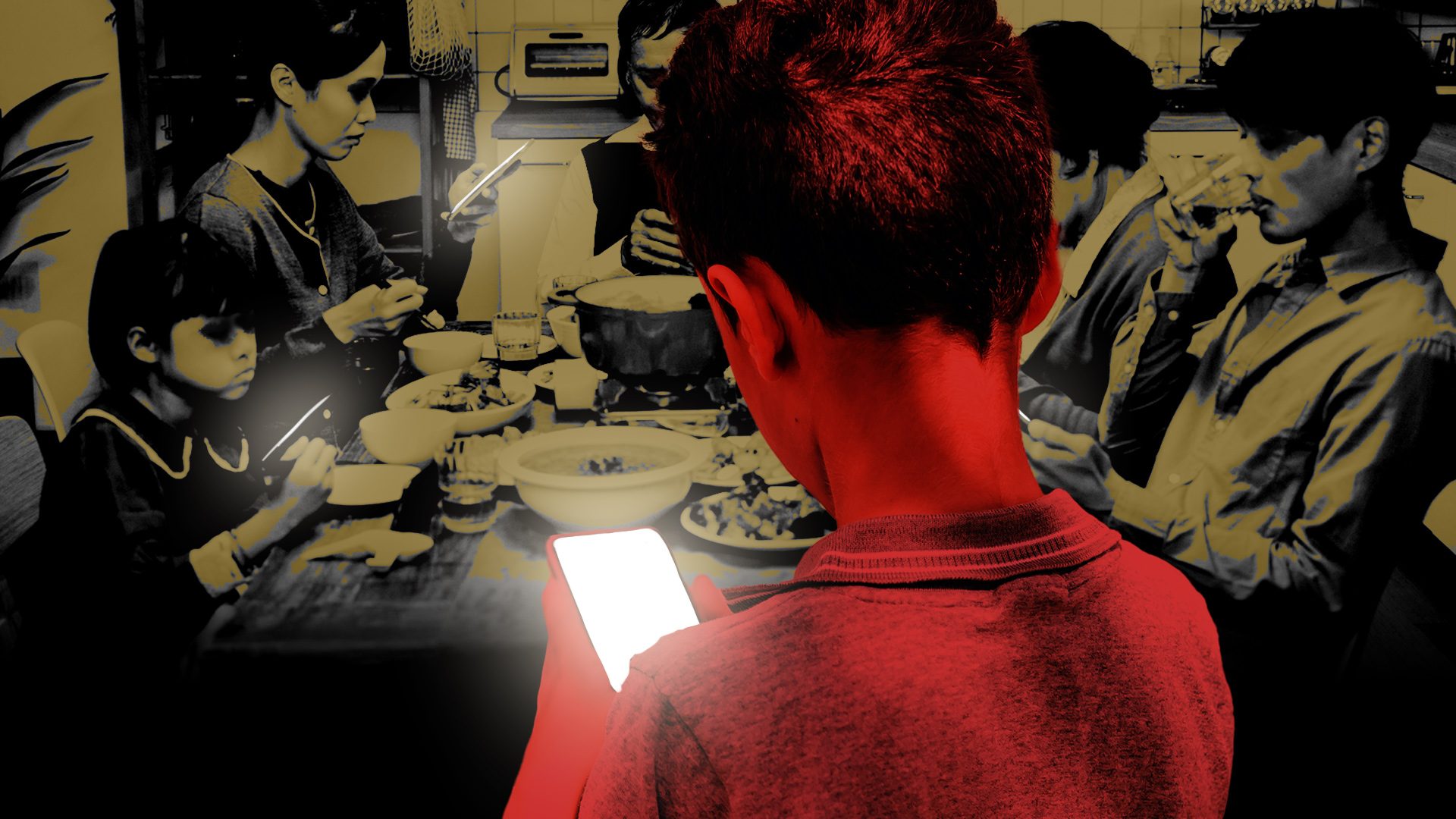
![[OPINION] Faith in the Footprints: How the youth today see religion, values, morality](https://www.rappler.com/tachyon/2026/08/TL-YOUTH-AND-RELIGION-AUG-27-2026.jpg)
Raphael Reyes/Rappler
Comparative global findings demonstrate that while secularization is present — predominantly in Western contexts — religious faith and spiritual yearning remain robust forces shaping youth personhood worldwide
AT A GLANCE
- The Footprints Project conducted a comprehensive study on youth beliefs about God and religion, surveying 4,889 young people across eight countries.
- The findings show that 73% of youth identify as believers in God, with 50% reporting increased spirituality over the last five years, challenging assumptions of total secularization.
- Distinct patterns emerged among countries
This is AI-generated. Read the article for full context. Report any errors.
What’s the tea about today’s youth’s beliefs and attitudes towards God, morality, and religion?
The Footprints Project, a multi-phase, multiyear, comprehensive research initiative coordinated by the Pontifical University of the Holy Cross in Rome, seeks to answer this question. Our team employed a method of “continuous listening” to better understand young people’s values, hopes, and expectations regarding their faith.
Grounded in relational sociology, our study operates on a core conviction: that relationships are central to identity formation, and that religion — understood as a relationship to one’s origin — is key to building personal identity and community cohesion.
To map this landscape for the first phase of the project, which focused on youth attitudes to religion and faith, our team conducted an international survey and gathered data from 4,889 young people aged 18-29 across eight countries from five continents: Argentina, Brazil, Italy, Kenya, Mexico, the Philippines, Spain, and the UK.
The findings offer a nuanced look at global youth religiosity. They challenge the long-held assumption popularized by sociologists that modern societies are bound for total secularization.
In fact, when the entire survey population is considered as a whole, 73% of youth identify as believers in God. The study also shows that in the last five years, 50% of respondents claimed an increase in their spirituality compared to only 15% reporting a decrease. This finding suggests that spirituality among youth has increased globally.
Among the eight countries in the survey, interesting patterns and trends emerged:
Countries with strong religious identity: Brazil, Kenya, and the Philippines share a strong religious identity. Even if predominant religious denominations differ for each country — evangelicalism for Brazil, Catholicism for the Philippines, and other religions for Kenya — they all exhibit similar moral and social values, which reflect the deep influence of religion in their societies.
Secularizing countries with a relevant Christian presence: Argentina, Italy, and Spain still have a not insignificant Christian presence, but they are in a rather advanced stage of secularization. While religion still plays an evident role in public life, and those who do identify as believers exhibit deeper faith through practices like more frequent daily prayer, it is clear that the nation’s once-strong Catholic influence is diminishing.
A country in between: Mexico appears to be between the above two categories. It represents a transitional stage that shows the country in general retaining a notable religious identity while also showing trends pointing towards secularization.
Unique case: The United Kingdom stands out as a distinct case, in which only 15% of youth identify with a specific faith tradition, yet 48% express belief in God. As well, a surprisingly high percentage engage in frequent prayer and service attendance.
‘Ironic contradictions’
Across all groups, religious perspectives strongly influence social issues. For example, attitudes diverge on topics like surrogacy, prostitution, and sexual ethics: non-believers make no bones about these issues in contrast to their religious counterparts.
Interestingly, both believers and atheists agree on their opposition to war, political corruption, and abuse of the environment. On the whole, however, believers were still shown to be more civic-minded.
At the same time, the study uncovered intriguing “ironic contradictions” among both non-believers and Catholic youth.
Among self-described non-believers, nearly half engage in prayer during times of difficulty or out of gratitude, 42% believe in life after death, and 37% actually ask believers to pray for them.
Conversely, while many Catholic youth actively attend Mass and pray, significant numbers reject Church teachings on sexual morality, preferring personal conscience as their ultimate authority — views that mirror non-believers more than Church doctrine.
These comparative global findings demonstrate that while secularization is present — predominantly in Western contexts — religious faith and spiritual yearning remain robust forces shaping youth personhood worldwide. – Rappler.com
Robert Z. Cortes is assistant professor III in the School of Media and Marketing of the University of Asia and the Pacific (UA&P), with a PhD in social communication. His areas of study and teaching include communication/media ethics; the dynamics of entertainment, cultures, and societies; philosophy of technology; youth media habits and values. The original article on which this article is based was published in the journal Church, Communication, and Culture and was written by Norberto González Gaitano, José María Díaz-Dorronsoro, John Olukuru, and Robert Z. Cortes. It can be read or downloaded here.
KioskNews shows a cleaned-up reading view extracted from the publisher’s page — the original always lives on their site, not ours.