China US$300 dating app ‘marriage-or-refund’ guarantee sparks intense online buzz

In China’s competitive dating market, a new matchmaking start-up is staking its revenue on a bold wager: find true love, or get every penny back.
Launched in July, Liangpei AI charges an annual membership fee of 2,000 yuan (US$300), which is fully refundable if a user remains unmarried after three years.
The offer is an audacious challenge to a conventional business model built on keeping singles hooked. China’s online dating market reached 22.6 billion yuan (US$3.4 billion) in 2024, serving roughly 280 million users.
Unlike conventional apps, which encourage users to chat with several people at once, Liangpei AI limits users to one-on-one matches.
Registration requires users to provide their real name and a profile photo and verify that they are unmarried. In its first month, the checks screened out more than 150 married people.
New users complete a 20-minute AI chat to build a bespoke profile covering their family background, education, career, interests, personality, lifestyle and expectations of a partner.
Users can match with only one person at a time and must end their current match before meeting another candidate.
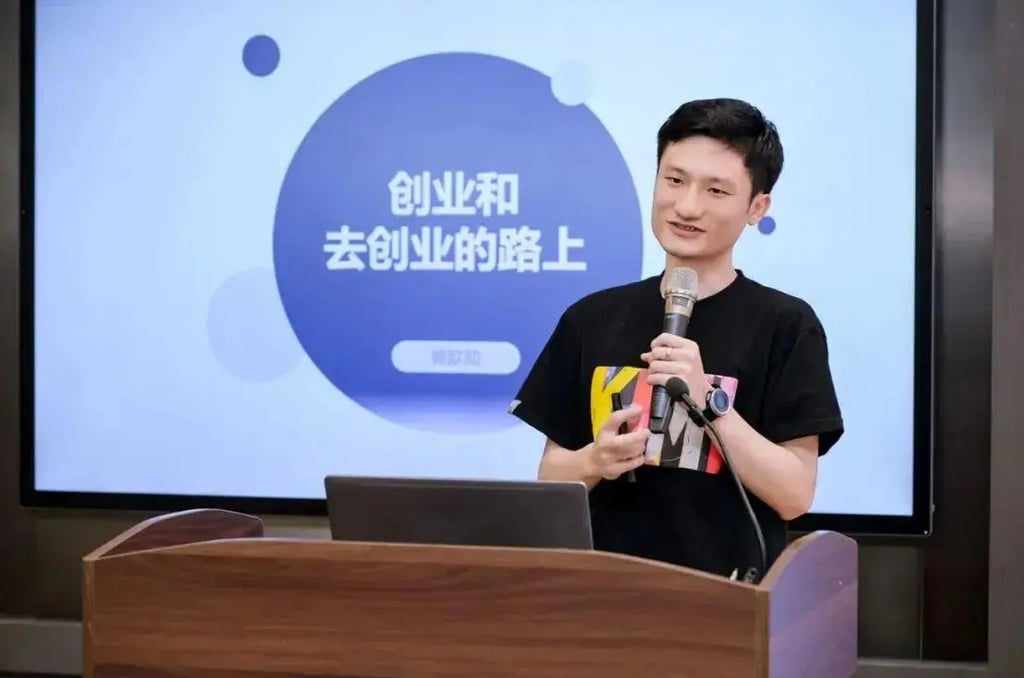
Founder Zeng Xinxun previously led the development of AI search technology for Kimi, a chatbot developed by Chinese company Moonshot AI.
Inspired by a matchmaking product he heard about from an interviewee, Zeng realised he could harness AI’s strengths in information retrieval and reasoning to help people find love.

Around the time Kimi K2 was released last year, he resigned in order to launch Liangpei AI, giving up stock options later valued at tens of millions of yuan (millions of US dollars).
Zeng sees traditional dating apps as little more than “online yellow pages”: they display basic profiles but leave the hard work to users.
Young people’s criteria for a partner have become increasingly nuanced, he told mainland Chinese media outlet AI New Rank, while dating apps’ understanding of their users remains crude – a gap AI could bridge.
Zeng met his wife on a dating app. Both had written profiles of more than 1,000 words, and they met after just one day of chatting.
He attributes their quick connection to the deep understanding they developed early on. Accordingly, Liangpei AI uses in-depth introductory conversations to understand the person behind the screen.
Believing that too many choices suggest an algorithm cannot identify who is truly compatible, Zeng introduced the one-to-one rule.
On the refund policy, he noted that marriage is a distinct legal status that can be verified through authorised, compliant channels.
Questions remain, including whether users who rarely use the app but marry through other means would qualify for refunds. But Zeng insists matchmaking services should not profit when users fail to find love. If the app has not helped, he is willing to issue a refund.
The app also features an “AI Strategist” that assesses relationship issues using user profiles and chat logs.
After one female user’s match stopped responding, she consulted the tool. The AI advised that even a busy person should explain their absence within three days. She ended the match and later found a partner well suited to her.
Reports indicate that Liangpei AI has more than 35,000 registered users, a conversion rate of about 9 per cent and 15 million yuan (US$2.2 million) in angel funding. Given the app’s recent launch, its match and marriage rates have yet to be established.
One observer commented: “AI-screened matches might lead to harmonious marriages, and a better marital experience could improve society’s currently subdued outlook on romance.”
Another remarked: “Can they make the AI Strategist available to married couples? Without kids, my husband and I could really use an objective buffer.”
KioskNews shows a cleaned-up reading view extracted from the publisher’s page — the original always lives on their site, not ours.