Why Apple's 'Boring' New HomeView Could Beat Google And Amazon
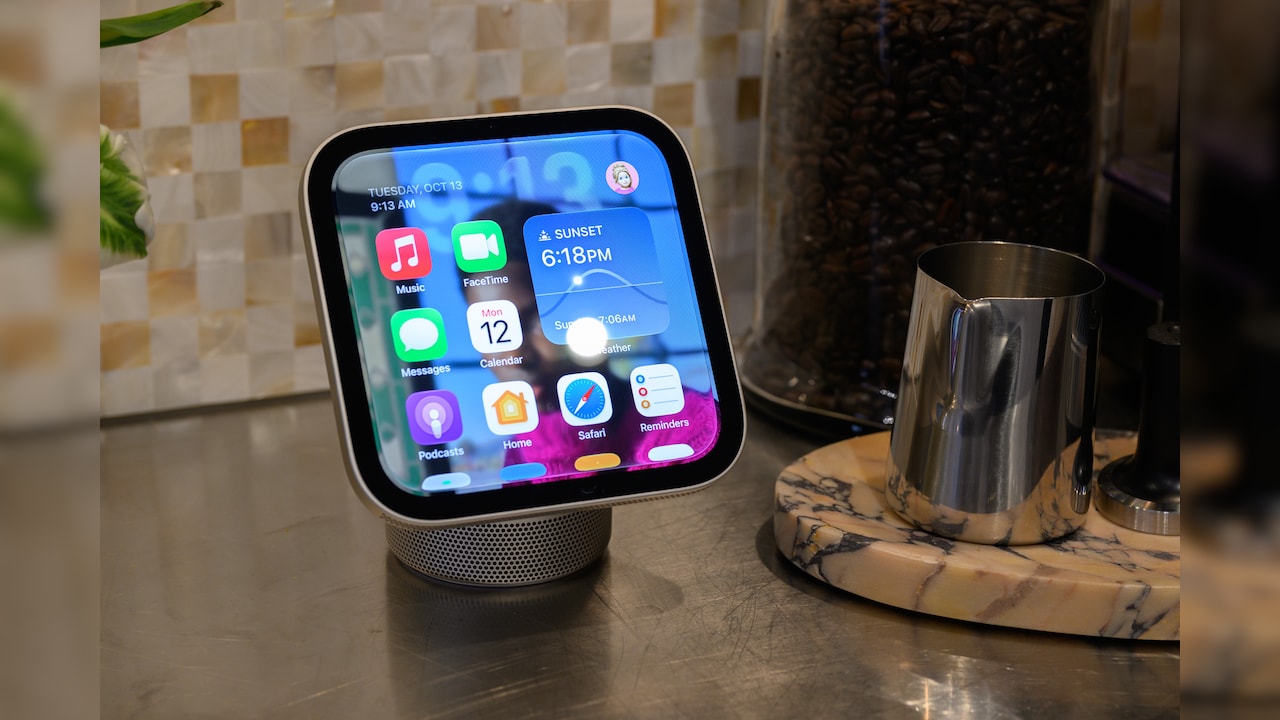
What do you mean it doesn't wheel around the house with a long extendable neck? Sorry - it doesn't fly? Zzzzz. Apple's HomeView is so boring. Which is entirely the point.
Apple unveiled its new attempt at a home device at an event in New York on Tuesday, the company's second attempt to "win" the home. The first was its HomePod, released in 2018, and it left very little impression on consumers (other than those who owned one and found it left a little white stain on their furniture). The stakes were low at the time. Voice assistants were primitive affairs, mainly used to play music, set timers and, if you were particularly enthusiastic, control lighting and other minor home electronics. Alphabet Inc.'s Google and Amazon.com Inc. became the main players. Apple hovered at a market share of around 6 per cent.
The stakes are much higher today. Winning the home might mean winning consumer artificial intelligence. The new HomeView, which will be available in November priced at $299, is about as barebones as it gets -- a 7-inch-square screen either placed on an aluminum base or mounted on a wall. The device uses a camera and voice recognition to determine who is accessing it, adjusting its answers to questions accordingly. It is a touchscreen, but Siri AI is the primary control method -- a test for Apple's floundering voice assistant.
Also Read | Layoffs Are Rising In Tech, But These Skills Are Helping People Unlock Better Pay
Depending on who you ask, Apple is either way behind the AI pack or displaying wise restraint in refusing to thrust it upon its users. It's perhaps a little from column A and a little from column B. The clumsiness of Siri was one of the reasons that the HomePod gained so little market share, and Apple is only just getting around to rolling out improvements to Siri that are well over a year overdue. On the smart-home front, Apple is almost a decade behind launching a home device with a screen.
But simplicity and elegance in design are in Apple's DNA, two descriptors you would struggle to attach to any of the leading AI products on the market today. The leading chatbots are convoluted, error-prone, jargon-heavy affairs -- do you want to use "Sol medium" or "Sonnet 5.5" for your homework, kid? -- and the public is intensely distrustful of what AI companies want with its data. Meanwhile, existing voice assistants have never quite lived up to their promise of helping to run the home, with most users only scratching the surface of available features.
The HomeView seeks to get around all this by essentially being an extension of the iPhone. If you've ever used Apple CarPlay, or Apple Watch, you'll be right at home with how it functions. There are built in Apple apps -- FaceTime, Music, Podcasts and so on. Third-party apps aren't installed on the device but are rather beckoned from the nearby iPhone, offering up an interface for HomeView if the third-party developer has chosen to offer one. That means apps like Spotify will be present and, owing to the HomeView's ability to know who is using it, that Spotify experience will be personalised -- rather than some kind of "family" account or similar. This is the biggest selling point, as described by Bloomberg News' report:
Whenever HomeView recognises household members, it will display their personalised home screen of applications, widgets and calendar appointments. Siri AI, Apple's recently upgraded digital assistant, is able to leverage its database of knowledge about each specific user when answering requests or sending messages. The HomeView always relies on a nearby iPhone for personal context; that data isn't stored directly on the device.
It also means that HomeView can move elegantly with the times. If the device becomes popular, leading AI makers will be compelled to make compatible apps, just as they must provide an iPhone app if they want a meaningful number of users. Further, Apple's upper hand with the iPhone can extend to the home. Only Apple sells devices that can send and receive iMessages and take FaceTime calls, two core functions that have made its lock-in so strong. I believe consumers will be willing to pay a premium to be able to say "Text Geoff that I'm running 10 minutes late," when rushing to get ready or pull up answers to queries only Siri will be allowed to answer.
On Tuesday, some commentators balked at the $299 price tag for HomeView, pointing out that it is far more expensive than competing devices from Amazon and Google. But the iPhone is more expensive than an Android model and yet it dominates the premium market, while in the home, the fact that neither Amazon nor Google have built an unassailable or even formidable lead with a decade head start should tell us something. There's a market for a simpler device that knows more about you because of the relationship you already have with your smartphone.
Apple's decision to make HomeView essentially just an extension of your iPhone is a winning answer to privacy concerns and offers familiarity and trust out of the box. It's not a "new thing," but an existing thing accessed in a different way. If you trust your iPhone, then you'll trust the HomeView. Billions already do. Apple is right to make boring its strategy.
(Except for the headline, this story has not been edited by NDTV staff and is published from a syndicated feed.)
KioskNews shows a cleaned-up reading view extracted from the publisher’s page — the original always lives on their site, not ours.