Ford government’s Bill 140 gutting Ontario’s environmental rights, experts warn
A chorus of environmental advocates, legal experts and political parties are sounding the alarm over the Ford government’s latest red tape reduction laws, claiming the proposed bill would gut residents’ ability to challenge provincial decisions that affect the environment.

The Ford government tabled the Building Ontario Faster Act, on Oct. 27, in an effort to fast-track infrastructure projects and cut down regulatory requirements.
The sweeping new bill, however, is drawing sharp warnings from environmental advocates who say it will reverse decades of progress on environmental issues and that could leave Ontarians more vulnerable to serious environmental harms.
“Eliminating the environmental rights of 16 million Canadians will destabilize the environment and the economy it’s built on,” said Joseph Castrilli, a lawyer at the Canadian Environmental Law Association.
If the legislation passes, “it’s pretty clear that decision-making will be more secretive and less beneficial to members of the public,” said Castrilli.
Story continues below advertisement
A key element of the legislation looks to overhaul the Environmental Bill of Rights, meant to give residents a firm legal voice in any environmental decision-making and the ability to hold Ontario accountable for protecting the environment.
Currently, the province has to comply with the bill of rights and the Auditor General monitors the Ford government’s compliance.
The Ford government, advocates say, is now looking to repeal much of the Environmental Bill of Rights, including the ability for the public to request environmental investigations, policy reviews, or to appeal any government permits.

Get daily National news
Get daily Canada news delivered to your inbox so you'll never miss the day's top stories.
Bill 140 would also no longer require the government to post about environmentally significant decisions on the Environment Registry of Ontario, which exists so residents can track government action.
Instead, it would allow ministries to post proposals on the Ontario Regulatory Registry, which does not carry the same legal requirements for advance public warning, guaranteed comment periods, or formal responses to public feedback
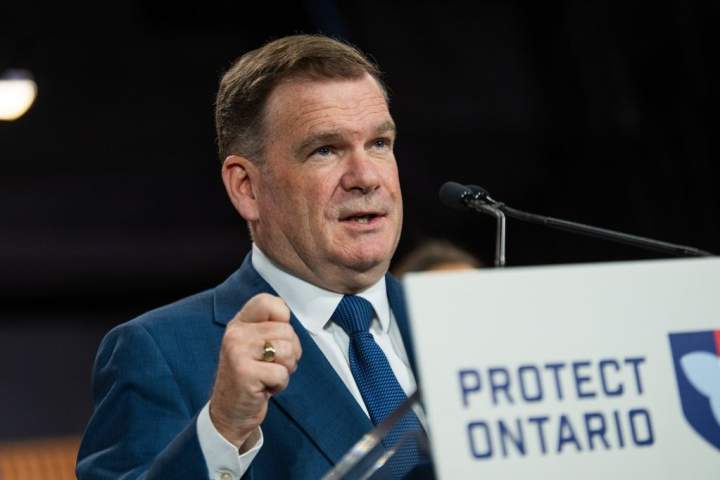
Todd McCarthy, the province’s environment minister, said the Environmental Bill of Rights is “here to stay” and that the changes are designed to cut red-tape, streamline outdated processes.
“It has not been updated in more than three-decades,” McCarthy said and added that several of the citizen-related processes are “little used,” and waste time and resources of ministry officials.
Story continues below advertisement
“The essence of it, consultation, input, remains possible. Judicial review, access to the courts, remains available. So the environmental bill of rights in my submission, will be better than ever,” he said.
But the sheer scale of changes proposed under Bill 140 has municipalities speaking out as well. Under the new legislation, the province will no longer need municipal consent for new landfill sites. Municipalities would lose the right to veto landfills, a right they gained only in 2020 after Oxford County officials launched a campaign.
Removing landfill veto power “would leave municipalities without leverage or meaningful voice at the table, with little to no opportunity to negotiate the necessary terms to safeguard their communities,” said a group of eleven Oxford County mayors in a statement.
McCarthy said that municipalities continue to have a permitting role and input, and that “we’re all in this together as we stare down the reality of new tariffs.”
Ontario needs to become more self-reliant and expand its landfill capacity, as an “insurance policy,” he said.
The Ford government’s arguments on the need to expand landfills, and fast-track building, due to the threat of U.S tariffs is now a weaker point given the U.S. midterm results that saw the Democrats flip the house and the senate, said Castrilli.
As well, the economy does not need to be picked over the environment, he said. “Having a resilient environment is key to having a sustainable economy,” he said.
Story continues below advertisement
Green Party Leader Mike Schreiner said Bill 140 will make it easier for large corporations that donate to the Ford government to engage in harmful environmental practices, while limiting residents’ ability to speak out.
“The Environmental Bill of Rights has worked well in Ontario for over 30 years. The fact that the Ford government is cutting is basically taking away your rights as citizens of this province to have input and say on issues that directly affect your quality of life,” he said.
On municipalities possibly losing veto power on landfills, Schreiner said “the whole garbage crisis that we’re facing in Ontario is Doug Ford’s responsibility.”
He said the government should be coming up with a better way to dispose of waste and instead is”decriminating” the blue box system. The majority of what’s ending up in landfills could be composted, said Schreiner.
“That is a complete failure on the part of the Ford government,” he said.
KioskNews shows a cleaned-up reading view extracted from the publisher’s page — the original always lives on their site, not ours.